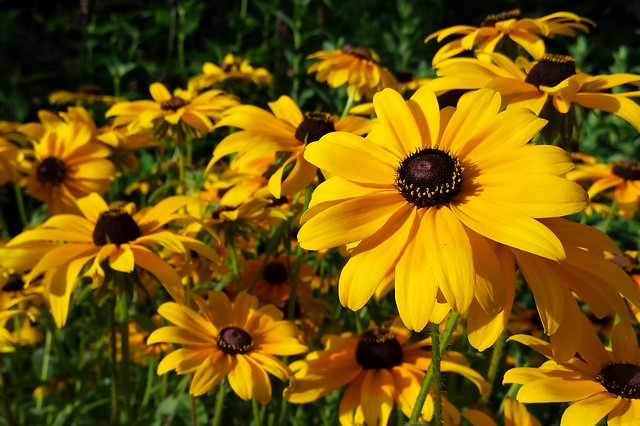
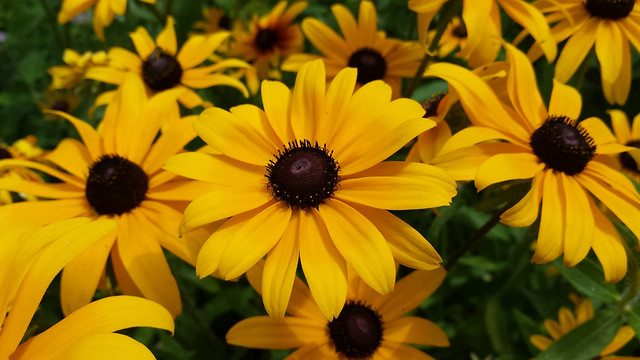
This was a banner season for the native black-eyed susans — especially after such a lackluster year in 2016. While last year there were only a few flowers, and not any until September 19, this year they started opening up on June 20, and dozens and dozens of them kept going for weeks.
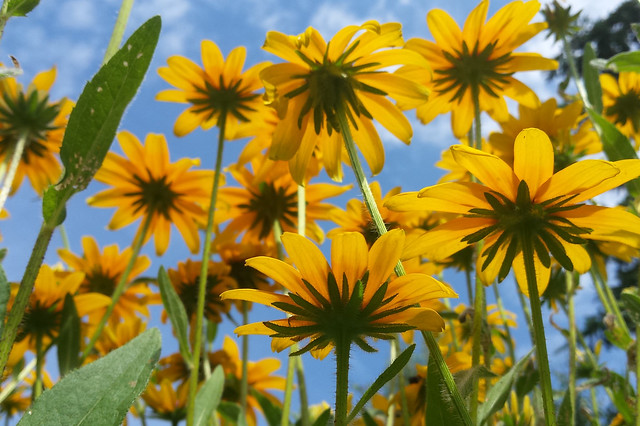
One gorgeous Sunday afternoon, I waded in close to the cluster and crouched near the ground to look up at the blue sky.
Side-by-side comparison of one flower:
Here’s one more photo of the whole bunch for good measure, from the side.
I thought that the Japanese beetle outbreak wasn’t so bad this year (compared to previous years).
I was wrong.
They started out slowly, with just one or two showing up seemingly randomly on basically every kind of plant in the yard — no surprise, since there is a list of about 300 plants that they like. But then they found the grapevine
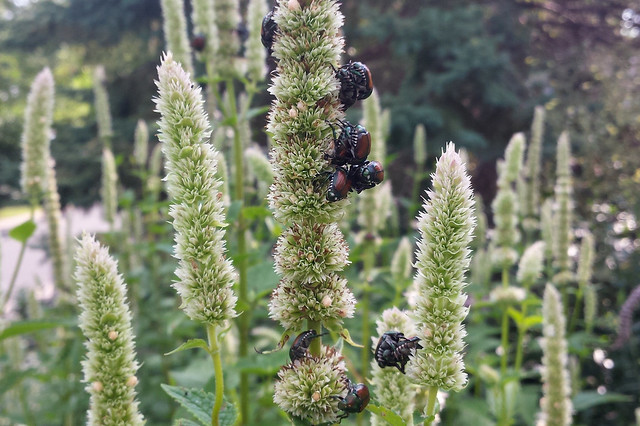
and the purple giant hyssop
and on both of those plants, they really cluster.
Japanese beetles are an invasive species that arrived on the east coast of the United States just over 100 years ago, and they’ve been moving westward ever since.
They are considered a major agricultural pest, destroying turf grass (which, sorry, I don’t care for anyway) and defoliating shrubs and trees.
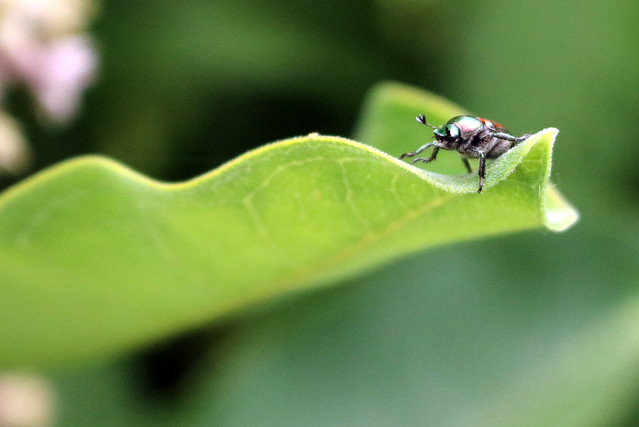
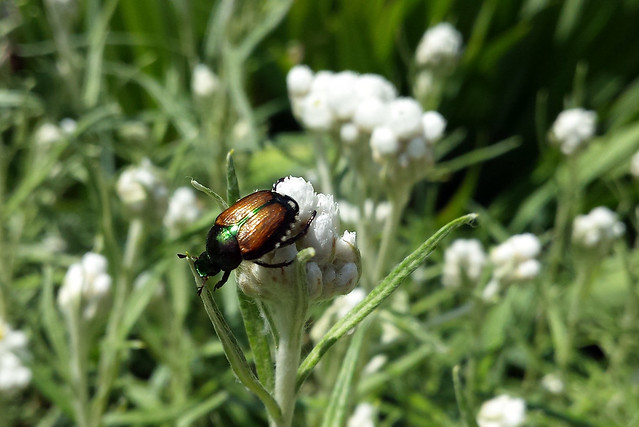
They’re actually quite attractive bugs, with their metallic coloring…
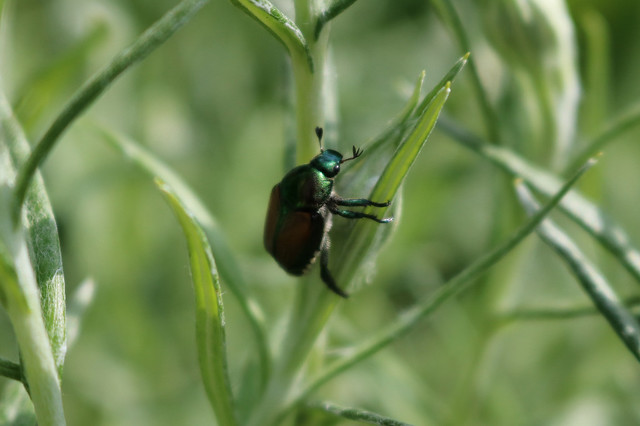
and maybe they’re even a little cute, with their “eyelashes.”
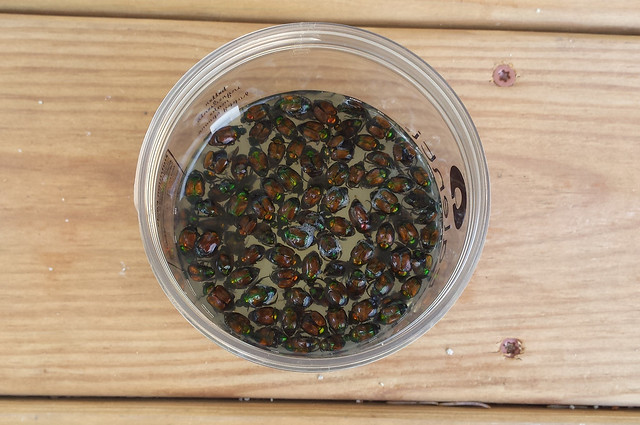
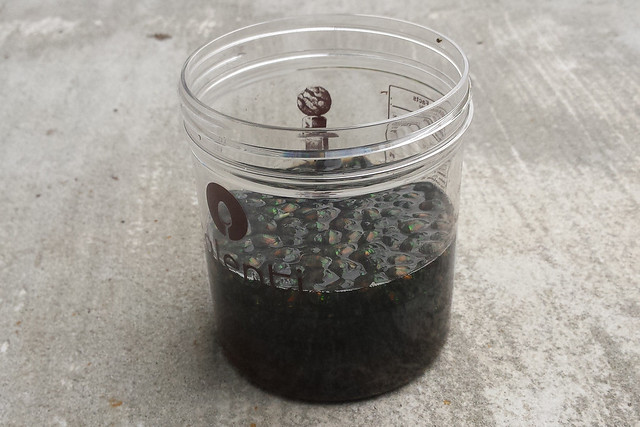
My current method of control is to walk around the garden with a small container of soapy water and to knock the beetles into the container, where they drown. This is mostly but not completely effective because some will fly away, and it is even a little bit fun (but only because it’s an invasive species) as long as the beetles don’t end up in my hair, which happens at least once a night. I sometimes find them there hours later, which is rarely a happy event.
With the large size of my garden, this collecting activity leads to some pretty full, and pretty yucky, containers.
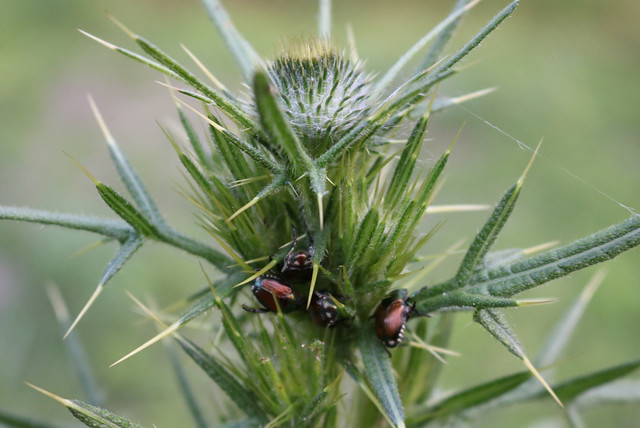
These ones were pretty smart in picking a super-sharp thistle, where I’m not about to go after them.
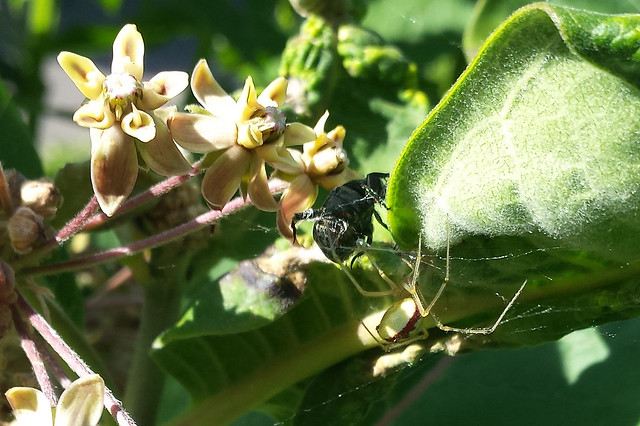
I have heard from a couple of in-person and Instagram friends that chickens love these beetles, but unfortunately I do not have access to chickens. And Japanese beetles don’t have enough natural predators to really control their numbers in Minnesota — though I did catch this interesting altercation between a candy-stripe spider and a Japanese beetle on a common milkweed plant last year. The beetle put up a really good fight, but the spider eventually won.
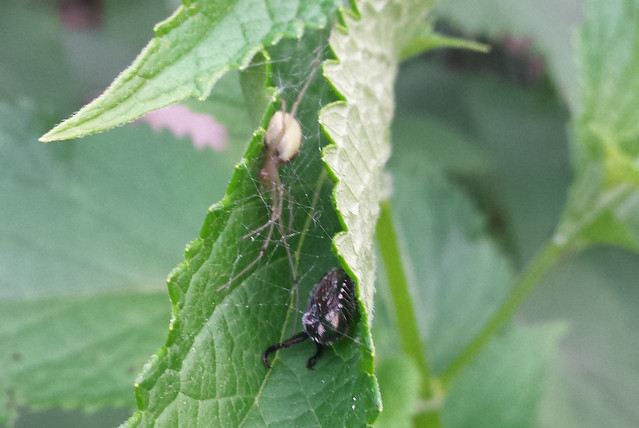
The end of a Japanese beetle at the hands of a candy-stripe spider, the same night — possibly the same pair, though on a joe-pye weed 10 feet away:
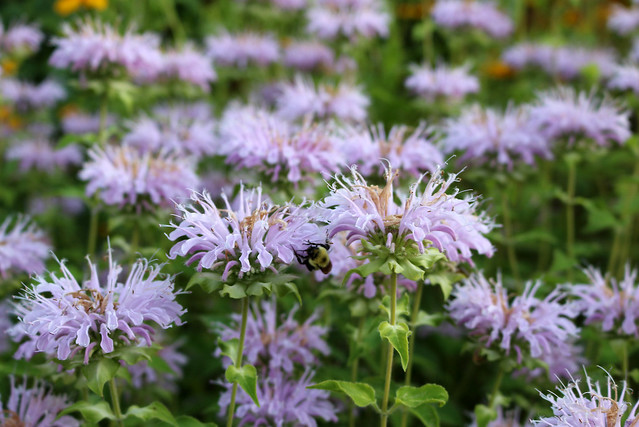
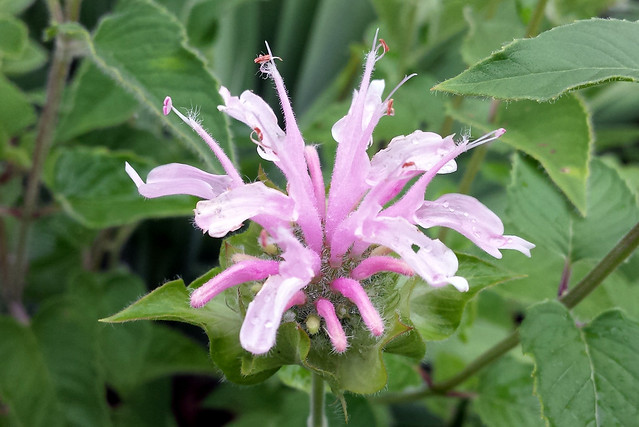
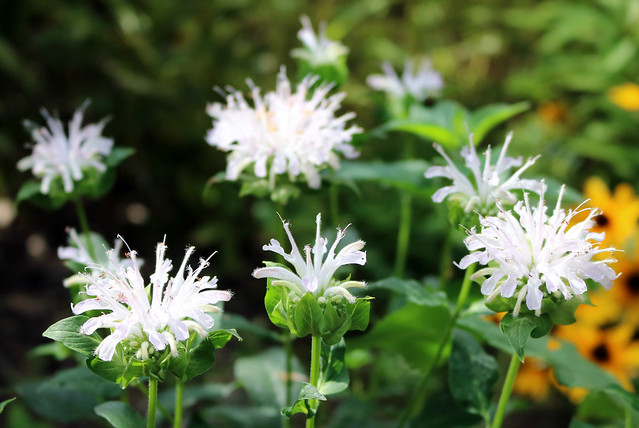
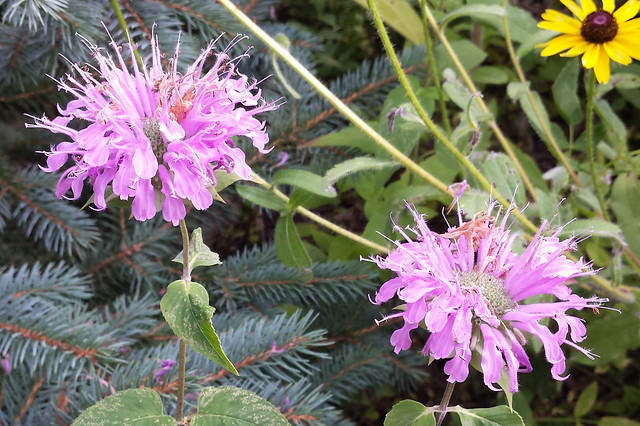
We’ve been growing bee balm (or wild bergamot, or monarda) for many years. It started as one large clump, and then we divided it into two sections. Each year it’s been the same pale purple color.
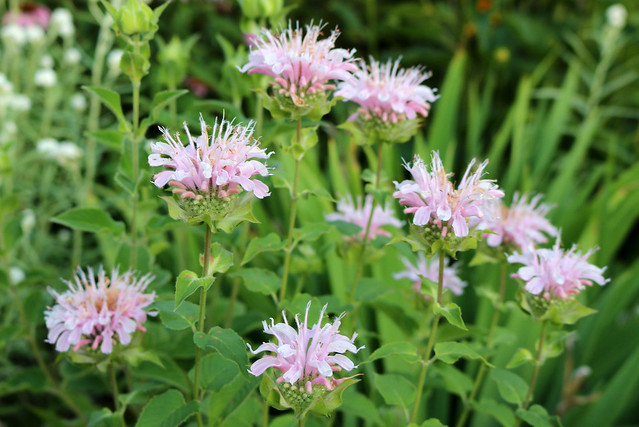
Last year there were a couple of volunteer blossoms, but this summer new growth is popping up all over. The first new plants were purple, too, but then I noticed a pink flower…
…which turned into a pink patch.
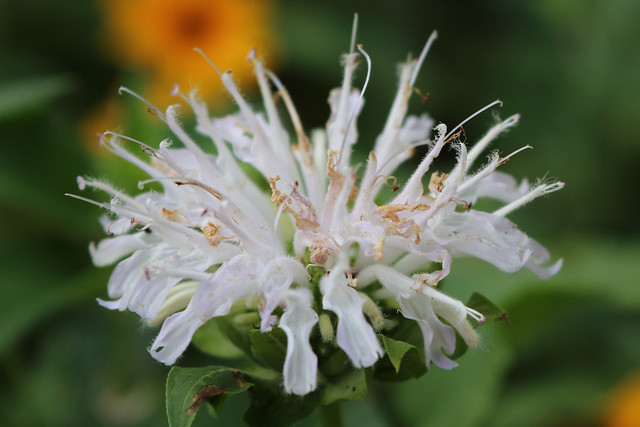
Later I found a nearly white patch, then several more clusters like this.
And finally, I found a couple of blossoms that were a darker purple.
It started with a small patch of fleabane that popped up in the lawn right behind the house in early June.
Two weeks later came several right at the edge of the railing in the most shady spot of the front yard. There have been a couple here before, but this year they really took off. I called it a “fleabane forest” on Instagram.
Little did I know that it would be nothing compared to what happened in the backyard in July: a roughly six feet-by-six feet spot of solid fleabane.
I don’t care that it’s considered weedy; it’s cheery, and it is native.
Minnesotawildflowers.info recognizes three kinds of fleabane in Minnesota. I am pretty sure the early ones were Philadelphia fleabane. I’m leaning toward prairie fleabane for both of the other locations, and perhaps the difference in bloom time is simply because of different amounts of sunlight. All three varieties that grow in Minnesota are native, though, so I’m not overly concerned about getting the correct identification.
I probably shouldn’t admit this, but I garden without paying much attention to where plants are supposed to grow. I’ll try most flowers once, and if they don’t like the spot, I don’t usually try again. With some notable exceptions (bloodroot keeps breaking my heart), plants will grow in my yard, whether in full sun in the front or in part-shade to mostly-shade in the back.
With that said, and perhaps not surprisingly, I’ve noticed that most of the summer prairie flowers in my yard bloom earlier and more vigorously in full sun.
All comparison photos were taken on July 24; sun first, then shade.
Bee balm was the plant that made me think of comparing the locations:
Yellow coneflower:
Joe-pye weed, just opening up in both spots, but a little further ahead in the full sun:
Pearly everlasting — all over in the front yard, but struggling to make it through all the creeping charlie in the backyard:
Dramatic difference for the black-eyed susan — a huge cluster in the front yard, but just one small plant in the backyard:
(Much more to come about the black-eyed susan situation in the front yard.)
Purple coneflower — not even a comparison because at that point, there were none in the backyard (and even today, August 8, there is just one).
I’m not ready to attribute all of the front-yard success to amount of sunlight alone. For example, in the case of the black-eyed susan, in previous years the results were reversed (few in the sun, many in the shade).
And even in part shade, the flowers usually do grow, just later, like the same backyard bee balm location, taken on August 7:











 crystallofolia