I could watch bees crawl in and out of turtlehead flowers all day. Mostly it’s just bumblebees and honeybees that do this, because they’re big enough to open the flowers. And I see more bumblebees than honeybees here.
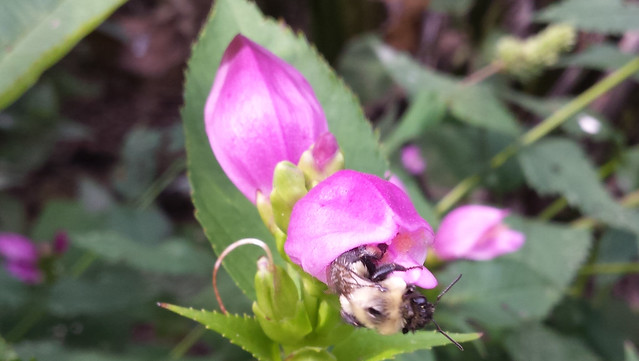
bumblebee that is almost all the way out of a dark-pink flower, viewing almost straight into the flower's opening

They force their way into the “mouth” of the “turtle” and rustle around inside for quite awhile, then exit and find another flower to repeat the process.

Video of a bumblebee from a few years ago:

Sometimes they need to stop and regroup after they exit, brushing the pollen off their antennae or eyes, I assume.
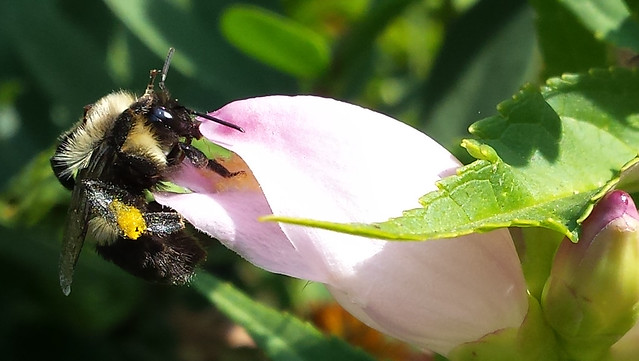
bumblebee with a small yellow pollen basket, holding on to a light-pink flower with a leg up near its eyes, viewed from the side

This flower has a honeybee inside, barely visible.
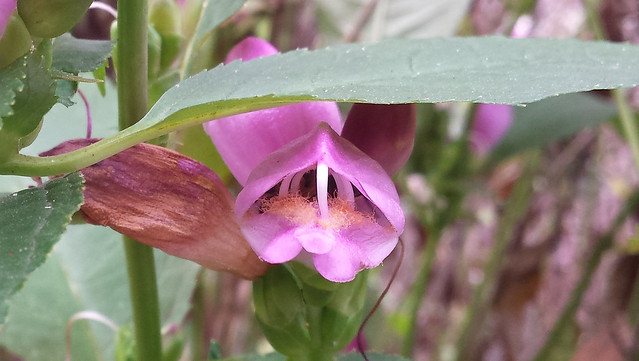
looking straight into the 'mouth' of a dark-pink flower, the bee is not distinguishable but the back of the flower is dark

This year, at first, I thought I had noticed a difference – bumblebees climb out backwards, while honeybees turn around and climb out face-first – but then I saw a bumblebee turn around, too. (And the video above shows a bumblebee that turns around, so I had seen that before.) In fact, I don’t seem to have any photos of bumblebees backing out. So much for that theory.
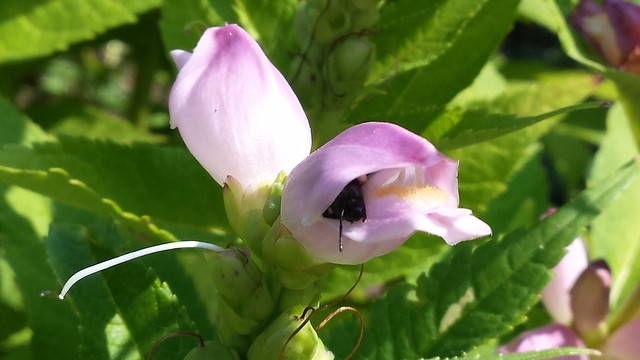
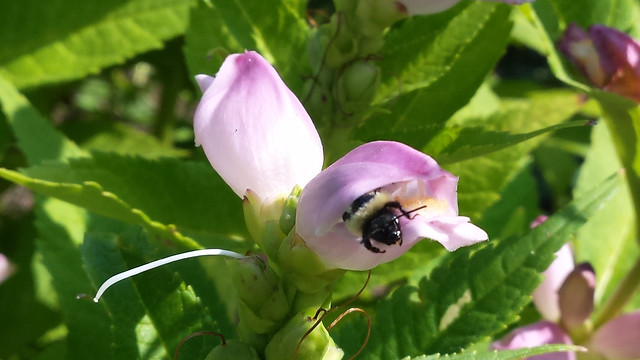
just the head of a bumblebee emerging from a light-pink flower

same bee a fraction of a second later, with its front two legs and its body visible to the thorax

This one is my favorite: looks like it was quite the effort to squeeze out of this blossom.
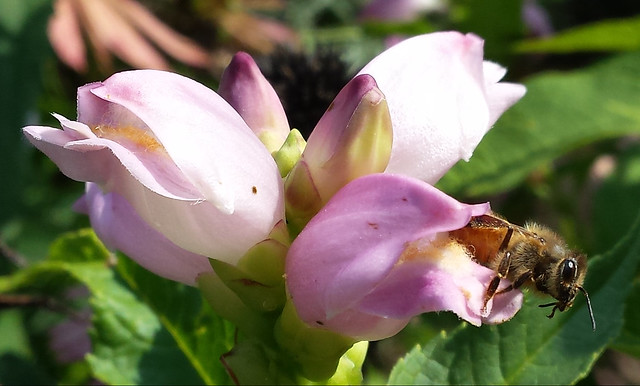
three light-pink blossoms, with a honeybee emerging from the lower right flower horizontally and tilted, looks like it's pulling itself out with its front two legs

Only a little hint of the insect inside.
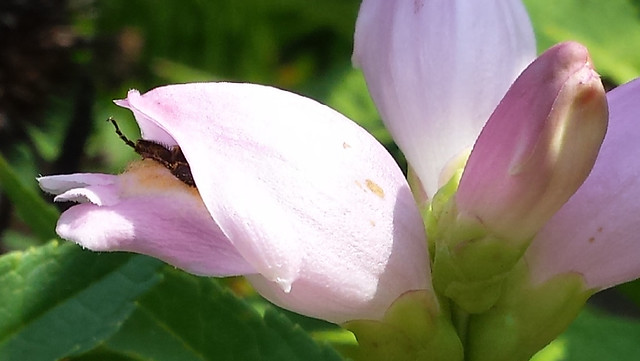
one bumblebee leg sticking out of a light-pink blossom

Every autumn I seem to find a surprise or two in the yard, usually spring flowers that should be long-gone. Four years ago it was an iris. I’ve also found late-blooming snowdrop anemone more than once.

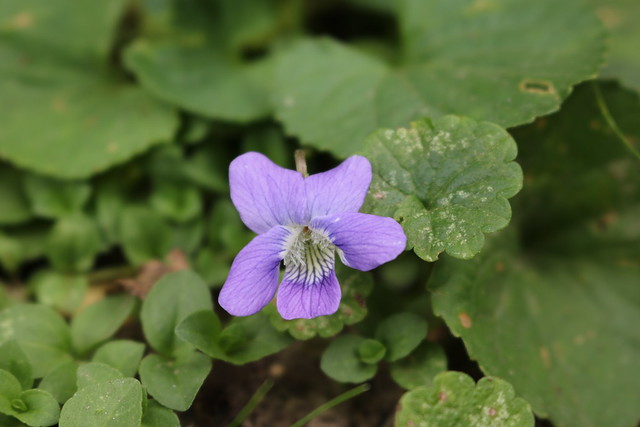
This afternoon, while checking up on the status of the yard, I spotted this single wood violet.

one purple violet in the grass and creeping charlie

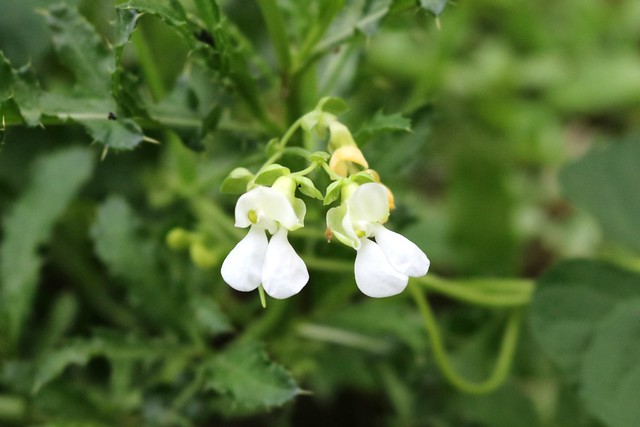
The vegetable garden is also a good spot to find late bloomers, usually plants that just didn’t quite get enough time to finish before the first frost. But today I spotted beans that are making their first appearance of the year. There are two plants, each completely tangled up in thistles. (When they didn’t appear on time, I didn’t bother weeding the garden.) Strange time to be starting!

two bean flowers, the background nearly all poky thistles

The large section of black-eyed susans has finished blooming and is going to seed.

more than two dozen dark-brown seedheads, with only a few shriveled petals remaining

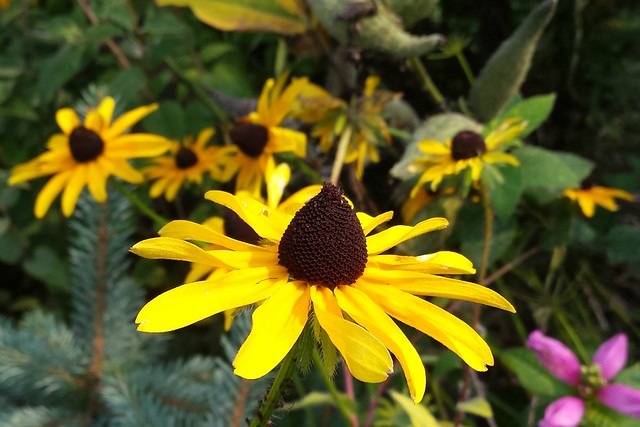
But just when I thought it was the end for these flowers, a somewhat hidden section popped up a few feet away.

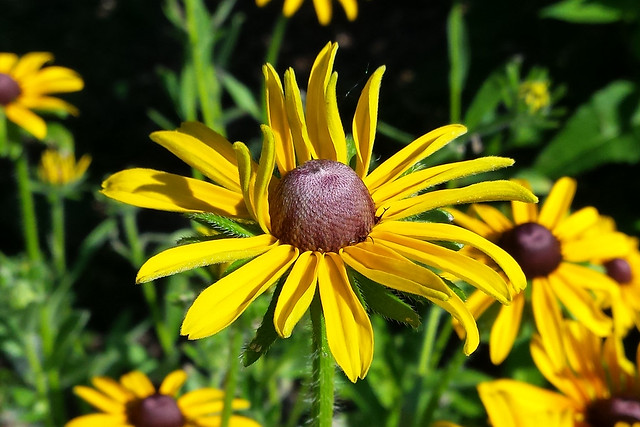
closeup of one bright yellow flower with a tall brown cone, with six more flowers blurred in a fairly straight line in the background

They are a welcome sight as the garden is starting to fade.

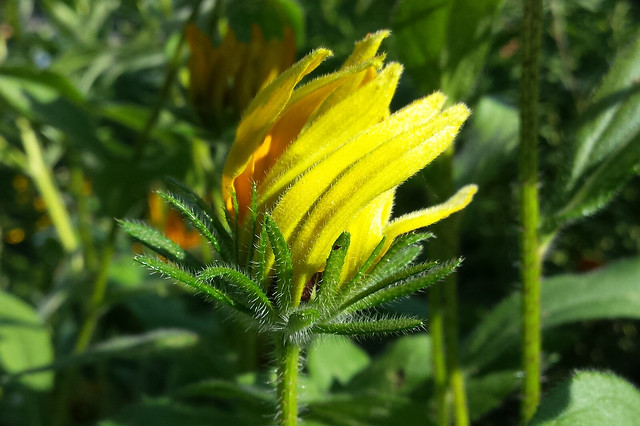
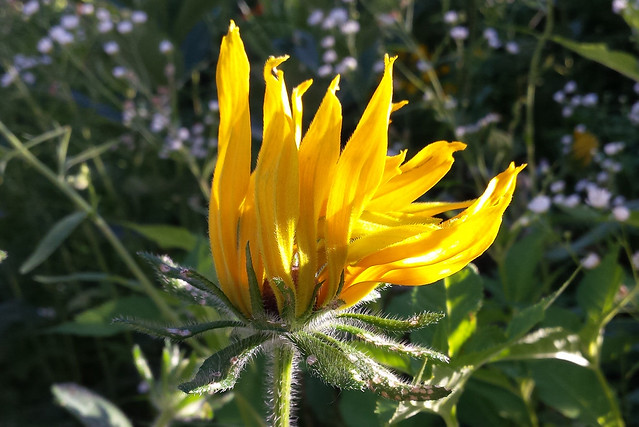
Black-eyed susans that are opening look like they’re sleepy and having a hard time waking up.

bright yellow flower just starting to open, the petals somewhat swirled to the right, in bright sunlight

My hair is a bit wild in the morning, too.

another flower farther along, the petals on the left sticking straight up, and the petals on the right starting to fall into place

One last stretch, and then this one will be ready.

closeup on a nearly-open flower with 13 petals flat, while 2 on the left and 5 in the back are sticking up, with several other flowers blurred in the background

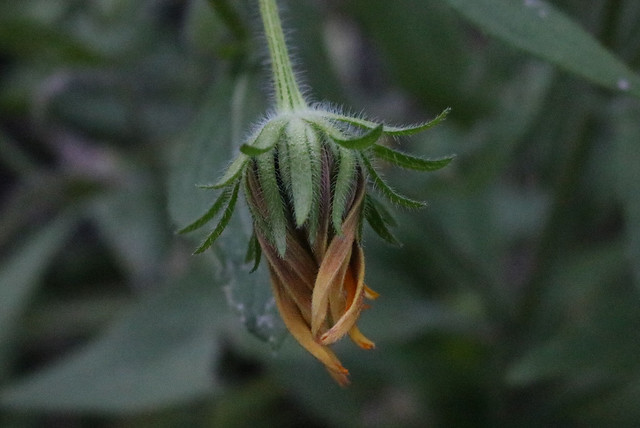
At the end of the day, this one looks like it’s ready for sleep.

stem hanging down with a reddish rudbeckia just starting to unfurl

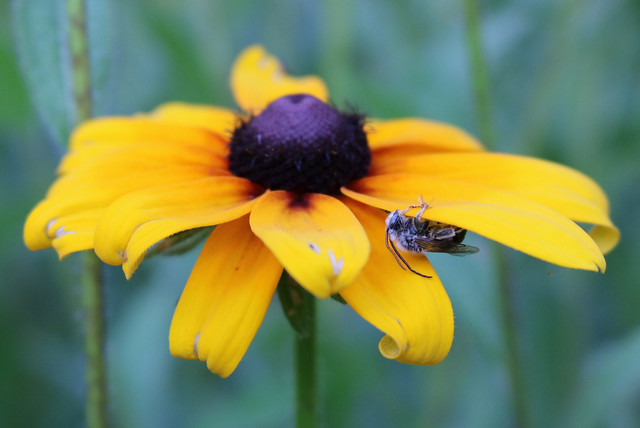
All tucked in for the night. This doesn’t look comfy to me, but what do I know? I’m not a bee.

completely open flower that is just starting to fade, with a long-horned bee holding onto the top of a petal with two legs while its body hangs underneath

If I were giving out an award for the most social flower of the year, black-eyed susan would win. One fun day, I spent the morning checking and rechecking on them, noticing and admiring the diversity of insects that were attracted to the blossoms. About two-thirds of these photos are from that one day alone.

Bees:

likely a bumblebee on the right side of the center disk, facing downward

metallic green been in the same position

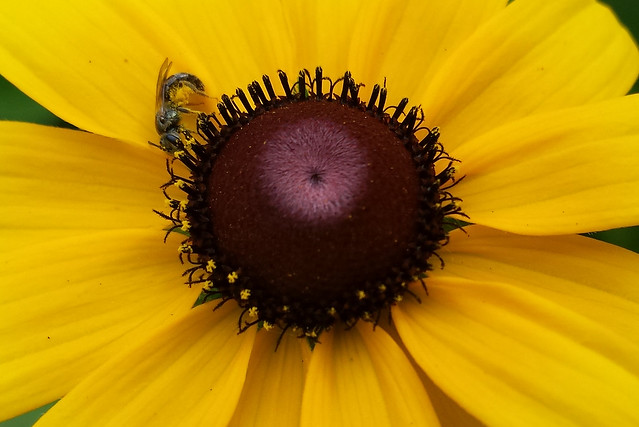
unidentified smaller bee on the left of the center disk, curled and facing downward

possibly a megachile, on top of the center disk, with legs full of orange pollen

Flies:

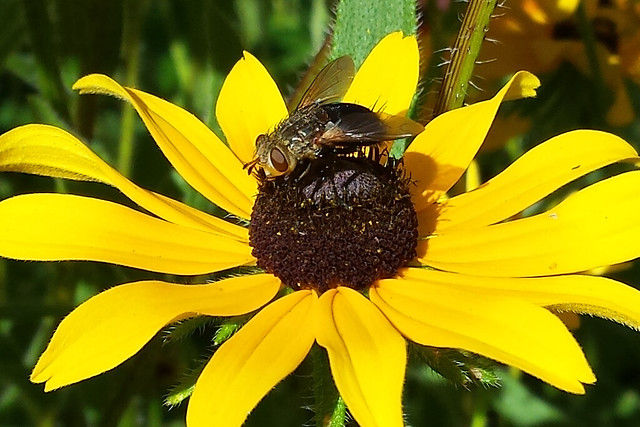
really big fly with hairs, possibly a tachinid, on top of the center disk

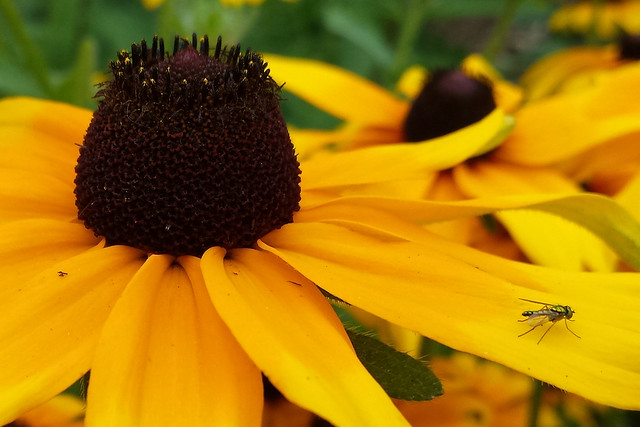
long-legged fly standing out on one of the petals

Flies that look like bees:

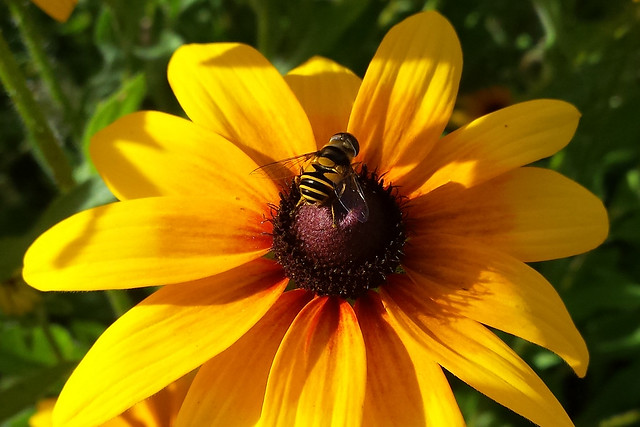
bee mimic with a wide abdomen

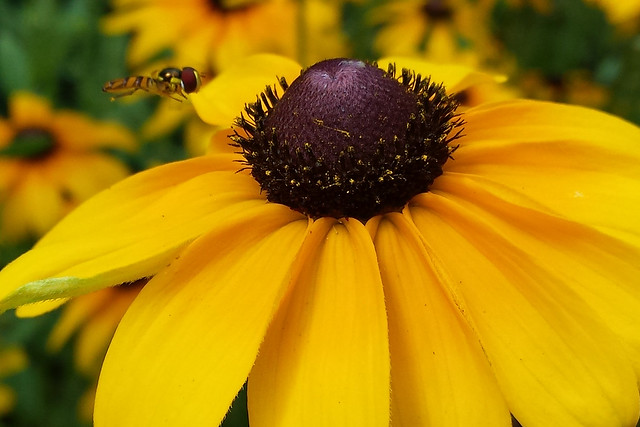
much smaller bee mimic, or hoverfly, hovering to the left of the center disk

Butterflies:

tattered monarch sitting on the right side of the flower

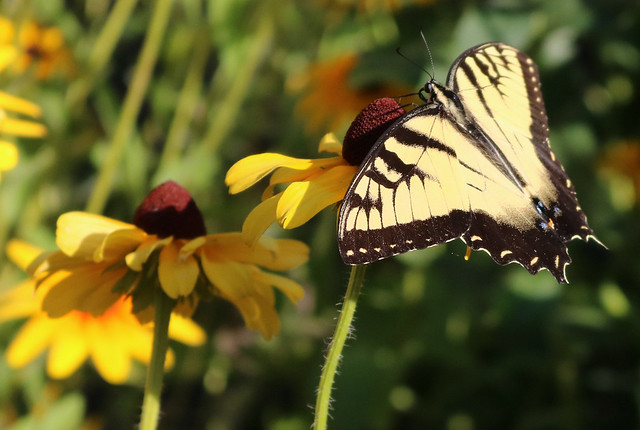
Eastern tiger swallowtail with wings outstretched, tilted toward the camera, on the right side of the flower

Bees and butterflies:

gray butterfly, possibly a hairstreak, on the left side, and a long-horned bee on the right, their antennae crossing in the middle

Lacewing:

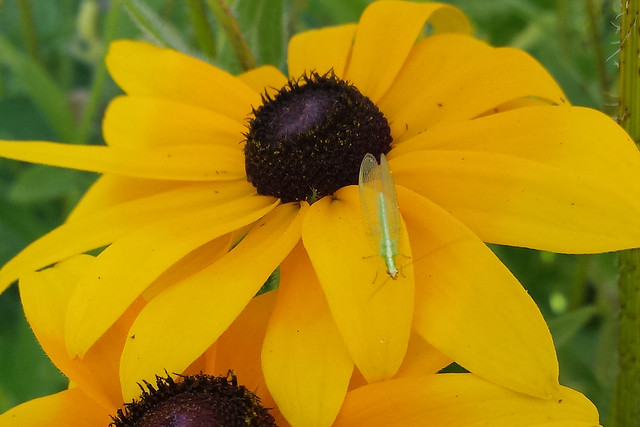
sitting on a petal in the front of the picture, facing downward

Aphids:

a blurred stem with two large red aphids and several smaller red aphids, in front of a black-eyed susan

Beetle:

beetle perpendicular to a tall center disk, with a dark red body and wing shells that blend in with the flower disk

Japanese beetle doing the splits:

beetle on the petals facing up

Leafhopper:

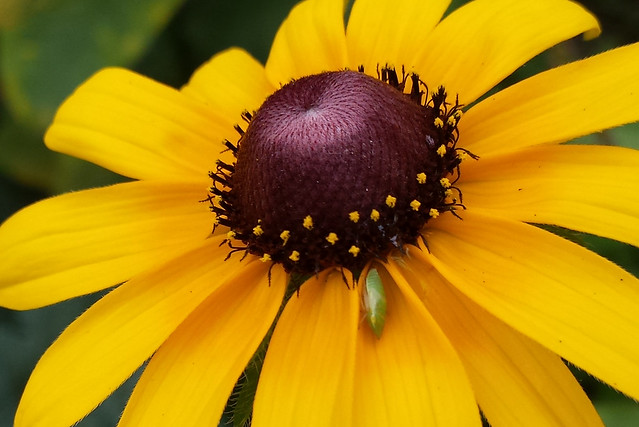
small green insect tucked into the fold where the petal meets the flower's center

I don’t know what this is:

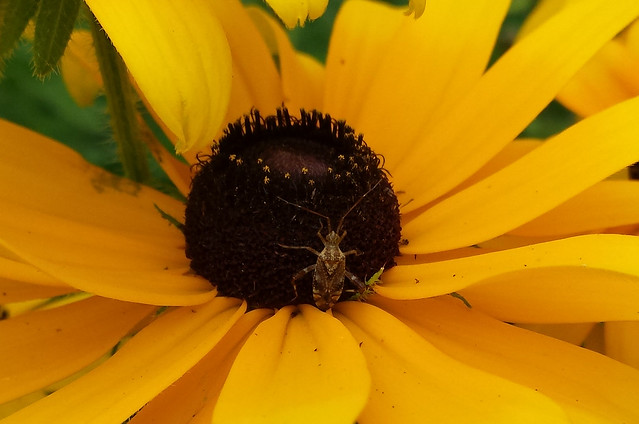
patterned brown insect with long antennae, climbing up a tall center disk

Inchworm:

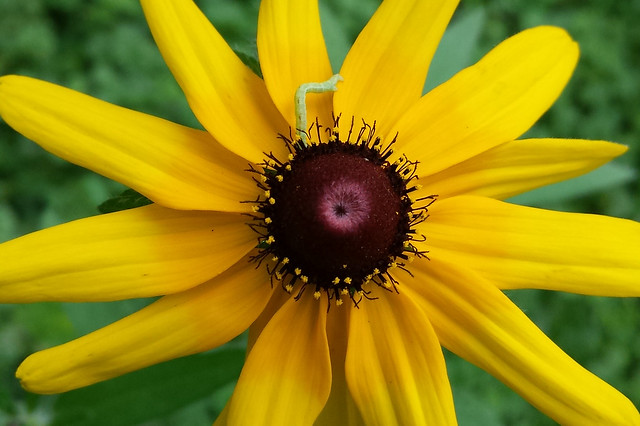
skinny green caterpillar holding onto a petal with its head hidden behind the center disk

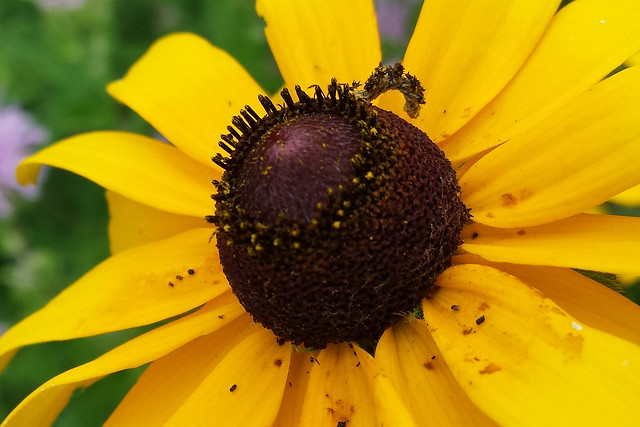
And my favorite find, a camouflaged looper inchworm:

curved brown caterpillar hanging off the right side of the center disk

(More about this camouflaged looper caterpillar.)

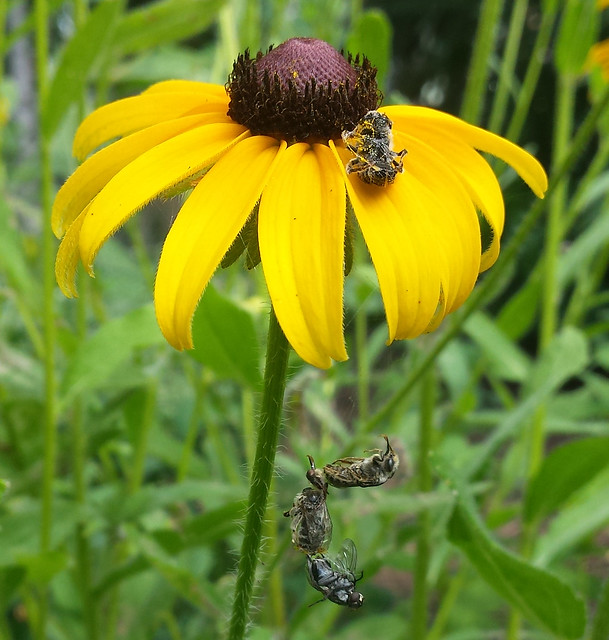
There was also this gruesome find — one dead bee on a petal, with two dead bees and one dead fly suspended below — but then again, a spider’s gotta eat, too. (I assume that’s what created this scene.)

tall image of a flower with four dead insects, three hanging below the flower but no visible spiderwebs