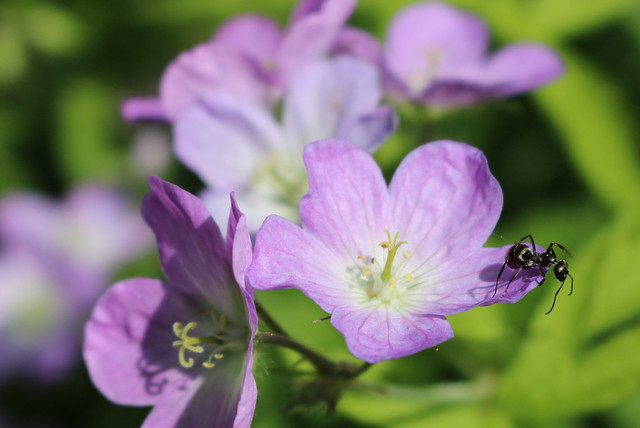
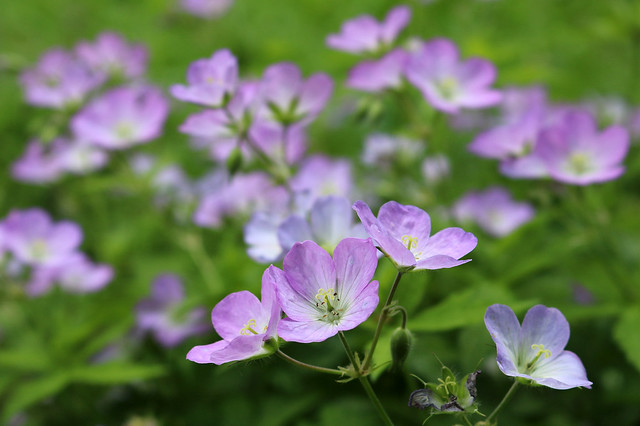
After a big morning storm on June 11, which included plenty of hail, we spent a lot of time in the garden checking on the flowers and the caterpillars. Not many flowers were blooming yet, which may have worked in our favor: some common milkweed and cup plants had a few ripped leaves from the hail, but most looked just fine.

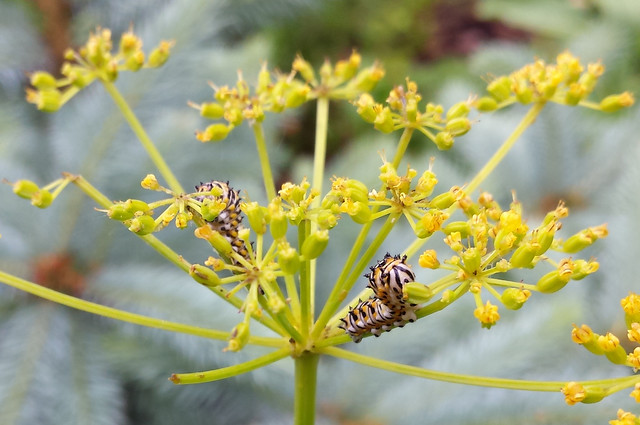
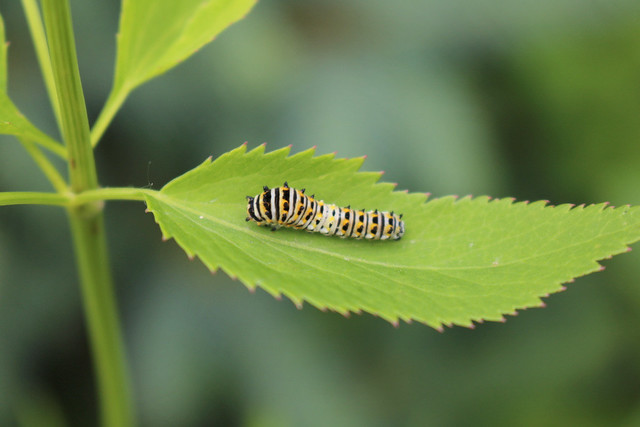
The monarch and American lady caterpillars were wet and recovering where they usually reside, and then we found something somewhat unexpected: five black swallowtail caterpillars.

It wasn’t completely unexpected because they were all on Golden Alexanders, which is a host plant, and I had been looking for them for a couple weeks. (I saw a butterfly on May 12, and a caterpillar last year, so I knew it was a possibility.) But I was quite surprised to find five!

large, mostly white caterpillar, with black and yellow stripes, along a flower stem with its mouth at the blossom

a little smaller, more yellow, resting on a leaf

two mostly yellow, spiky caterpillars in the flower blossom, eating

The fifth looked strange; maybe it had been hurt during the storm?

a caterpillar upside-down, possibly wedged between two flower stems

I kept checking for them after that day, and two were visible for more than a week. Here are photos from one evening:

a skinny, smooth, green caterpillar with black stripes that have yellow dots, along the bottom side of a half-eaten leaf

similarly sized caterpillar viewed from the front, holding a leaf in its front legs to eat it

Same caterpillar from the side, looking guilty (though of course that is just my funny interpretation):
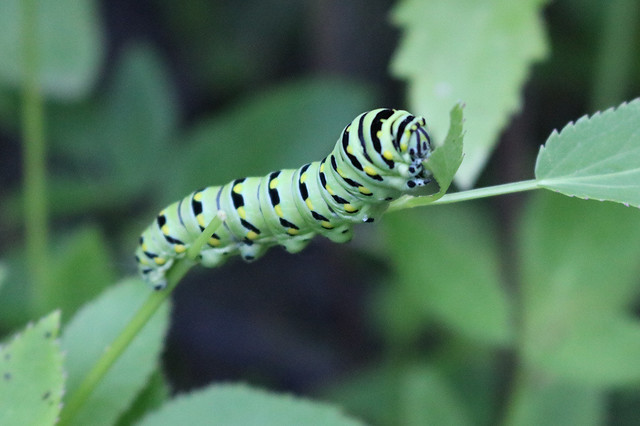
still holding the leaf, but the patterns on its head make it look like the caterpillar is hiding behind its hands in embarrassment

This was the last night I saw any of these caterpillars. I don’t know enough about the life cycle of black swallowtail butterflies, yet, to know whether these caterpillars moved away to pupate, or whether they were more likely eaten by birds, wasps, or something else.
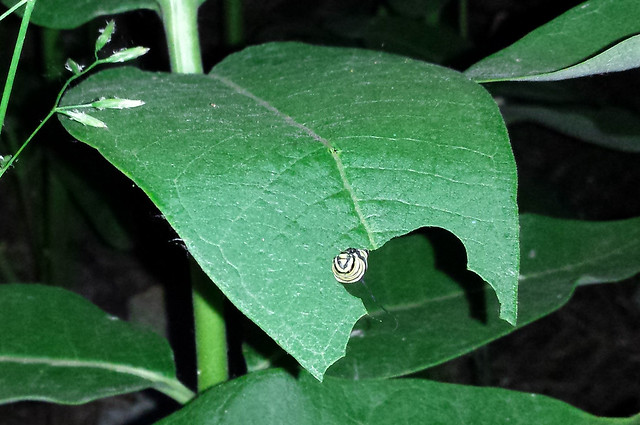
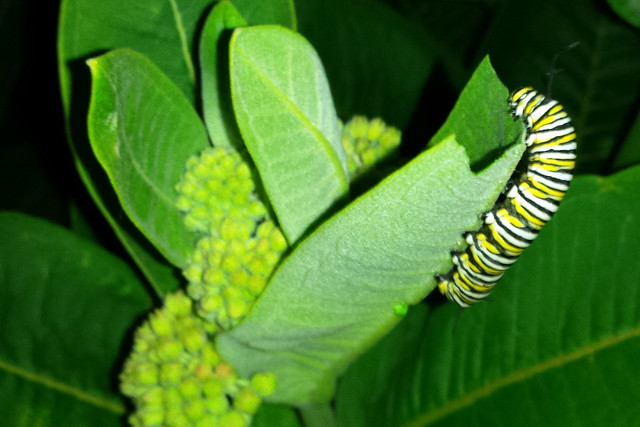
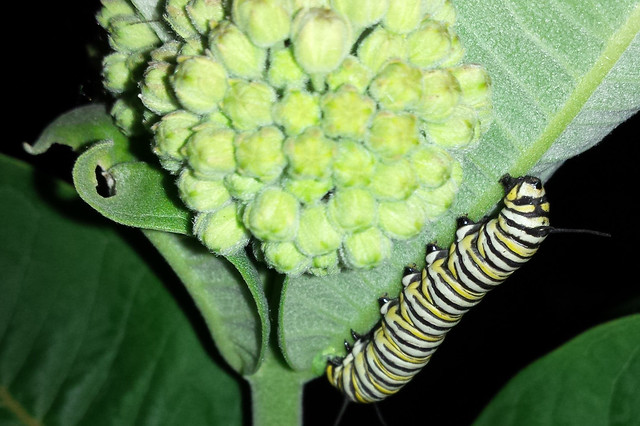
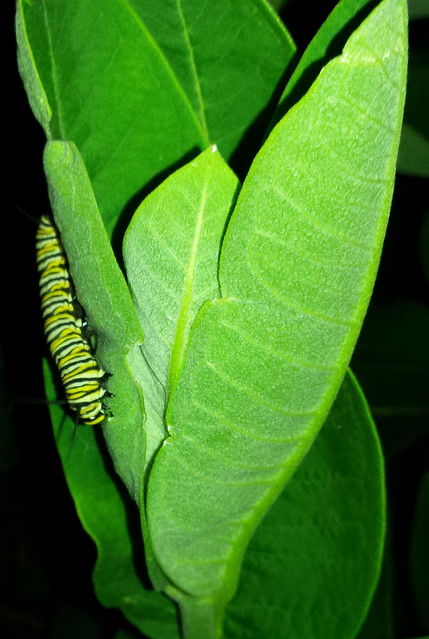
One night just after dusk, as I arrived home after running errands, I decided to see what the caterpillars were up to. For several days, I had been observing eight or nine monarch caterpillars growing larger and larger in the front corner of the yard, in what I’m calling the “milkweed forest” because there are about three dozen common milkweed plants close together. Quite likely, these caterpillars were from the eggs that were laid on May 26.

The caterpillars were getting so big, I knew they’d be ready to form their chrysalises soon. Would they be resting up, or would they be eating all they could? I guessed they’d be eating.

Sure enough, they were still out and about, still eating. Even in the low light, I could easily spot them. They just went about their business without even noticing me, which is generally what they do in the daylight, too.

just a head poking out under a leaf, looking surprised, though that is likely anthropomorphization

caterpillar underneath a leaf, holding on, with a sharp corner in its mouth

caterpillar climbing up a leaf, curved over to eat from the top

caterpillar possibly resting upside-down at the base of a leaf

caterpillar reaching up to the top of a leaf, antennae stretched wide

caterpillar facing down on the left side of a large cluster of leaves

I’m not sure whether they eat all night. Sometime, maybe I’ll check!

Within a day or two, these caterpillars probably moved on to the next stage in life. They must have crawled far away, or hidden well, because I haven’t found even one chrysalis.

Photos were taken on June 15. These caterpillars might be butterflies now!

A little over a week ago, I saw a monarch lay an egg on the butterfly weed, so I kept checking on it.

closeup of one butterfly weed bud stem in the sun, with a white football-shaped egg pointed downward on the left side

Two days later I noticed two more eggs. The next day I noticed a fourth, and I was able to get them all in one photo.

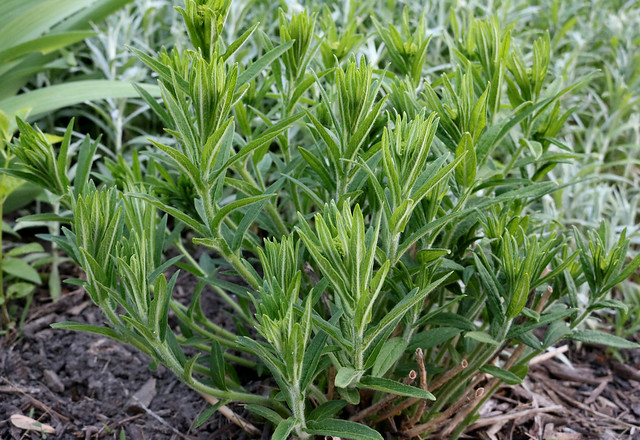
large, full butterfly weed plant with two eggs visible in the front and two practically invisible in the middle

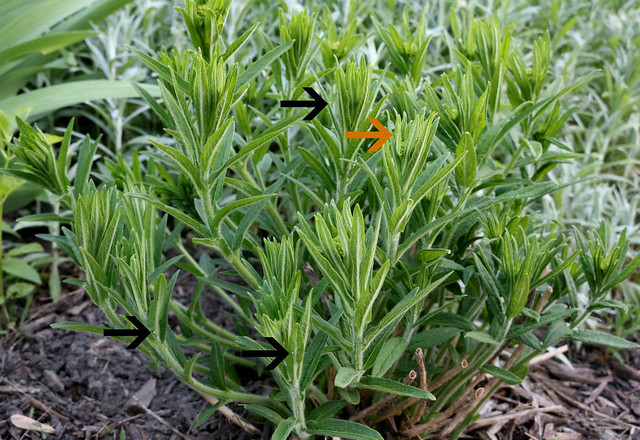
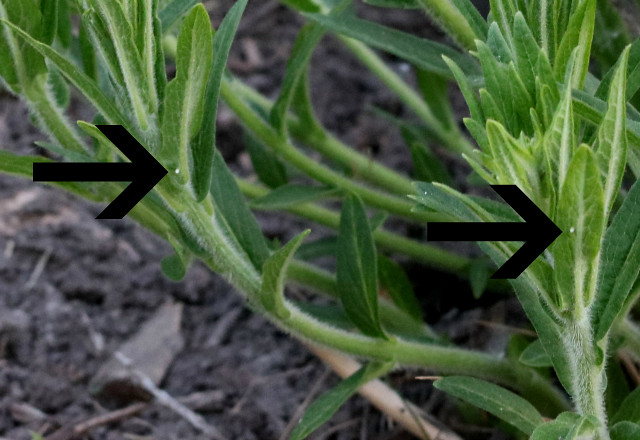
Of course, from this distance they’re nearly impossible to see, so I added arrows to show where they are. The orange arrow is the location of the original egg.

same photo, with three black arrows and one orange arrow pointing to tiny whitish spots

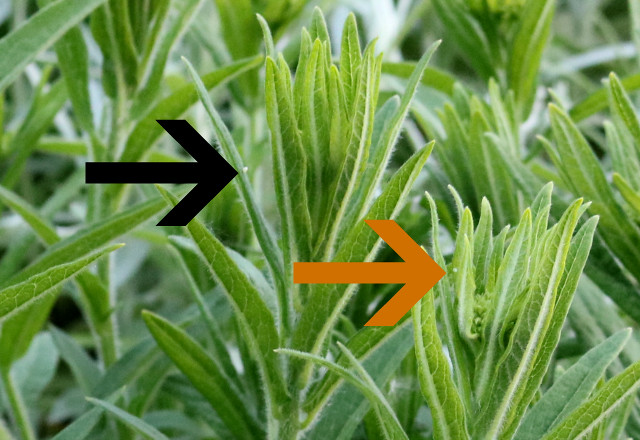
A zoomed-in version of the top two eggs:

a black arrow and an orange arrow pointing to white dots

And a zoomed-in version of the bottom two eggs:

black arrows pointing to two white dots

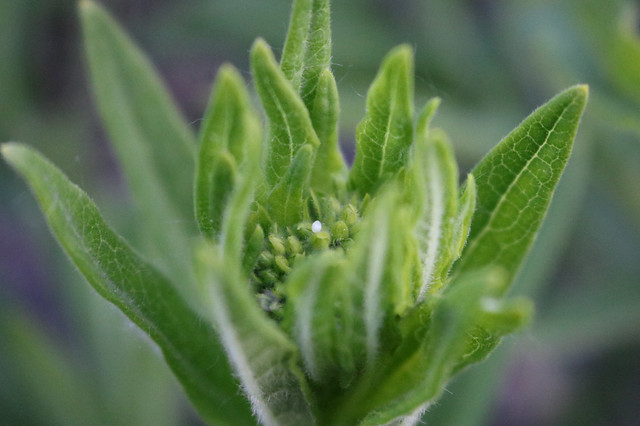
When I leaned in to get a closer look at one of them, I spotted a fifth egg in the crown of one of the stems.

an egg in focus on a cluster of buds, with blurry leaves in the foreground

Then I decided to check the other side of the plant, and I found a sixth egg.

egg on the top left corner of a group of lots of skinny green leaves

Six eggs on one plant. Wow!

I decided to raise two of the eggs (plus one from a common milkweed) inside — partly to simply observe, and partly for a reason I’ll explain in a future post. All three hatched early the same morning, but strangely, they’re growing at different rates.

three tiny monarch caterpillars, one much smaller than the others

It’s a strange time in the garden: even though it’s summer, not many native plants are blooming. The spring ephemerals and even the stretch-season wild geraniums are done, but most of the summer flowers haven’t opened yet. Right now it’s just Golden Alexanders…

small black bee facing down on Golden Alexanders

…and Philadelphia fleabane, which volunteered in the lawn.

dozens of small white flowers with yellow centers, green grass in the background

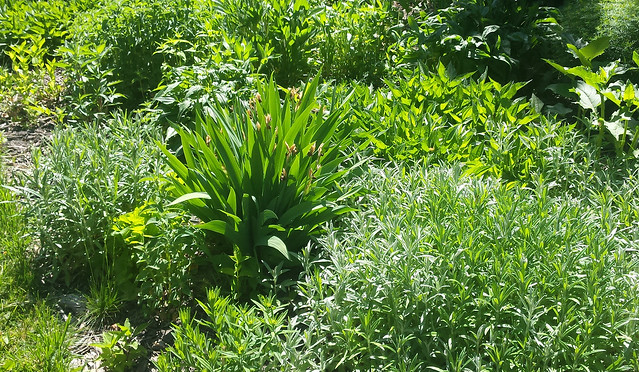
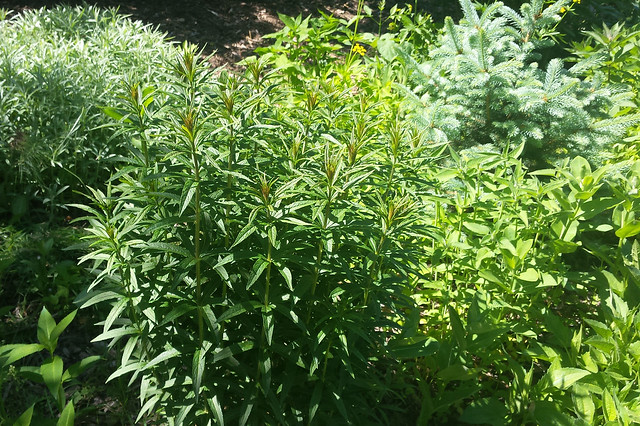
But there’s still a lot going on in the garden. After a lot of May rain and now early June hot temperatures, the plants are looking good, getting bigger by the day. Lots of shades of green, and lots of different textures.

green plants: pearly everlasting, bee balm, iris, blue vervain, butterfly weed, cup plant, black-eyed susan, stiff goldenrod

pearly everlasting, culver's root, bee balm, small pine tree, Golden Alexanders

And the wildlife is buzzing along. Last Sunday, I spotted…

American Lady butterflies and monarch butterflies have laid eggs, which are now American Lady caterpillars

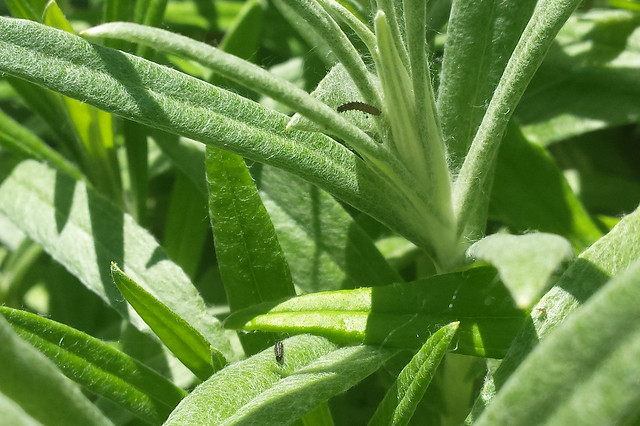
two small black caterpillars crawling on pearly everlasting leaves

and monarch caterpillars.

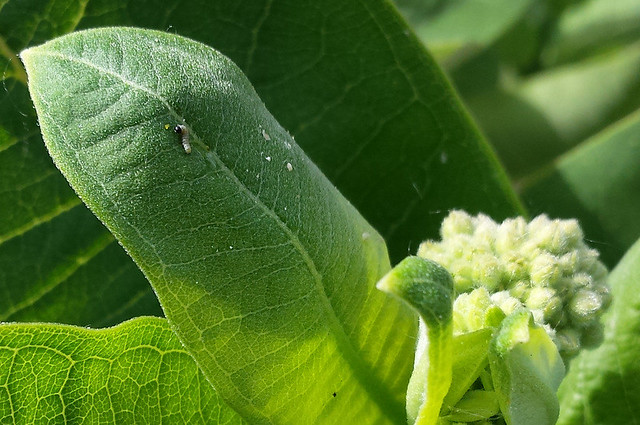
a just-hatched monarch caterpillar curved on a big common milkweed leaf

And more monarchs showed up to lay more eggs.

female butterfly holding onto a common milkweed in an egg-laying pose

Every time I walked through the garden, I kicked up clouds of damselflies. Dragonflies were busy, too, but I haven’t gotten close enough to get a picture yet.

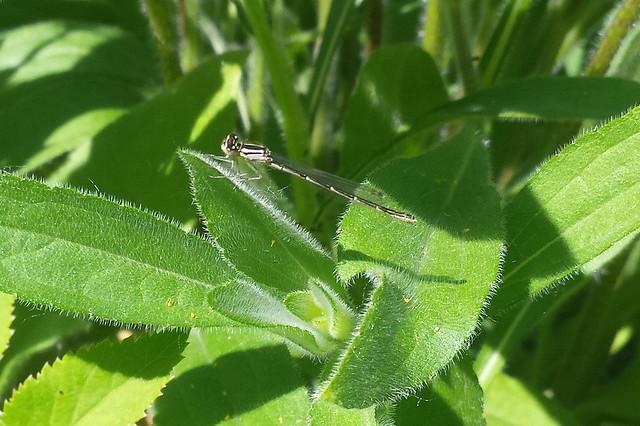
damselfly resting on black-eyed susan

Aphids and other similar insects were everywhere, so it’s about time for ladybugs to show up to keep them under control.

dozens of red aphids on yellow coneflower

I keep checking for swallowtail caterpillars on the Golden Alexanders, especially since I saw a butterfly last month, but so far I haven’t found any.

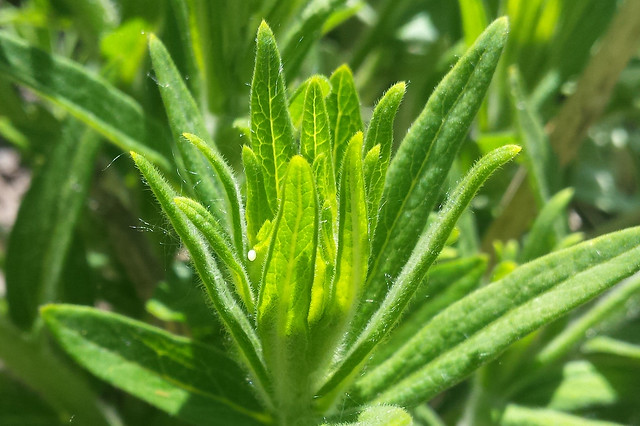
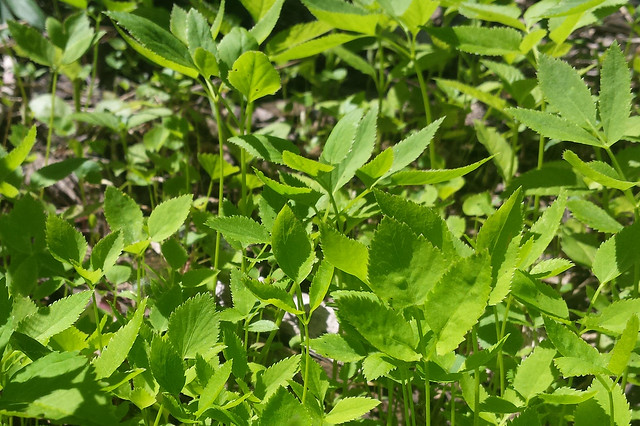
Golden Alexanders leaves

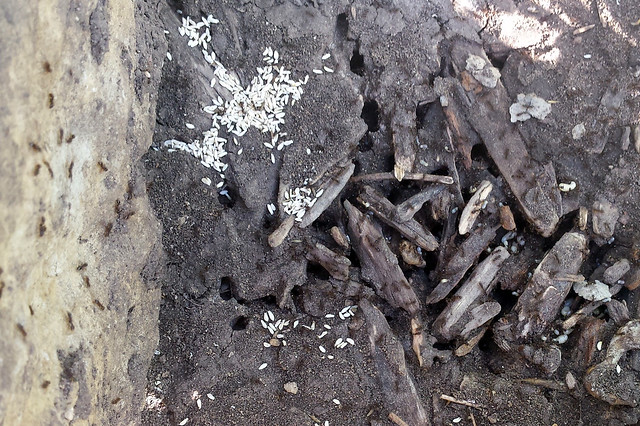
Ants were busy managing their colony under stepping stones.

vertical stone on the far left with some small brown ants, a cluster of white eggs, and many ants crawling on top of a structure of woodchips and holes

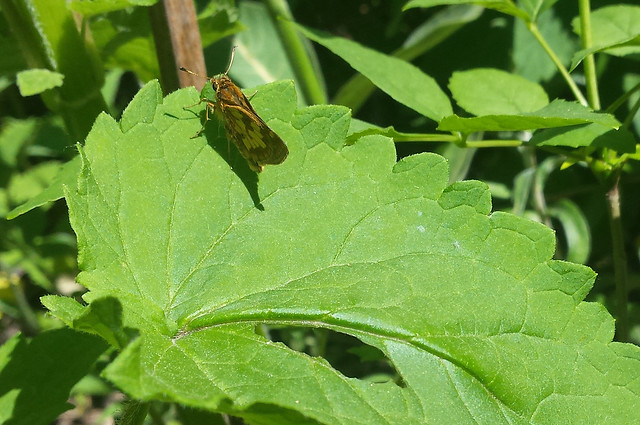
And a skipper butterfly stopped by.

small brown-and-yellow butterfly looking away on a hyssop leaf

So while the first glance is a lull in the garden, the reality is anything but boring.

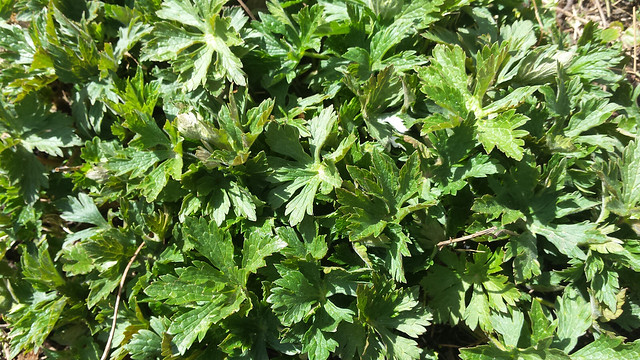
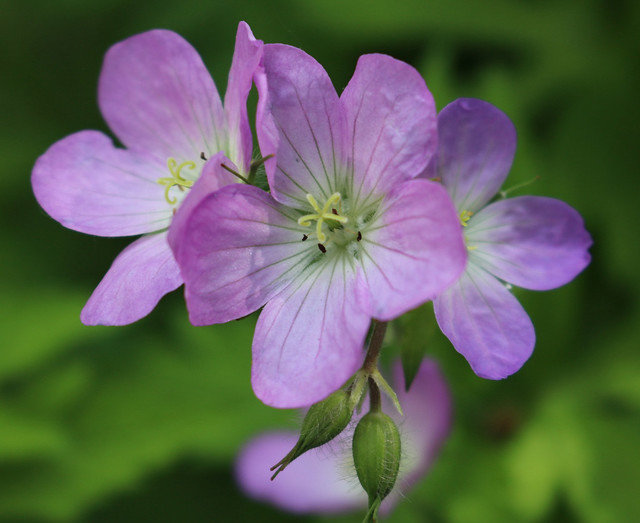
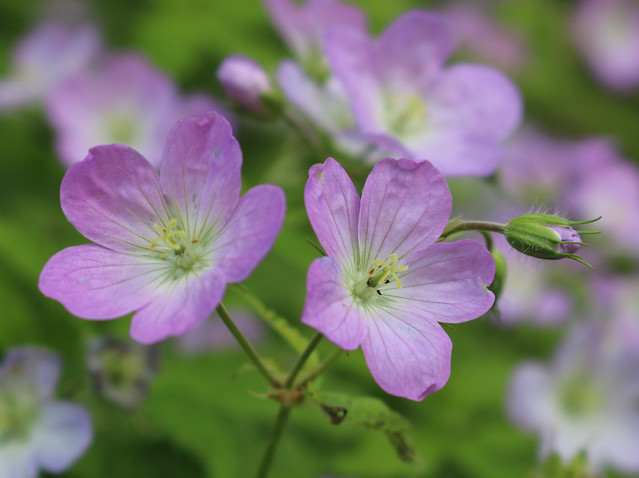
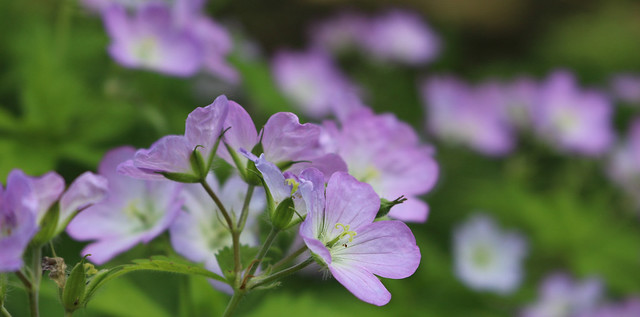
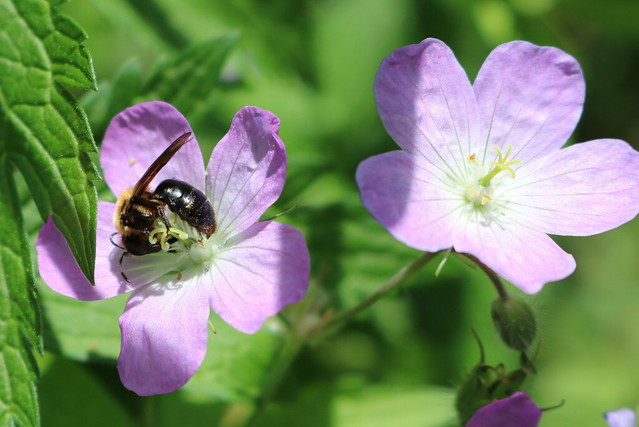
In late April I noticed that the wild geranium section had multiplied since last year. This transplanted wildflower was a solid mass of green leaves.

wild geranium leaves filling the frame

I couldn’t wait for them to start blooming because I imagined a crowded sea of pinkish-purple flowers.

about three dozen flowers, viewed from above

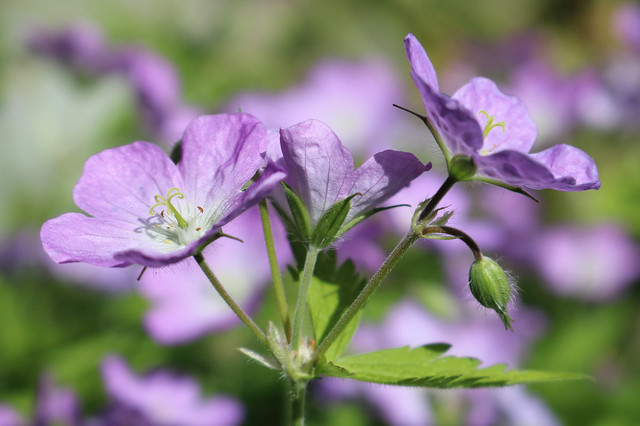
A month later, that proved true. One afternoon, I couldn’t seem to stop taking photos.

a stem with three open flowers viewed from the side, two of the styles visible

three flowers tightly clustered so their petals push against each other

two open flowers and a bud about to open

four blooming on one stem in the foreground, only one pointed toward the camera, with lots blurred in the background

a bee curved around the style

an ant walking near the edge of a flower

four flowers in the foreground, viewed from the side, with many flowers blurred in the background

the entire cluster of flowers, viewed from the top

Plant source: Transplant from my mom’s garden.

More about wild geraniums