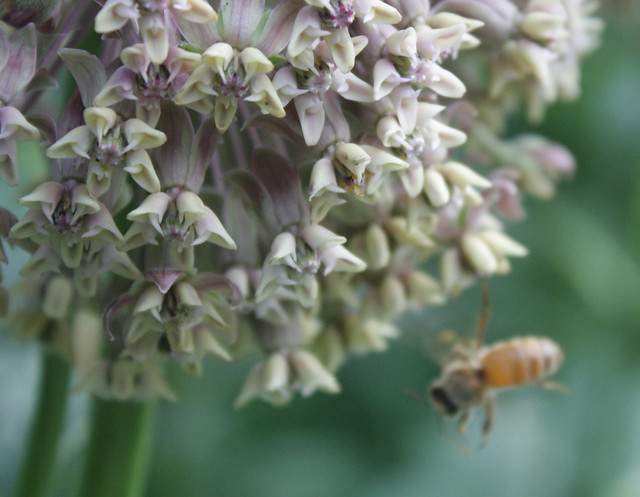
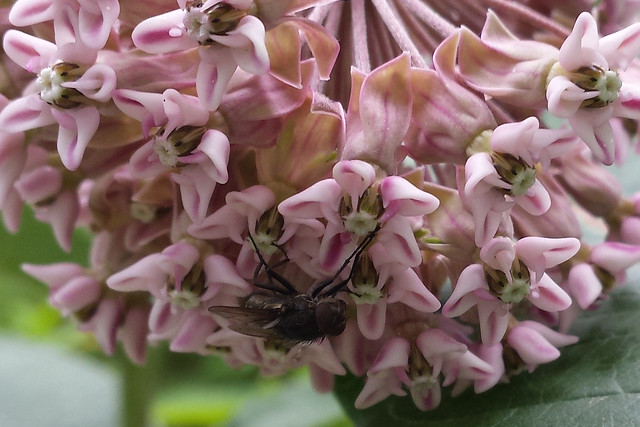
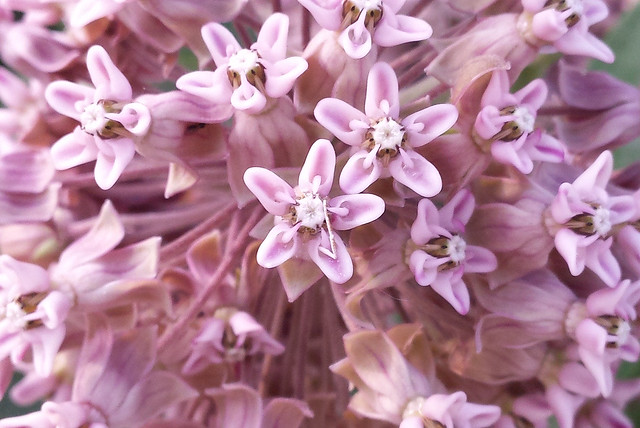
Every summer when the common milkweed is in full bloom, I find insects trapped in its blossoms. They can’t get their legs out because they’re caught in a slit in the flower or on a bundle of pollen called pollinia.

honeybee that appears to be visiting but is stuck on the underside of a cluster

I sometimes see honeybees struggling, like this one from two years ago…

honeybee, out of focus at the bottom of a cluster, hanging by one of its back legs

…and then if they fight enough, they’re often able to get away. I’ve even seen honeybees get stuck, struggle, free themselves, and then immediately get stuck again on another flower.

same honeybee has righted itself, and its wings are beating so fast they look like a blurred circle

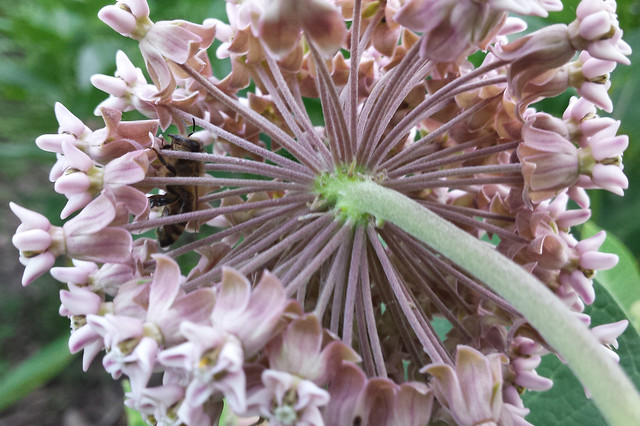
But sometimes, they aren’t able to get free. I assume this one struggled so much that it got turned around and found itself in a cage. When I find them, I help them escape. It may be interfering with nature, but I can’t sit by and watch them suffer.

honeybee inside a blossom, viewed from underneath, and the individual flower stalks look like a cage

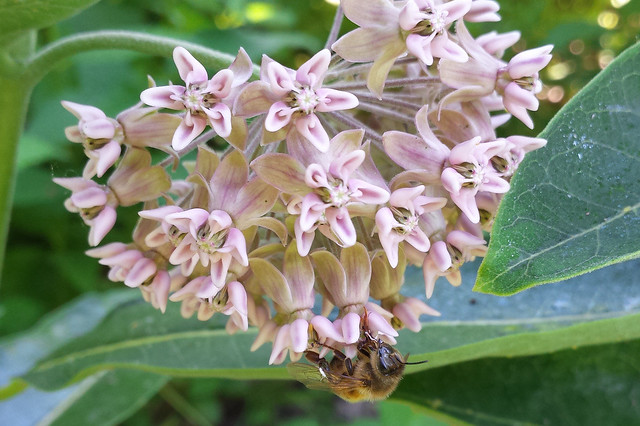
For the insects that can’t escape, if I don’t find in time, that’s how their story ends. I’ve found many dead insects with their legs stuck in the flowers.

honeybee stuck at the bottom of a cluster

Honeybees, flies, and moths are the only insects I’ve found trapped; bumblebees and other bees, as well as butterflies, apparently are strong enough that this isn’t an issue.

fly with its front two legs trapped in one flower and at least one back leg trapped in another

I found these two moths about two feet apart one morning.

small white moths with a bit of brown stripes, one with its wings open and the other with wings straight behind

The one on the left even lost a leg in the ordeal; you can see it in the first picture too.

facing straight into a blossom, with a white insect leg bent in one of the flowers

Learn more about this phenomenon

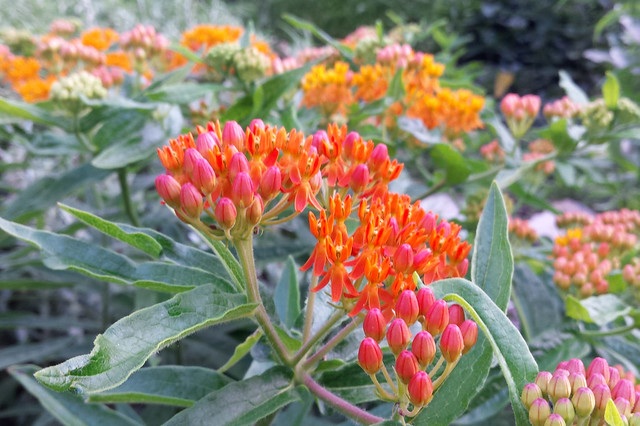
The butterfly weed nearest the street — one big plant that’s been growing for a few years — is two shades of orange:

from above, a nearly round-shaped plant, dark orange flowers on the left, lighter orange flowers on the right

half dark orange, half light orange.

close-up view from the side, dark orange milkweed in focus in front, light orange out of focus in back

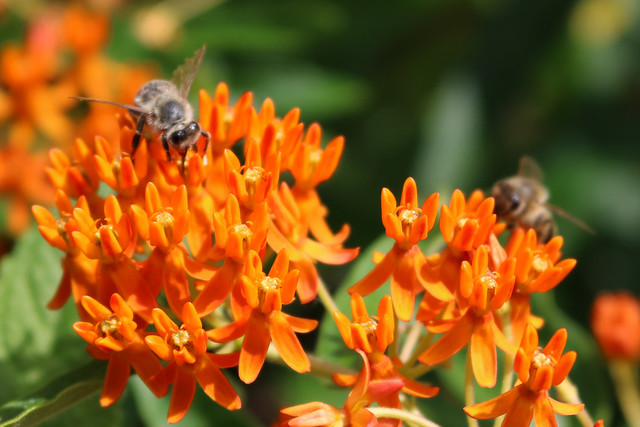
This particular plant (one of at least five butterfly weeds in our front yard) is constantly humming with busy honeybees.

closeup of a stem of dark orange with a honeybee on each side

closeup of a horizontal stem of light orange, with one honeybee on the left and two on the right

I thought about watching for five minutes for an unscientific study of which side the bees prefer. Over several days, I would keep coming back to this flower, and the result wasn’t consistent.

closeup of dark orange, with a honeybee in focus facing down on the left and an out-of-focus honeybee further back on the right

closeup of light orange, with a honeybee in focus facing up on the center-right and an out-of-focus honeybee above facing left

Other bees sometimes make an appearance, too. I don’t know what kind of bee this is.

longhorn bee facing away so the head isn't visible

And being butterfly weed, butterflies sometimes stop by, too. I think this is a type of hairstreak.

small brown butterfly with a small triangle of orange on the bottom of the hind wing and a bluish patch below that

This is the same butterfly weed plant that had six monarch eggs earlier this year.

A little over a week ago, I saw a monarch lay an egg on the butterfly weed, so I kept checking on it.

closeup of one butterfly weed bud stem in the sun, with a white football-shaped egg pointed downward on the left side

Two days later I noticed two more eggs. The next day I noticed a fourth, and I was able to get them all in one photo.

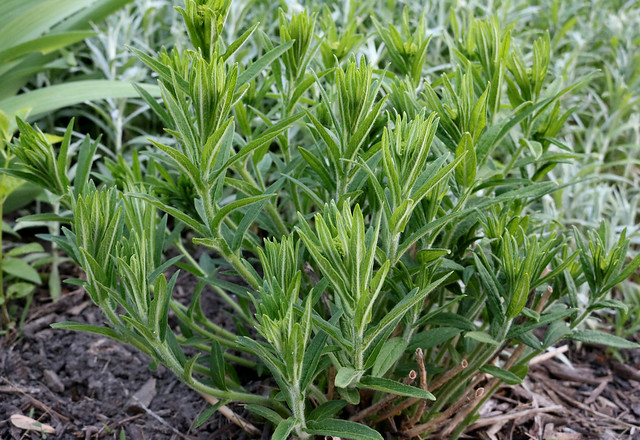
large, full butterfly weed plant with two eggs visible in the front and two practically invisible in the middle

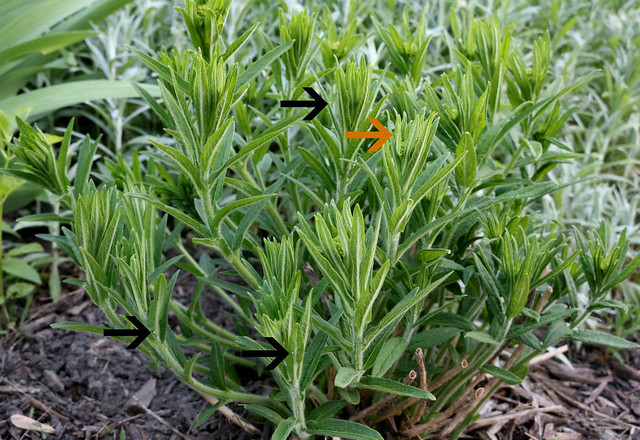
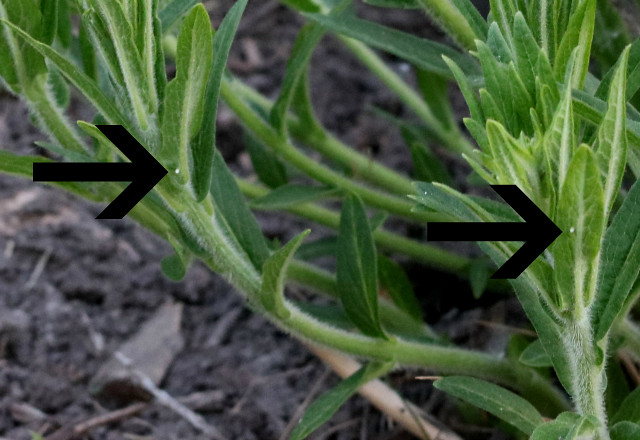
Of course, from this distance they’re nearly impossible to see, so I added arrows to show where they are. The orange arrow is the location of the original egg.

same photo, with three black arrows and one orange arrow pointing to tiny whitish spots

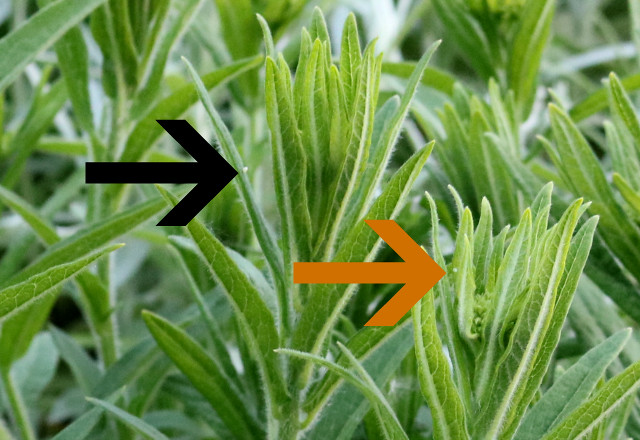
A zoomed-in version of the top two eggs:

a black arrow and an orange arrow pointing to white dots

And a zoomed-in version of the bottom two eggs:

black arrows pointing to two white dots

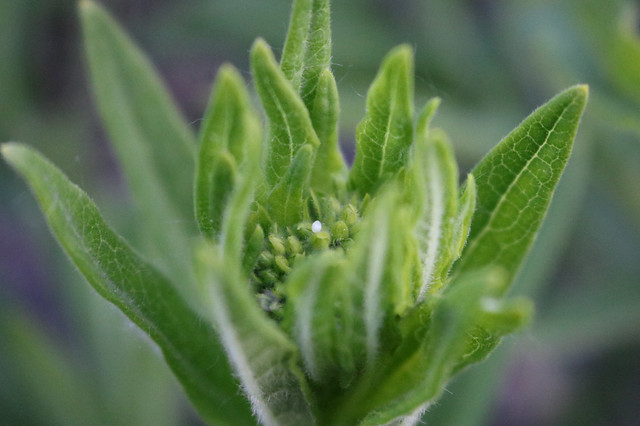
When I leaned in to get a closer look at one of them, I spotted a fifth egg in the crown of one of the stems.

an egg in focus on a cluster of buds, with blurry leaves in the foreground

Then I decided to check the other side of the plant, and I found a sixth egg.

egg on the top left corner of a group of lots of skinny green leaves

Six eggs on one plant. Wow!

I decided to raise two of the eggs (plus one from a common milkweed) inside — partly to simply observe, and partly for a reason I’ll explain in a future post. All three hatched early the same morning, but strangely, they’re growing at different rates.

three tiny monarch caterpillars, one much smaller than the others

It’s a strange time in the garden: even though it’s summer, not many native plants are blooming. The spring ephemerals and even the stretch-season wild geraniums are done, but most of the summer flowers haven’t opened yet. Right now it’s just Golden Alexanders…

small black bee facing down on Golden Alexanders

…and Philadelphia fleabane, which volunteered in the lawn.

dozens of small white flowers with yellow centers, green grass in the background

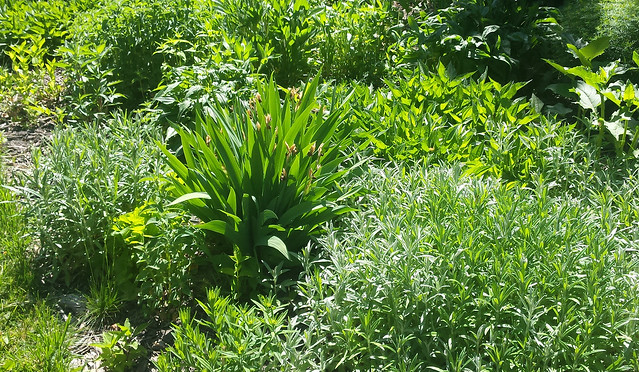
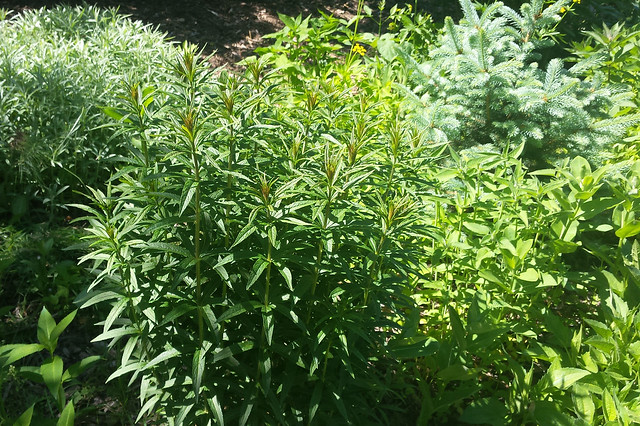
But there’s still a lot going on in the garden. After a lot of May rain and now early June hot temperatures, the plants are looking good, getting bigger by the day. Lots of shades of green, and lots of different textures.

green plants: pearly everlasting, bee balm, iris, blue vervain, butterfly weed, cup plant, black-eyed susan, stiff goldenrod

pearly everlasting, culver's root, bee balm, small pine tree, Golden Alexanders

And the wildlife is buzzing along. Last Sunday, I spotted…

American Lady butterflies and monarch butterflies have laid eggs, which are now American Lady caterpillars

two small black caterpillars crawling on pearly everlasting leaves

and monarch caterpillars.

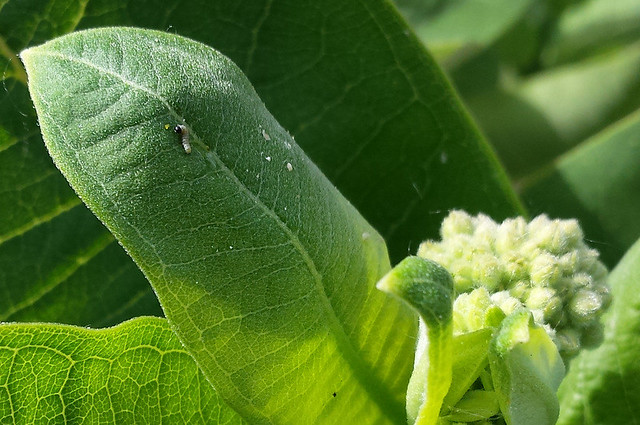
a just-hatched monarch caterpillar curved on a big common milkweed leaf

And more monarchs showed up to lay more eggs.

female butterfly holding onto a common milkweed in an egg-laying pose

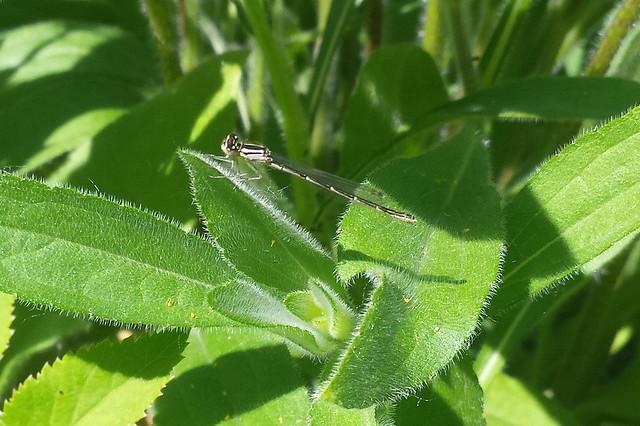
Every time I walked through the garden, I kicked up clouds of damselflies. Dragonflies were busy, too, but I haven’t gotten close enough to get a picture yet.

damselfly resting on black-eyed susan

Aphids and other similar insects were everywhere, so it’s about time for ladybugs to show up to keep them under control.

dozens of red aphids on yellow coneflower

I keep checking for swallowtail caterpillars on the Golden Alexanders, especially since I saw a butterfly last month, but so far I haven’t found any.

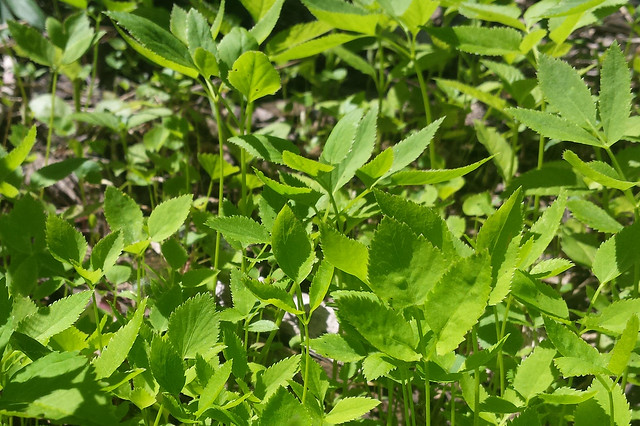
Golden Alexanders leaves

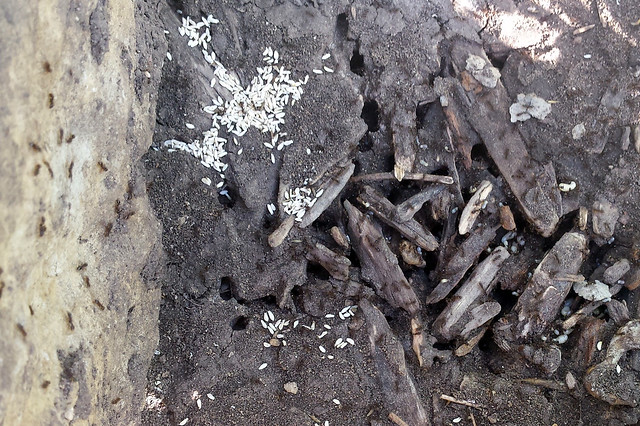
Ants were busy managing their colony under stepping stones.

vertical stone on the far left with some small brown ants, a cluster of white eggs, and many ants crawling on top of a structure of woodchips and holes

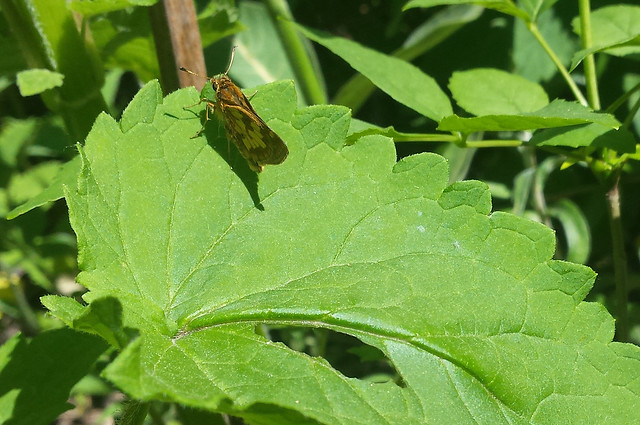
And a skipper butterfly stopped by.

small brown-and-yellow butterfly looking away on a hyssop leaf

So while the first glance is a lull in the garden, the reality is anything but boring.

Remember back in late June when I whined that there were no monarchs in my yet? The very first monarch I saw was this tattered female in mid-July:

butterfly with wings spread and a chunk taken out of its lower wings, climbing on a purple flower stalk

I also saw a few others, like this one two days later that tried and tried to get the unopened joe-pye weed to work before giving up and flying off to the fully open purple coneflower

monarch standing on the center of a flower, its wings folded closed

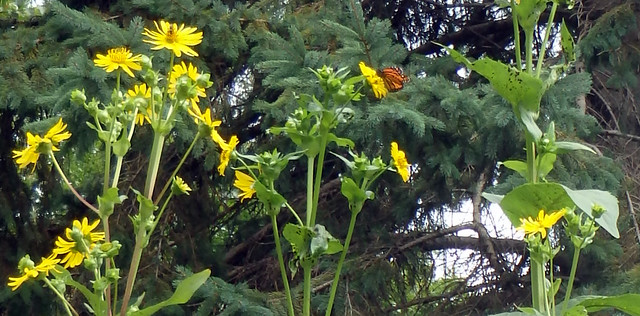
and this gorgeous male two weeks later that spent more than an hour in the garden, splitting time between the now-open joe-pye weed and the cup plant
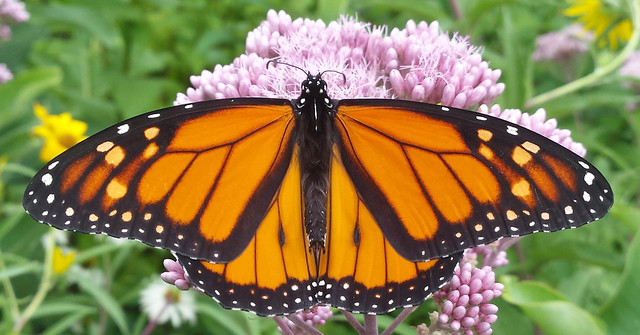
butterfly with its wings stretched wide and the flower in the background, viewed from above

zoomed-in photo of a small orange butterfly from the side, on a yellow flower

and I saw evidence of caterpillars

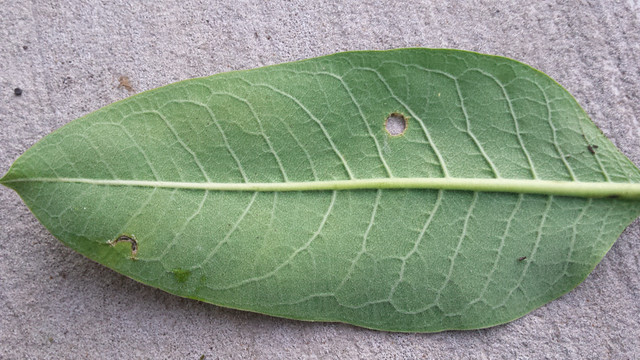
the underside of a milkweed leaf with a tiny crescent-shaped hole in the lower left and a small circle hole in the middle

but until late September, I never saw even one caterpillar in my yard. After last summer’s excitement of fostering 13 caterpillars over two generations, this was disheartening, especially after bad news about the freak March snowstorm that killed many monarchs in their overwintering habitat in Mexico.

But I tried to stay positive with news from real friends and internet friends about monarch and caterpillar sightings in the area, even though I was seeing fewer butterflies than last year. The reports seemed to be more numerous as the migration generation was growing.

right-side view of a butterfly with wings closed, climbing on joe-pye weed buds

As the season was winding down, I had a blast at Ney Nature Center in Henderson, “hunting” monarchs at sunrise to tag them for their journey to Mexico. There were far fewer sleeping in the trees than the staff anticipated – in fact, we only saw one (and it got away). I then spent many hours walking through the prairie and saw quite a few monarchs

butterfly in a large clump of light-purple asters, with other flower seedheads nearby

and my first-ever viceroys! Such a convincing monarch mimic. This butterfly is much smaller than a monarch, though that’s not obvious unless comparing them side-by-side. The biggest visual difference is that viceroys have a black line through their lower wings, while monarchs do not.

viceroy butterfly with its wings unfolded, viewed from above

In the end, I caught five, though two escaped, so I tagged three.
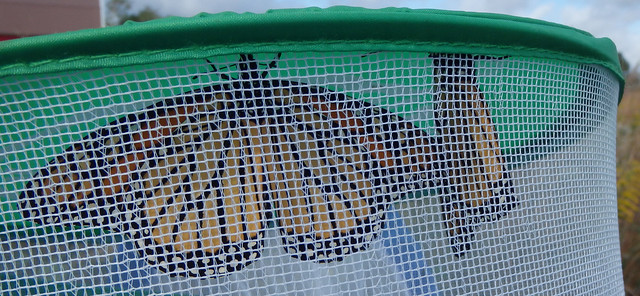
two butterflies inside a mesh monarch cage

fingers holding a monarch's wings closed, with a small sticker tag on the lower wing

And then – on the first day of autumn – I found a caterpillar in my front yard, moments away from beginning its transformation. I brought it inside, where it created its chrysalis. It stayed that way for two weeks, to the point where I was getting worried that the process had failed. But then, the green darkened to show wings forming inside.
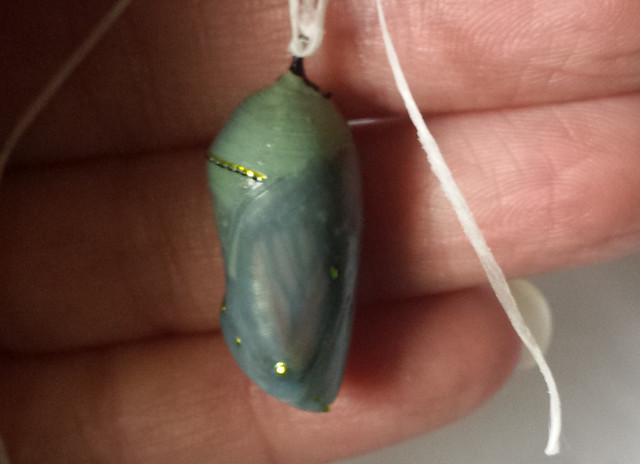
a hand holding a chrysalis with the top still green, viewed from the side with one wing somewhat visible

The butterfly emerged the next day, but I wasn’t home until the evening and so I decided to keep him inside overnight. Then next afternoon he was so antsy to get outside that he climbed out of the (nonsecure) mesh cage (really, a laundry container without a top). Fortunately, I had anticipated this and covered it with a towel, so he didn’t escape. But the release day was chilly – barely 50 degrees even though it was sunny – and I wondered if he felt tricked when I took him outside; he was suddenly in no hurry to move.
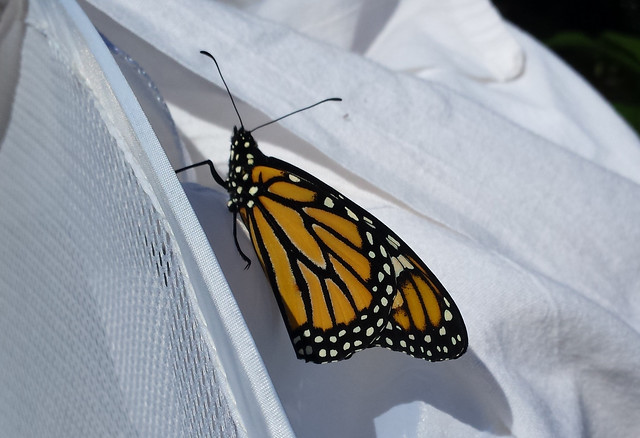
butterfly sitting on the top of a white mesh laundry hamper

After I let him climb onto my finger, he flew right up to a tree, like all of last year’s monarchs did, but this one perched in the shade. I knew he was not going to warm up there, so when he was still there an hour later, I climbed up a stepstool and took him down to find a better spot.

monarch hanging from a leaf of a birch tree, viewed from the right side

The backyard was somehow much warmer, so he rested on my finger for a few minutes while his wings warmed up, and then away he flew.
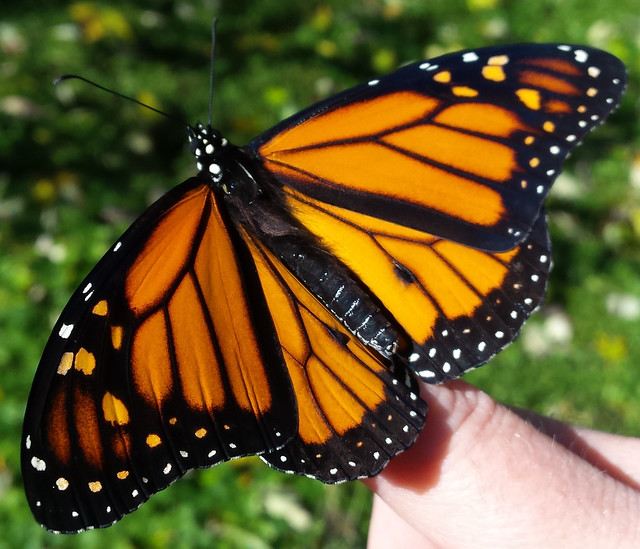
butterfly with wings unfolded, resting on my outstretched finger

I’m thrilled to find out that our common milkweed still attracted monarchs late in the season, when it didn’t look so good anymore. This year we added three other types of milkweed as small plants in the backyard garden, and hopefully 2017 will be the year the swamp milkweed seeds take off, too. The more variety we can provide for summer-long habitat, the better.