


I’ve noticed the persistence of plants a lot this season – flowers growing in spite of their less-than-ideal location or after being damaged.
We’ve always had weeds growing in the the cracks in the driveway, but this year we’re getting flowers, too.
Purple coneflowers have done the best – several flowers that the bees have found, even though they’re three feet below the rest of the garden:

There are many areas with hollyhocks, though they aren’t flowering yet:

I’m not surprised that feverfew is growing in the driveway – it spreads very easily:

Wind has been a force in our garden this year, with many plants blown over after one storm or another.
Milkweed gets tossed around a lot, and it always rebounds after about a day.
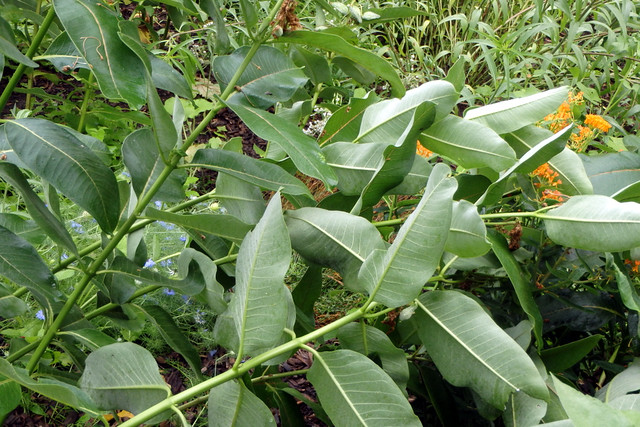
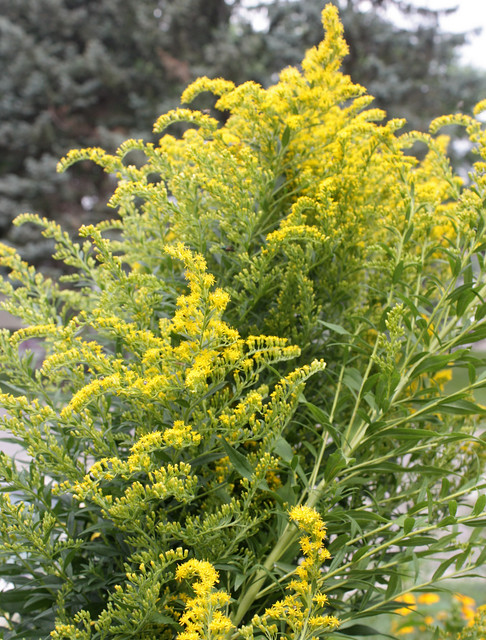
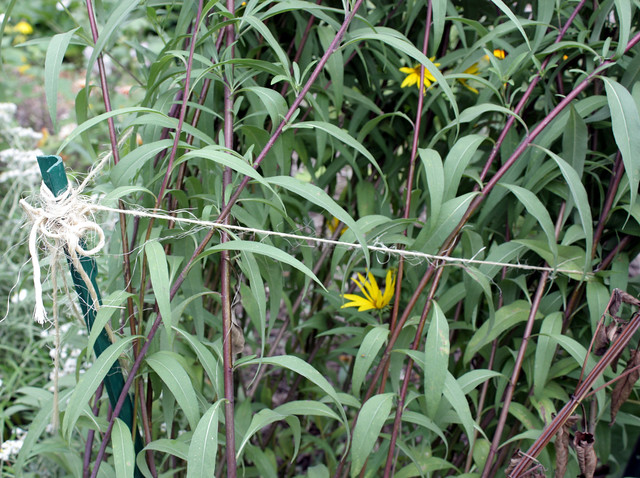
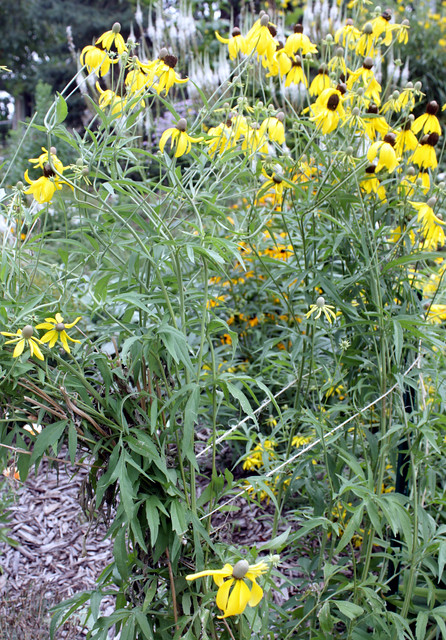
We’ve staked the taller plants, and they’re still growing even if their stems are not straight. These first three have been bunched tighter than normal due to the ties.
Goldenrod:
Tall sunflower:
Yellow coneflowers:
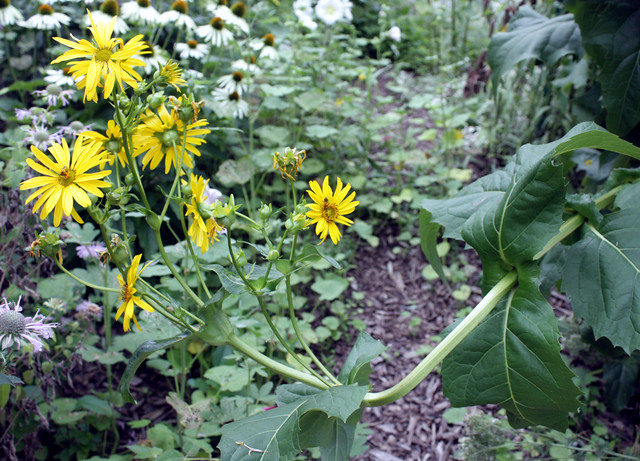
The cup plant is the best example of this. During a particularly bad thunderstorm we lost three stems, but the rest have been corralled – except one that slipped past the twine and is growing sideways:
If you know I’m talking about milkweed plants, then you know who “they” are: monarch butterflies. And I’m here to confirm the statement that “if you plant it, they will come.”
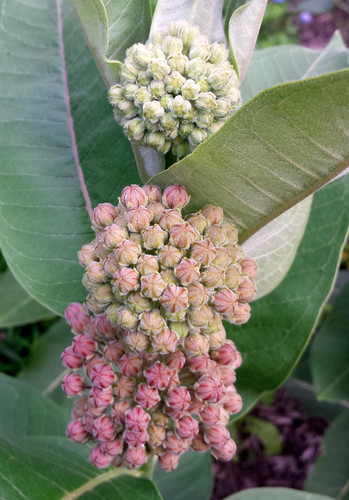
Last year we had a few milkweed plants, and this year that turned into at least 35, with more still sprouting even into July. Bugs love it.


And though we’ve seen monarchs in the past, I had never found any caterpillars. Until now.
There was evidence on more than one common milkweed plant – chewed leaves as well as frass…


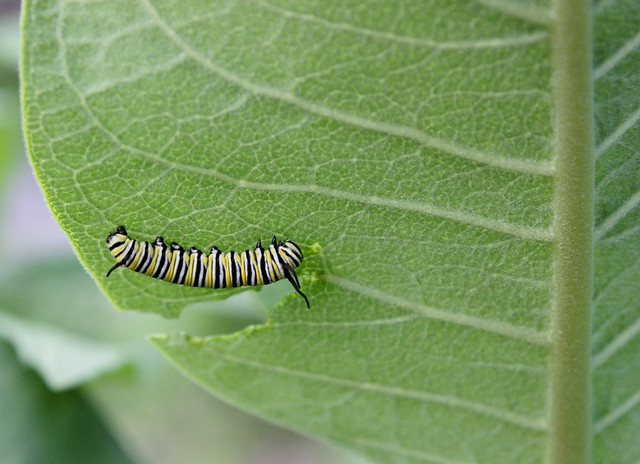
… but no caterpillars were spotted until I saw a photo from a new Instagram friend that prompted me to look again. That very night I found a medium-sized caterpillar…
and then I found a newborn:
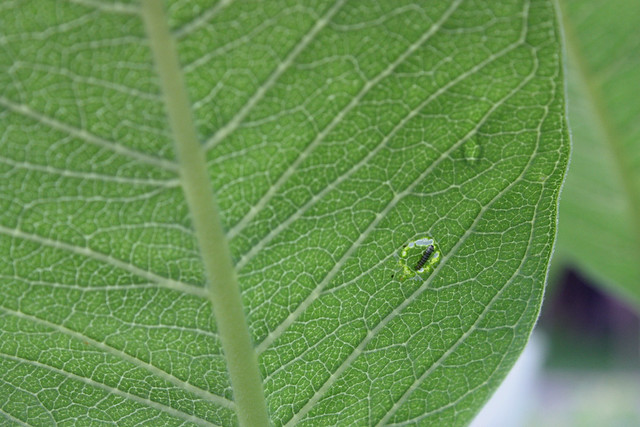
The next day, I didn’t see those two again, but I did find a giant one 20 feet away. Of course, given the small size of this milkweed, everything looks giant in comparison.
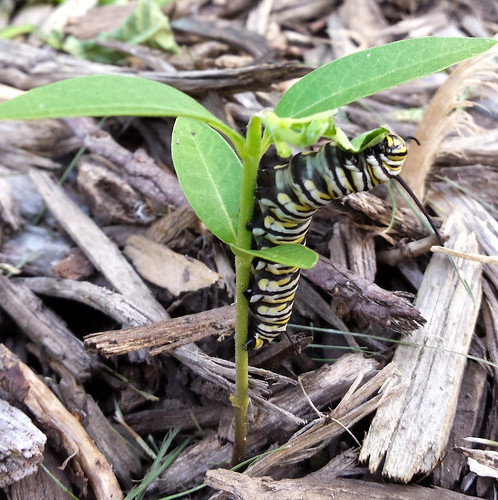
And then I saw a medium-sized caterpillar walking through the garden nowhere near milkweed.
I picked a leaf for it and it stuck around for another day before I didn’t see it again.
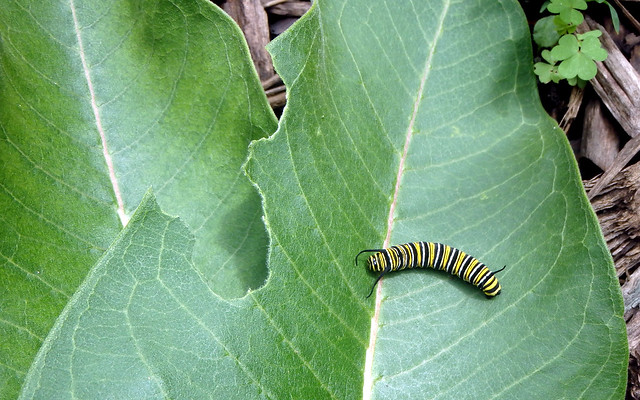
But then I noticed one on the underside of a leaf. I decided to keep my eye on it.

And sure enough, the next day it was in the “J” formation, signaling that it was about to begin its transformation.

Later that day it was a chrysalis! It was so well camouflaged that I almost certainly wouldn’t have seen it had I not noticed the caterpillar earlier.

I checked it morning and night for days. The “monarch lifecycle” websites say that butterflies emerge after 7 to 10 days of the chrysalis stage. Seven days passed, then ten. I was losing hope until the 12th morning, when I noticed orange and black starting to show through the green.

And then we had to go out of town for 4th of July celebrations. When we returned, the chrysalis was empty.
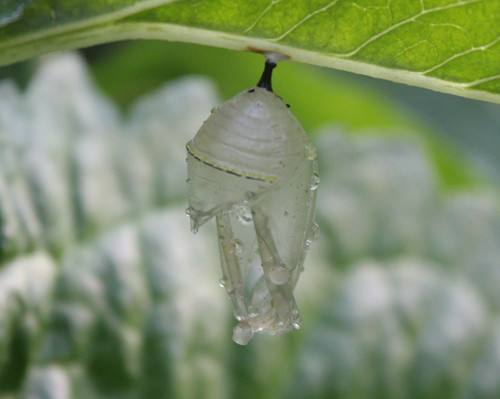
I was sad to have missed it, but I’m just glad that it was successful! Later that evening I noticed a monarch flying around our neighbor’s backyard – and I’m choosing to believe this was “our” monarch, making sure I noticed before it flew away.


It’s pollinator week, which celebrates the bees, bugs, and birds that help about 90% of flowering plants reproduce, including about one-third of the food we eat.
That’s a good excuse for me to spend a lot of time poring over the hundreds of photos I’ve taken already this year to see how many insects I can identify. (I’m not good at bird photos.) Each year seems to bring a greater diversity of bugs to our yard, perhaps because each year we’ve been removing more grass while adding more native plants.
I had to cross three insects off this list because while they may be beneficial, I just learned that they’re not pollinators:
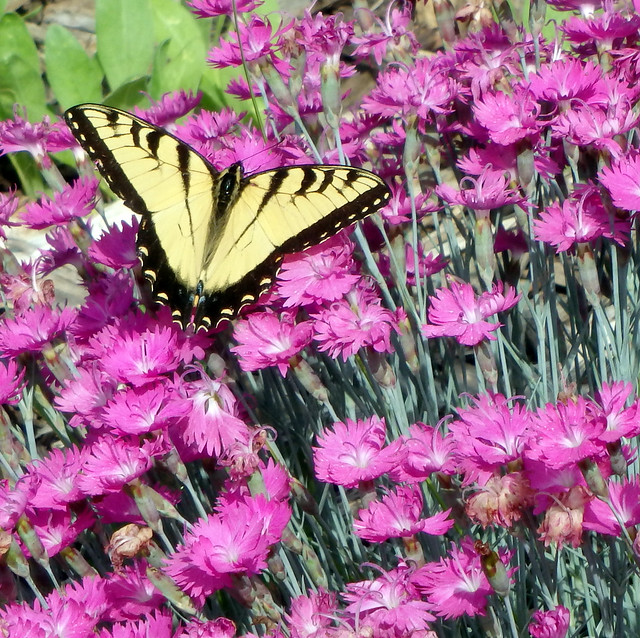
But many of the flying creatures in the garden are pollinators. Like this Eastern tiger swallowtail on dianthus / pinks:
I am fascinated by these teeny flies that mimic the look of bees. I first thought they were bees and searched and searched for their identity before I remembered that some flies look like bees, and sure enough, these heads look like fly heads. With that clue in hand, it took about 10 seconds to find the correct ID, syrphid flies (or hoverflies).
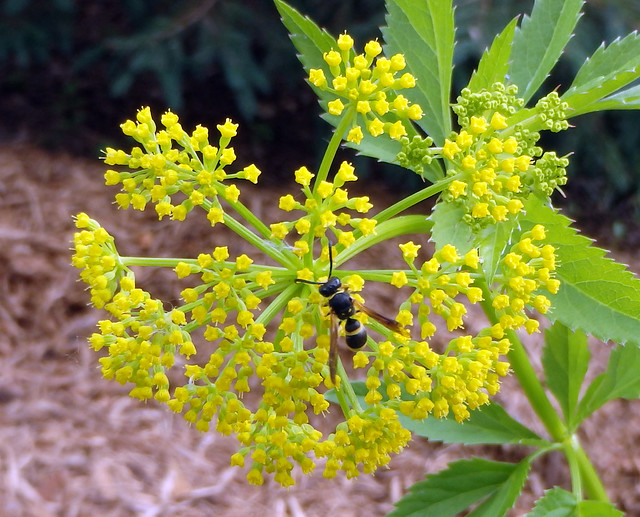
A bigger syrphid fly (Ceriana vespiformis) on Golden alexanders… or is it? The body looks like ceriana vespiformis, but the antennae look like a potter wasp:
About two weeks ago there were up to a dozen ladybugs crawling all over (and mating on) the yarrow at any given time. At the same time there were hundreds of aphids. Now the aphids are gone (no doubt due to the large presence of both ladybugs and damselflies) and now the ladybugs are gone, too.

The most popular plant so far has been the baptisia. It has been a, ahem, hive of activity.


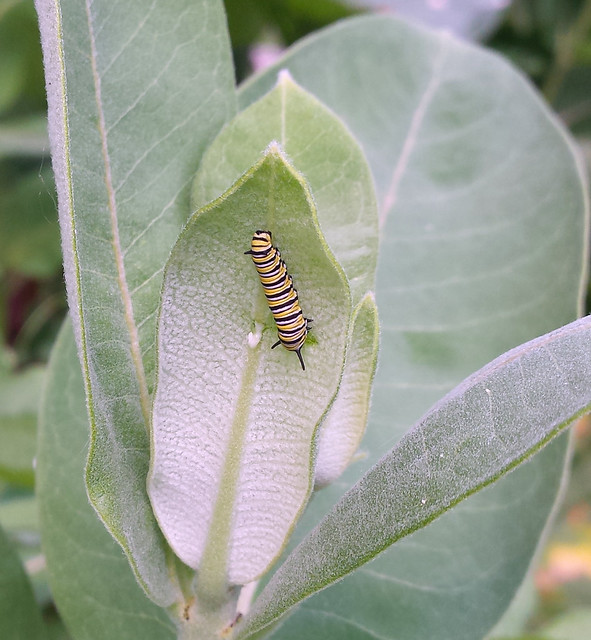
There’s no evidence yet of monarch caterpillars in our yard even though there are at least 35 common milkweed plants about to bloom, so I will share this caterpillar I saw in a friend’s yard on Sunday:
Welcome to summer! It seems like a new flower starts blooming every day – and on most days, more than one new flower. Last week’s multiple inches of rain helped that process immensely. Here are the most recent blooms in our garden.
Golden Alexanders:

Two kinds of dianthus / pinks:

Purple smoke wild indigo:

Spiderwort:

Trollius “new moon”:

“Tiny monster” geranium:


 crystallofolia