When I hear the term “spring babies,” I usually think of lambs, chicks, and piglets on a farm. Our yard has hundreds of baby plants this spring – flowers spreading beyond their original locations.

There’s a saying: the first year they sleep, the second year they creep, the third year they leap. Some of these are second years and some are third years or beyond, and I’m seeing a lot of creeping and leaping.
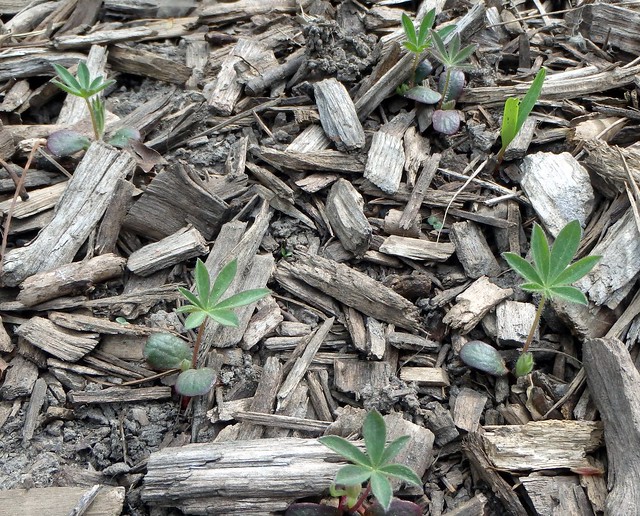
six lupine seedlings

The pearly everlasting is creeping earlier than expected. What started as two small pots two years ago has expanded exponentially. Last year we divided the original clump into four, and this year all four are bigger – with offshoots in about 15 additional spots within 15 feet of the original. It’ll be fun to see them blooming, but I will need to trim them before they go to seed this fall so the entire garden isn’t pearly everlasting next year.
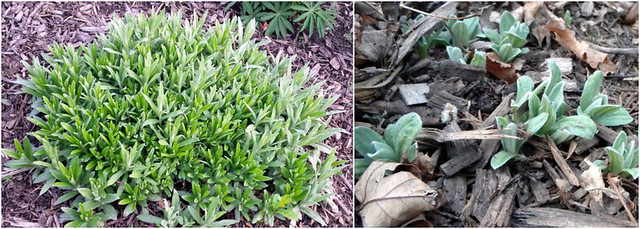
an enormous clump of pearly everlasting, and seedlings in another area

Star of beauty: a perfect example of a third-year creeper. If I am remembering correctly, this one was planted in the fall of 2011. It has looked nice every year and has produced lots seeds, but it didn’t spread. Until now. I’m letting most of them grow around the “mother” plant, though I moved some to a second location. I will need to thin them out further because all of those little green shoots in the upper left corner are star of beauty, too.
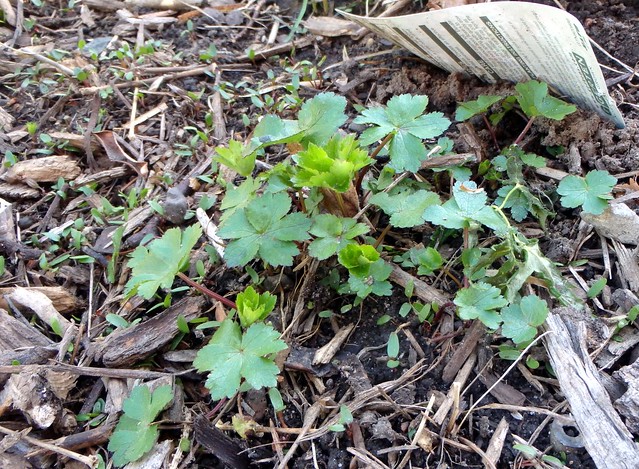
star of beauty seedlings

Tall sunflower: Last year’s seven or so stems are now about seventy. I’ve already divided it twice and moved the extras to two other locations, and there are still way too many for this one spot.
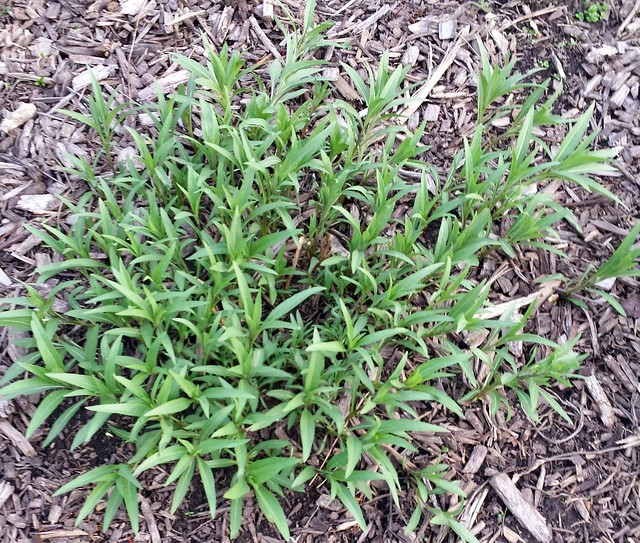
sunflower seedlings

Lupine: there are dozens of these little “palm trees” all over the front garden.
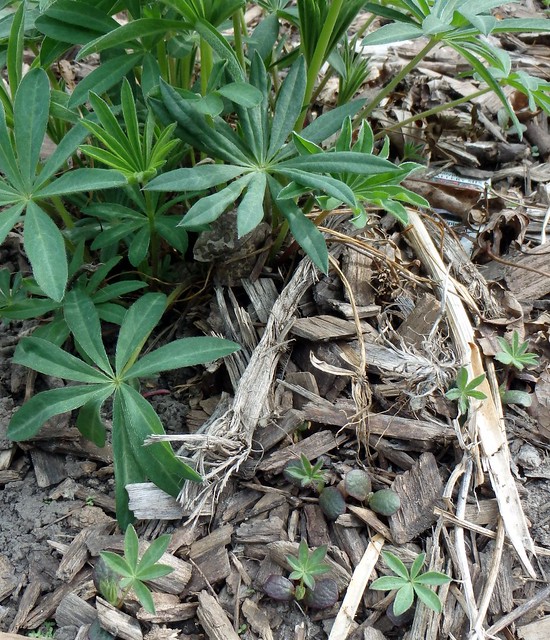
lupine seedlings next to the mature plant

Yellow coneflower is spreading rapidly near the main plant – even in the driveway, and taking over the candytuft.

yellow coneflower seedlings

I could spend an entire day pulling out the many tree seedlings:

four tree seedlings next to regular plants

I generally have an “innocent until proven guilty” policy with plants: I’ll let them grow until I identify that they’re weeds. There are so many of these growing in a spot where I planted blue vervain seeds last fall that I first thought that’s what they were. But they’re already flowering at their very short height, so I’m afraid they’re not blue vervain after all. It will be a big task to pull hundreds of these seedlings, if I can’t identify them soon.

dozens of small unknown seedlings

Back to the wanted flowers. Hollyhocks make me happy, and it looks like there will be a lot of new ones this year.
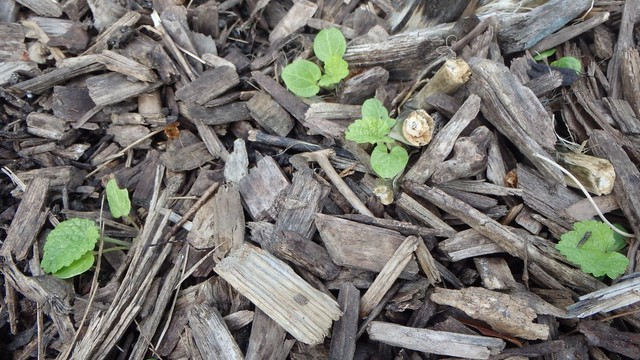
four hollyhock seedlings near an old hollyhock stalk

Snowdrop anemone: I liked this plant so much that I bought a second one last year. The older one, near the front door, has tripled in size. And a seed head must have flown to a far corner last fall because there are dozens of babies growing all around the false indigo.

snowdrop anemone seedlings around the mature plant, and around a false indigo

Milkweed: I didn’t intentionally plant these; they were a happy result of last year’s three (supposedly failed) milkweeds. It looked so bad that I pulled it before it seeded – or so I thought. At last count, there are 35 new plants, with more popping up pretty much every day. Unfortunately they don’t transplant well, or I would move several to other locations around the yard. Hopefully the monarchs find them.

eight milkweed seedlings and dozens of tree seedlings

Early spring is when all of my favorite wildflowers bloom. My garden has a few – hepatica, spring beauty, trillium – but the best place to see nearly every Minnesota ephemeral is the Eloise Butler Wildflower Garden. I visited on a sunny afternoon three weeks ago.

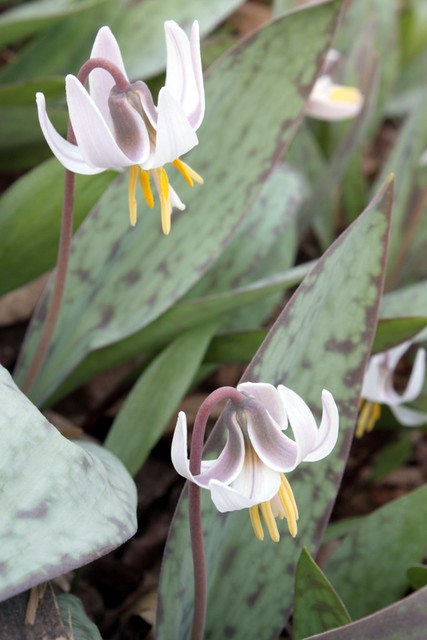
White trout lily:

side view of two white trout lilies

and yellow trout lily:

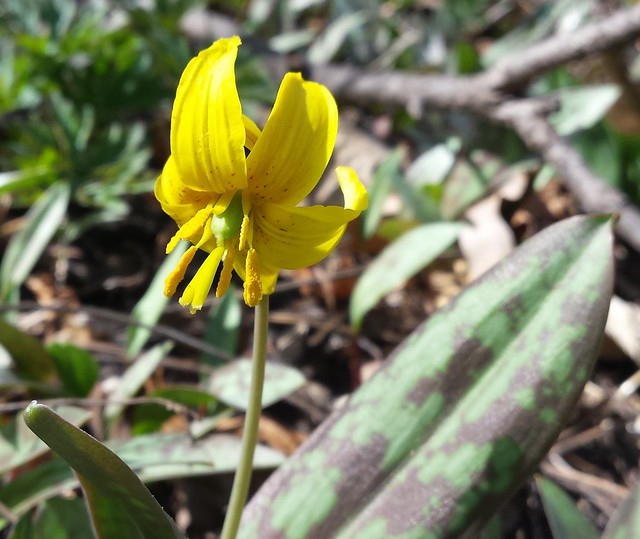
looking up at one yellow trout lily

Wild ginger’s shy flower:

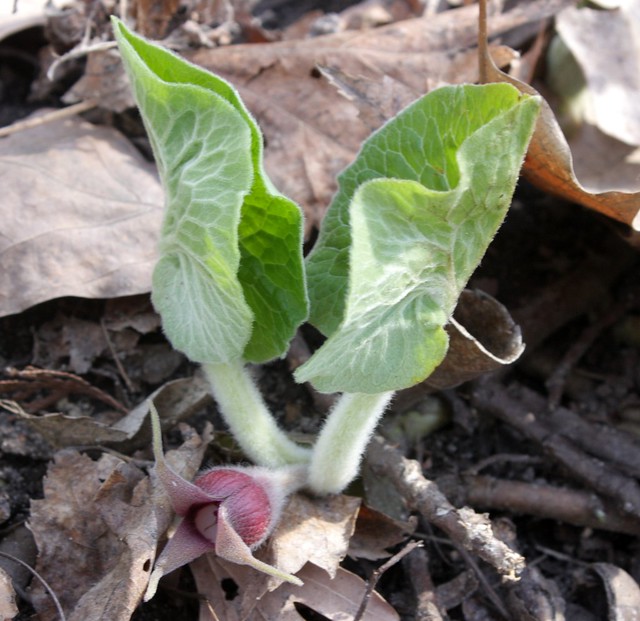
one wild ginger plant with a dark red flower

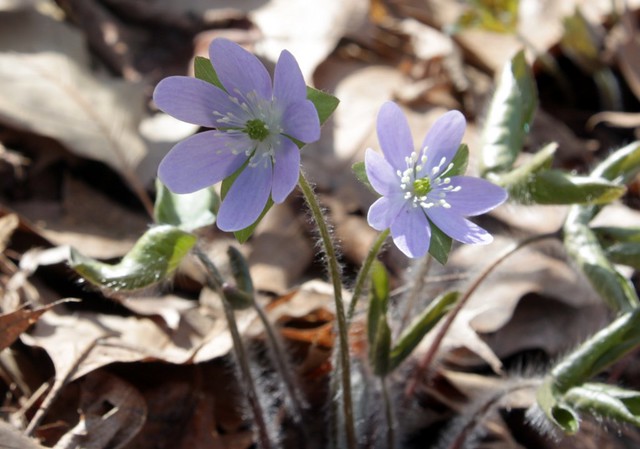
Hepatica rising out of the carpet of oak leaves:

two purple hepatica

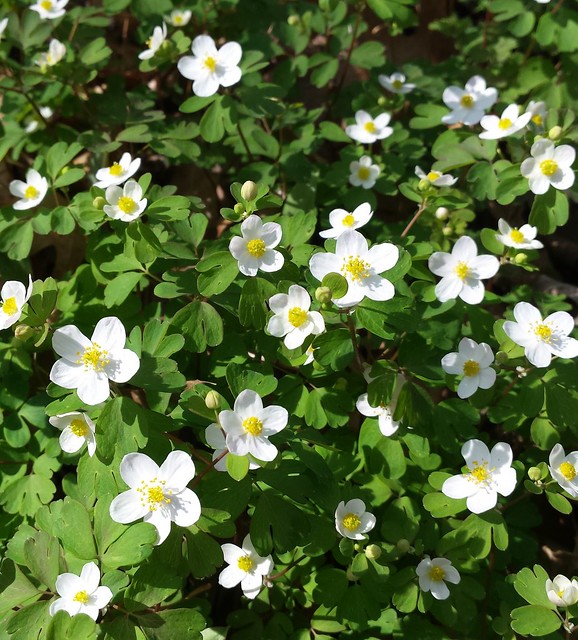
False rue anemone:

a large patch of false rue anemone in the sunshine

Bloodroot is my absolute favorite, possibly because they’re so delicate and so short-lived. This time I decided to take video of flowers blowing in the wind, with birds singing and bees buzzing in and out:

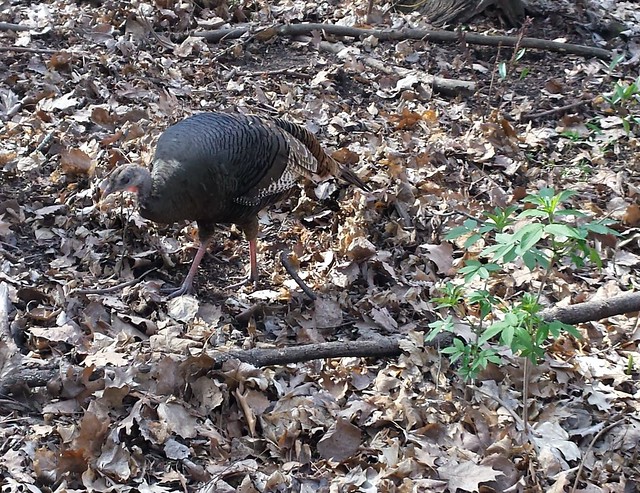
There was even a turkey roaming around, not at all concerned that I was watching:

a turkey that blends in well with the brown background

Earlier this week, I returned to see what’s happening now. There are many more varieties, and the brown groundcover is quickly being replaced by new, green growth.

The bloodroot I filmed is long gone, the leaves growing large but being overtaken by invasive periwinkle:

bloodroot leaves in a large patch of periwinkle

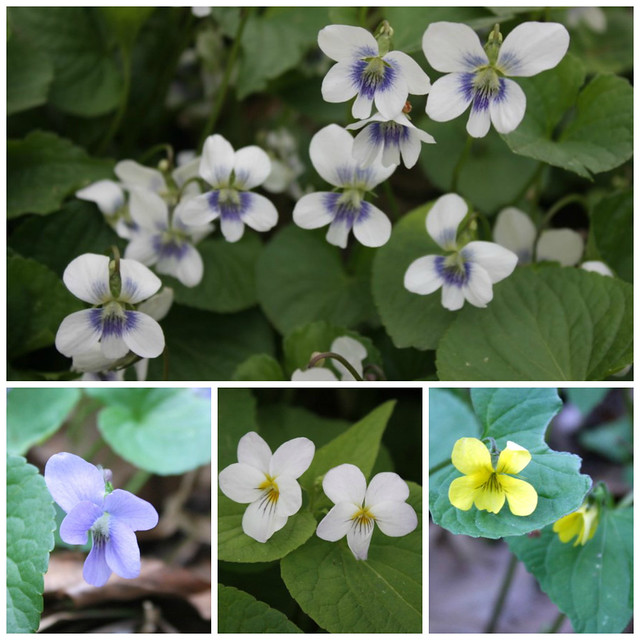
Many varieties of violets:

four different kinds of violets, names unknown

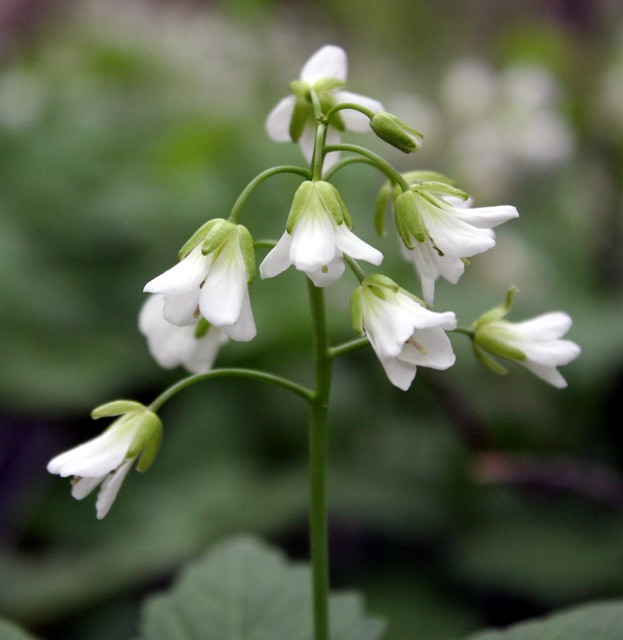
Two-leaved toothwort:

the top of one two-leaved toothwort plant

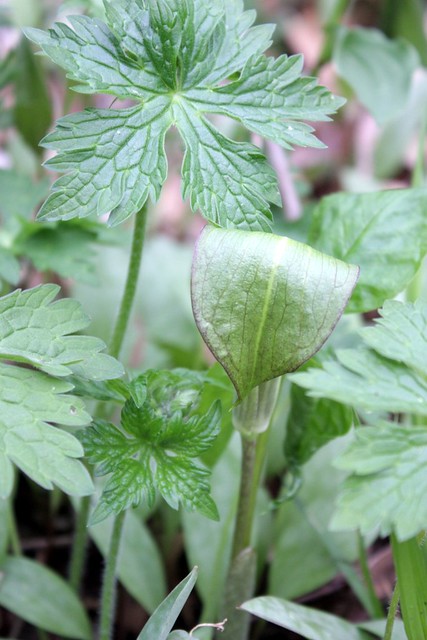
I was wondering whether there are any jack-in-the-pulpits and literally before I finished that thought, I found one hiding among the leaves:

jack-in-the-pulpit surrounded by wild geranium leaves

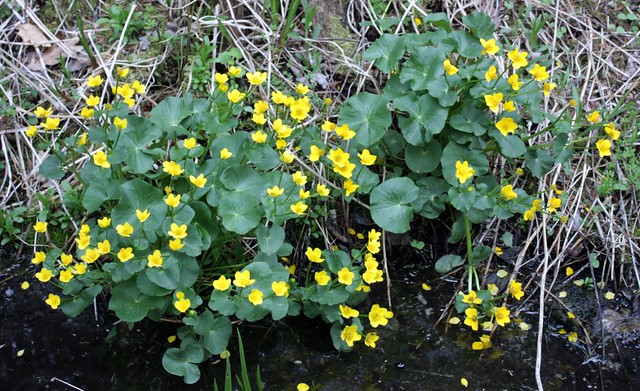
Marsh marigolds:

several marsh marigold blooms along a stream

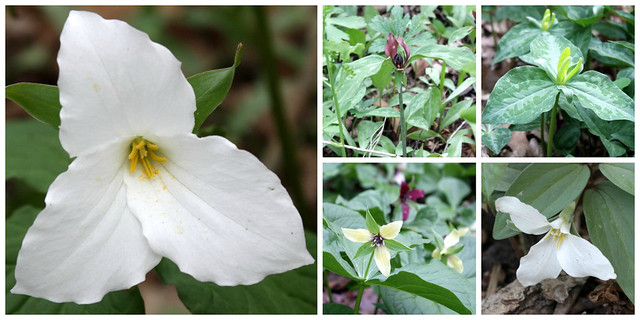
Several kinds of trilliums:

large trillium, prairie trillium, yellow trillium, a different yellow variety, snow trillium

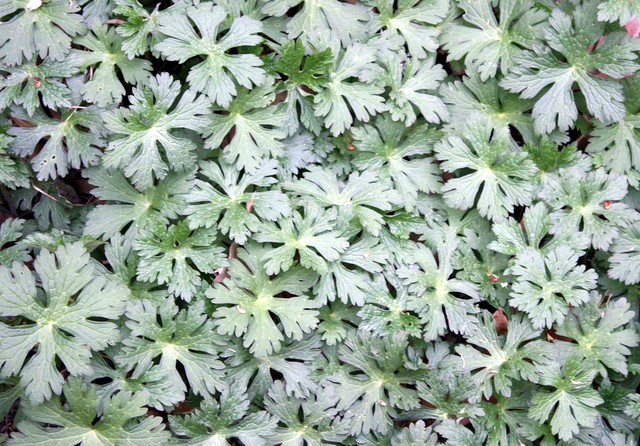
And coming soon: lots of wild geraniums.

about a hundred wild geranium leaves

My husband and I were out of town today when a strong thunderstorm blew through. We found plenty of hail still remained when we returned at least an hour later:

hail scattered on the ground around a gutter

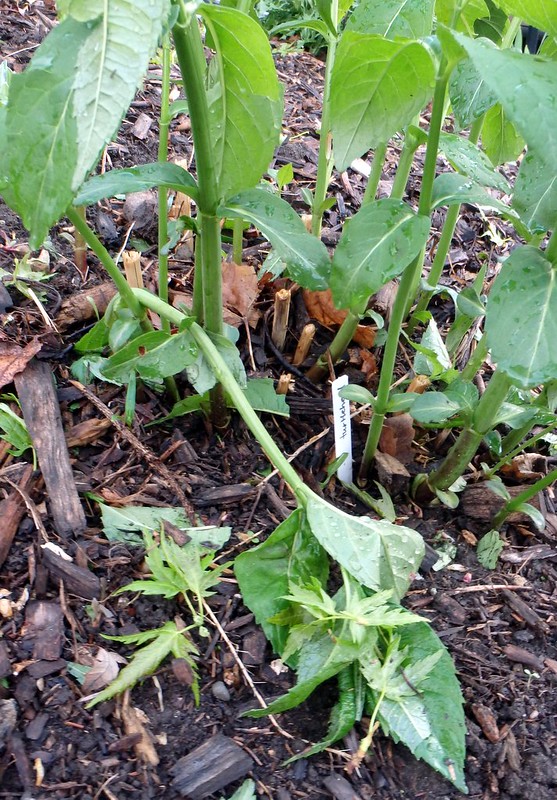
Some of our plants were injured, mostly the taller plants like this turtlehead:

one bent turtlehead stem amid many standing stems

For the most part, the damage appears minor, limited to just a few broken leaves.

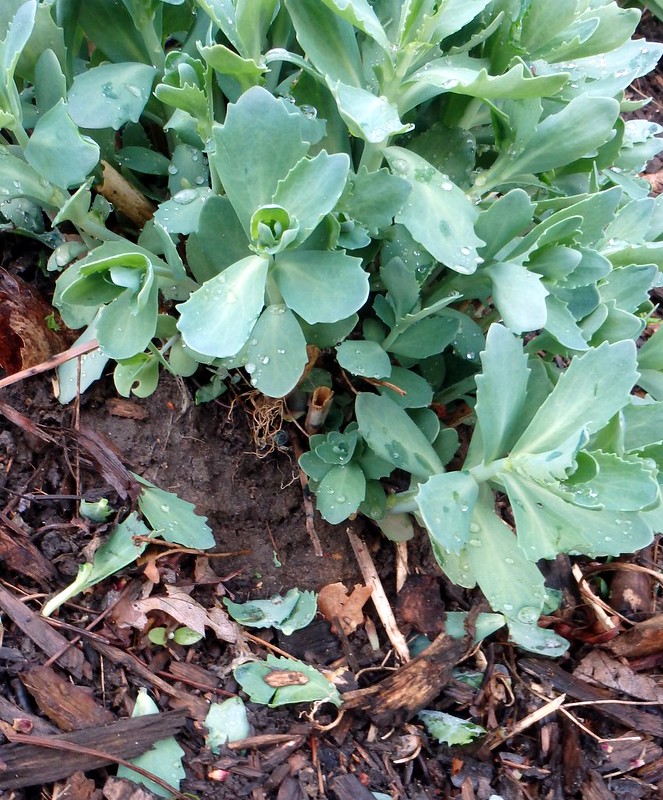
autumn joy sedum with a few broken leaves on the ground

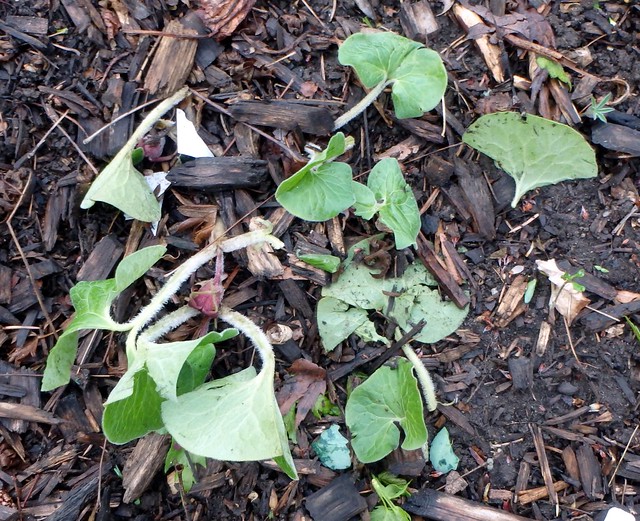
This wild ginger, a single leaf for many years, finally spread and flowered this year but now doesn’t look so good:

several leaves broken off wild ginger

Trillium sessile – standing tall this morning, then looking sad after the storm:

two trillium sessile - standing upright, then bent

Fortunately, it looks like most of the damage is superficial. I’m hoping that all of them will bounce back yet this spring.

We may have had snow just a week ago, but most daily temperatures lately have been warmer than normal, in the 60s and 70s. Flowers are starting to wake up for the spring.

emerging wild geranium leaves
Wild geranium


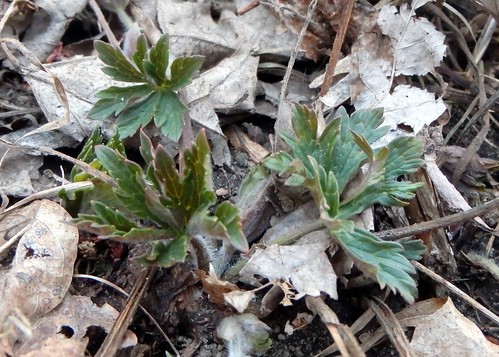
one cinquefoil bud with lots of leaves
Cinquefoil, which is supposed to bloom from mid- to late summer


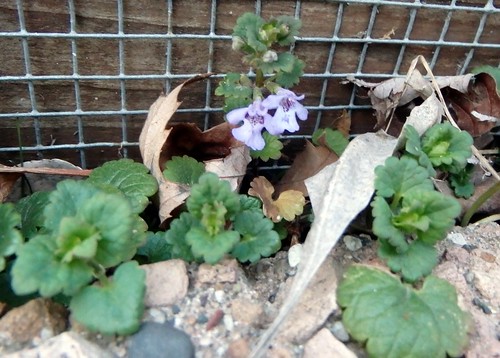
blooming creeping charlie
Creeping charlie, which was pulled out immediately after this photo


tiny New England aster leaves
New England aster appears to be making a comeback after failing last year!


two trillium sessile plants
And trillium! If these two bloom, they will be the first successful trilliums in our yard.

Our beautiful white peonies with flecks of magenta − “festiva maxima” − grew quickly this year.

festiva maxima peony in bloom

They were nearly as tall as I am, but before we could get a picture to compare, we’ve had storm after storm for days. Lots of rain, rain, and more rain − but the wind really took its toll.

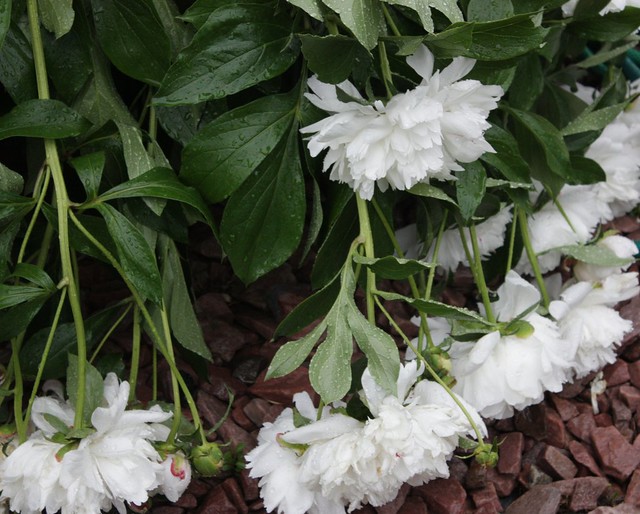
rain-soaked peonies

This was the first year we had planned ahead and set up a support cage, which worked well until the weekend. Now, all of the stems except one are bent at the top of the cage. Next year, we’ll need to find a taller one.

wind-blown peonies bent to the ground

Plant source: They came with the house