Today is so bright and sunny that when I first woke up, I had a wild impulse to open the windows and let in fresh air. And then I looked out the window and saw the snow and realized that the thermometer said it was one below zero.

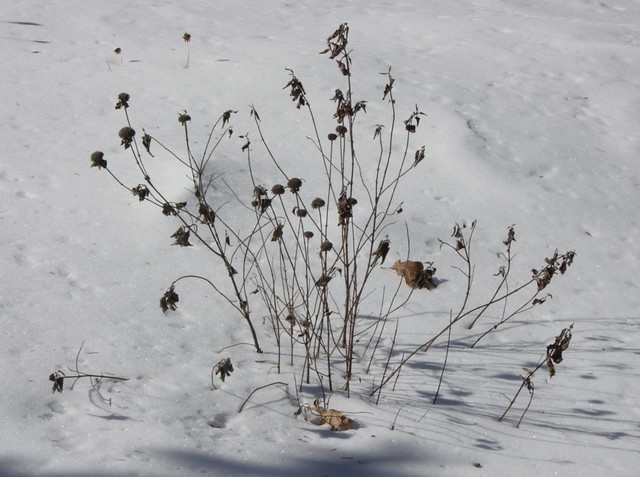
bee balm stems in winter

tall stack of books and magazinesIt’s the time of the year when it feels like winter will never end, when even though we’ve had less snow than normal, it’s been bitterly cold for weeks. So it’s a great day to instead stay inside and remember last year’s garden.

I planned today’s activity in advance, way back when the flowers were blooming and the days were long and warm: it’s finally time to look at the flowers I pressed at the end of last summer. They’ve been sleeping under a tall pile of books and magazines for several months.

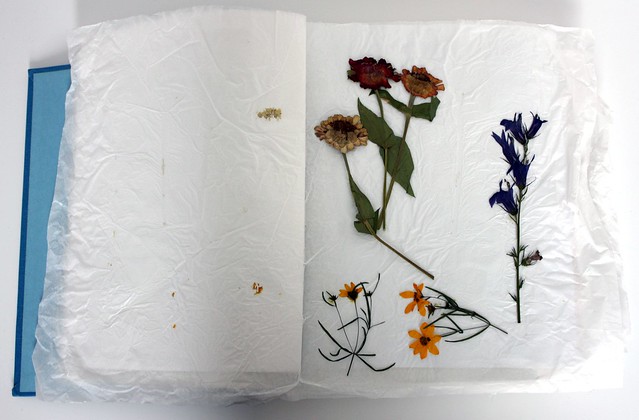
flowers pressed between book pages
Zinnia, lobelia, and coreopsis after being pressed in tissue paper in a textbook


cosmos from the top and cosmos from the side
Cosmos


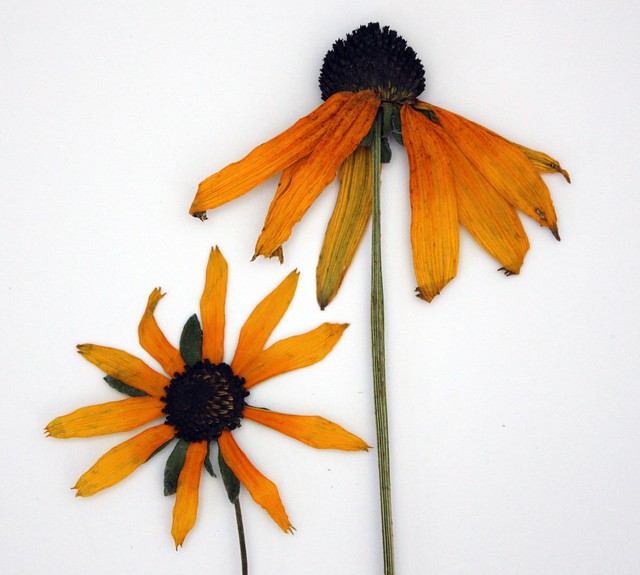
black-eyed susan
Black-eyed susan


calendula from the side and calendula from the top
Calendula


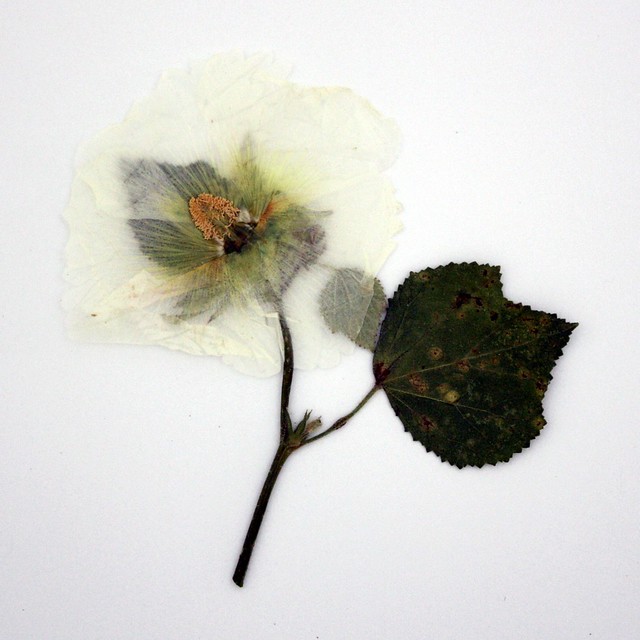
white hollyhock
This white hollyhock is now translucent


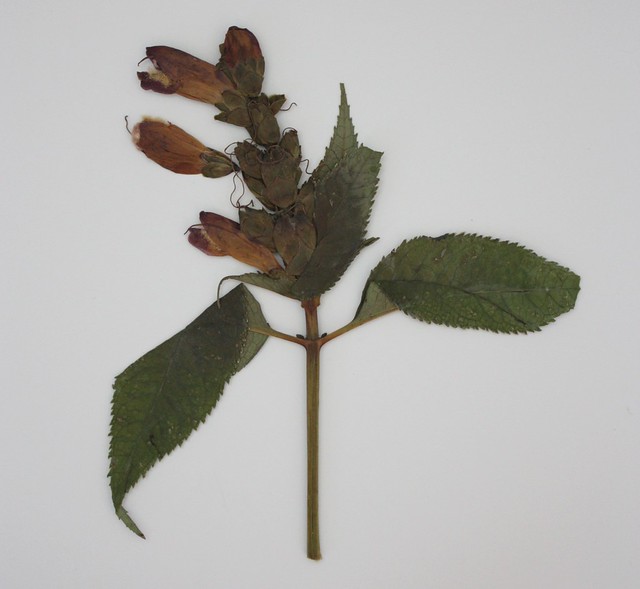
turtlehead
Turtlehead


back view of the same three zinnias
The backs of these three zinnias are even more interesting than the fronts because of the layered bracts


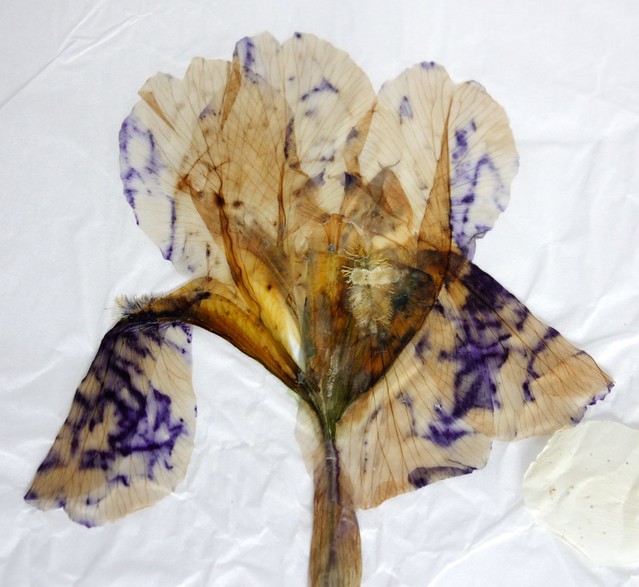
iris
This iris (pressed during the spring) has lost most of its color


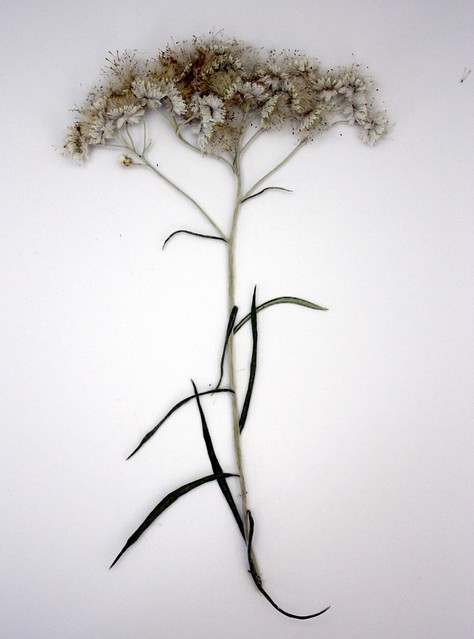
pearly everlasting
This pressed pearly everlasting is my favorite because of all of the seeds. Moving it makes a mess!


Looking at these pretty flowers is a great reminder that seasons change and soon 2015’s first plants will be poking out of the ground. Spring officially begins in only 20 days.

So there were some failures in 2014. There were even more successes – perhaps due to a lot of rain early in the growing season, perhaps due to many of the plants simply being one year older.

Blue-eyed grass was listed as a failure earlier, but in a different location, it did just fine:
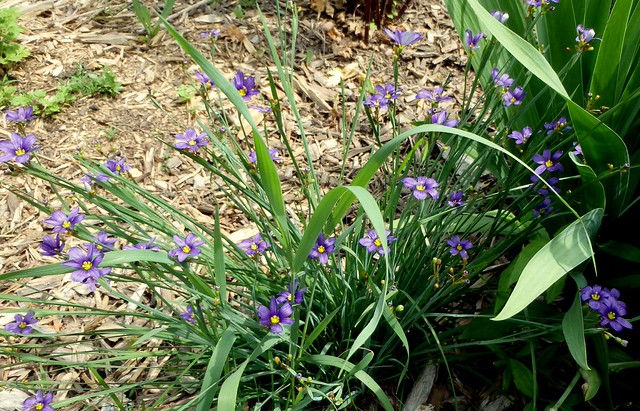
blue-eyed grass with about 40 blooms

The 2013 blazing star didn’t come back, but this summer we bought a new one that bloomed before the end of the season:
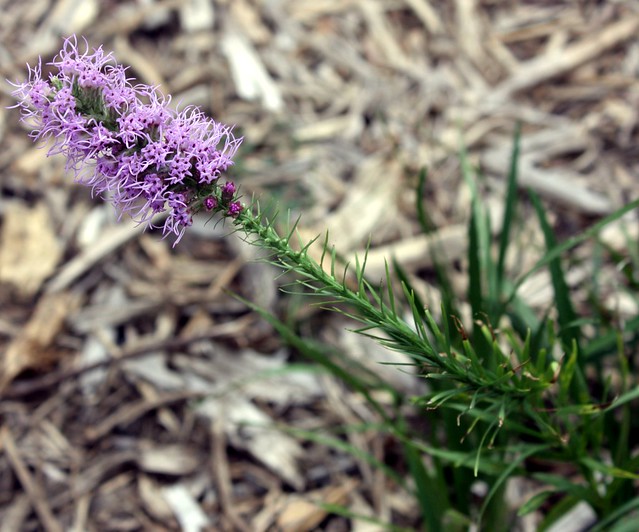
one blazing star stem in bloom

Our “tiny monster” geranium isn’t so tiny anymore. In fact, it’s starting to crowd out many of the plants around it, so we will need to divide it in the spring:

side view of tiny monster geranium with about 30 tall flowers

Moving the lamb’s ears from a shaded backyard location into the sunnier front yard did wonders for this plant:

six lamb's ears plants

The purple prairie clover had a few blooms in its first year:
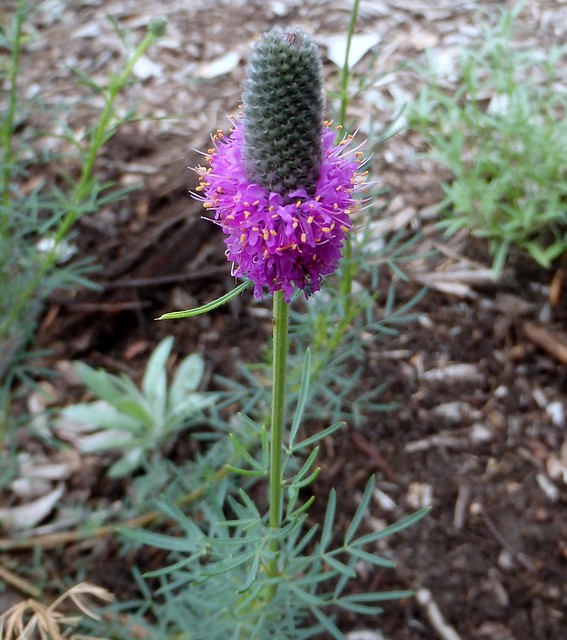
one purple prairie clover blossom

This new coreopsis was planted late in the summer, when we thought it was done for the year. But the six plugs grew and grew, and half of them bloomed and bloomed. This will be one to divide and watch closely in 2015:

six coreopsis flowers and several buds

This yarrow was a volunteer plant in the backyard, and it didn’t flower last year, so I thought it was simply a pretty fern. But after we moved it to the front yard, it bloomed and showed its true identity:

yarrow leaves, buds, and flowers

The spiderwort is now two years old, and like in 2013, it had pretty flowers every day, all summer long:

spiderwort with many blooms

The black-eyed susan created many baby plants at the end of 2013. We divided it and moved it to three additional locations, all of which looked like veterans by the end of 2014:

side view of about two dozen black-eyed susan flowers

I didn’t even know that hens-and-chicks is a flowering plant until a stem started growing! I’m always surprised that this succulent makes it through the cold winters, and this year it surprised me yet again:
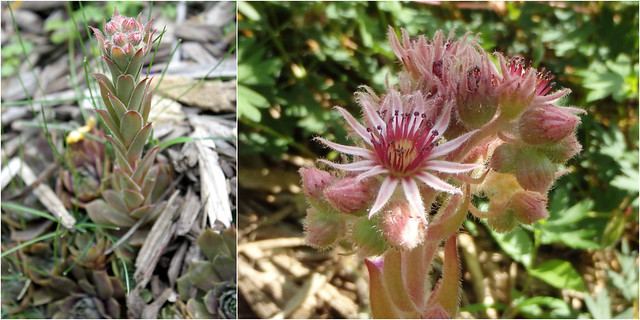
hens and chicks stem with buds, and a close-up of the flowers in bloom

We had varying success in the vegetable garden, and the beans were one example that exceeded expectations. They even grew through the squirrel fence:
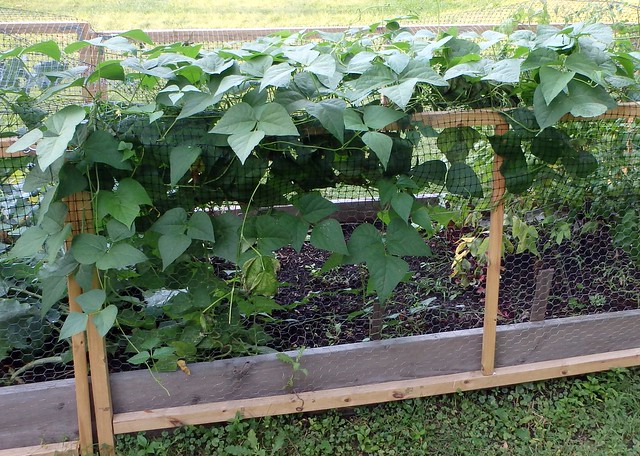
bean leaves growing through a fence

Not surprisingly, with all of the wet weather, mushrooms were quite prevalent from time to time:

two dozen short, brown mushrooms

And we enjoyed lots of insects, like this dragonfly on a budding purple coneflower:

dragonfly on a budding purple coneflower

While not from our own garden, I had to include this harebell. It’s my favorite photo from Tettegouche State Park, but it was saved in the wrong folder and so I overlooked it earlier.

several harebell flowers next to a river

I’ve been meaning to take stock of our 2014 garden ever since the first snowfall put an end to the growing season, and with a new year underway, no time like the present. As much fun as I had enjoying flowers all season long, not everything went as planned. In addition to the squirrel damage were other issues:

The new blue-eyed grass, coral bells, and blazing star – each bought in 2013, including the coral bells at the Linder’s clearance – did not come back.

plant tags for blue-eyed grass and coral bells

The two original pearly everlasting plants had grown so much by the end the previous year that we separated them into four before they bloomed in 2014. Each was hit by some type of insect or fungal problem that appeared devastating in the spring, though fortunately they all still flowered as if nothing had happened.

disfigured pearly everlasting leaves next to blooming flowers

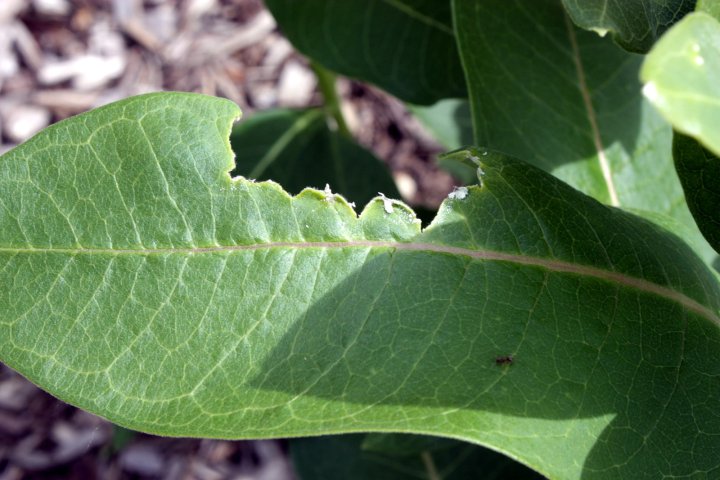
Our one volunteer milkweed plant had several damaged leaves, and it didn’t fully develop: it had only one cluster of very few flowers and stunted pods, so I pulled it before it seeded.

milkweed leaf with a big hole eaten from the top

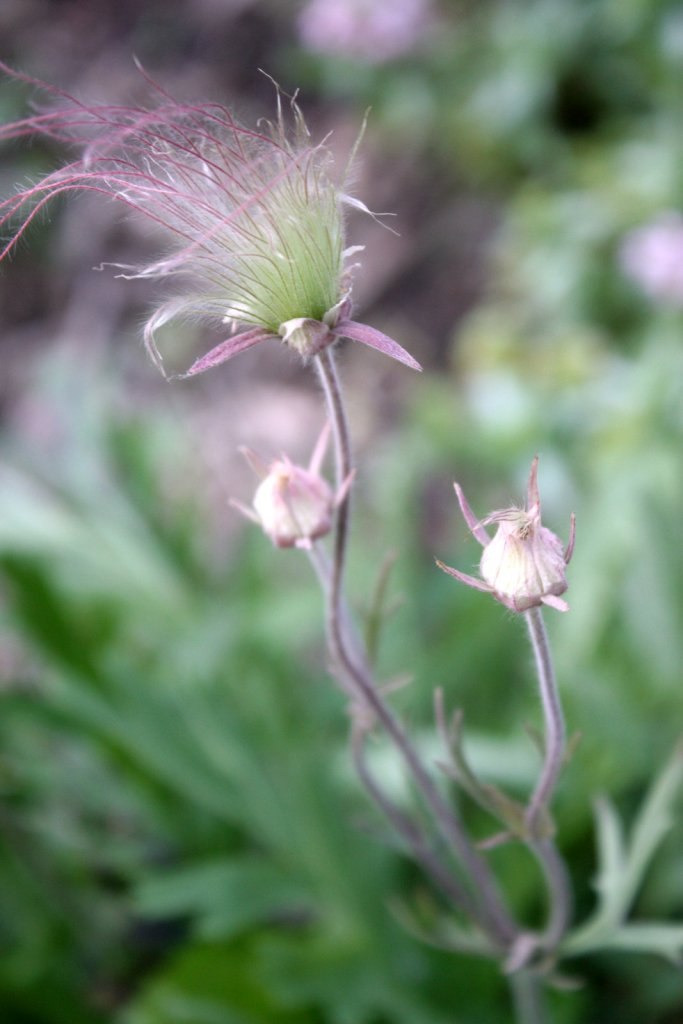
Prairie smoke is such a fun flower because of the feathery end to its growing cycle. However, only one flower reached that point this year.

one bloom and two buds

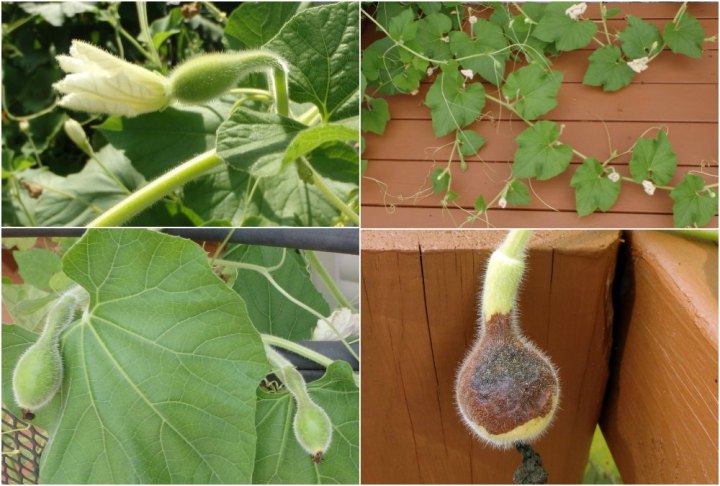
Similarly, our two birdhouse gourd plants fizzled. There were hundreds of baby gourds growing on the vines that were growing in every direction, including across the deck and up a chair, and even onto the roof! But one by one, they all molded…

collage of four photos of birdhouse gourd buds, the last moldy

…except one, which grew to a pretty good size and somehow avoided the squirrels and rabbits. Though when we finally brought it inside, it too soon developed brown and moldy spots and we had to throw it into the compost.

one big green gourd on the vine, then off the vine and moldy

While we had success dividing the pearly everlasting, dividing the New England aster was a failure. I wanted to move it to a new location since it was getting crowded where it was originally planted, and we decided to split it in two in the process. But a promising start with lots of green leaves on both plants quickly faded into rotten stems and no flowers. What it should have looked like, compared to what it did:

2013 view with lots of purple blooms, 2014 view with only a few leaves left

Our pretty blue wood aster seemed to be on a good course – here’s what it should have looked like, and how it started:

2013 view with lots of dewy light-purple blooms, 2014 start with healthy stems and big leaves

But long before budding, it shriveled up and keeled over. Maybe there was too much rain at the beginning of the season? It did try to come back at the end of the summer, so there is hope it will return.

withered stems lying on the ground, short regrowth

Fortunately, there were lots more successes than failures, and I’m excited to see how our garden will grow and change in 2015.

Prairie Restorations held wreath-making events this winter, and my mom and I took the opportunity to visit the Scandia location for the first time. It was fun to shop in their store while we waited for class to begin, choosing a few Christmas gifts and picking out seeds for next year’s garden. I was excited to see what kinds of dried flowers they saved to decorate our wreaths.
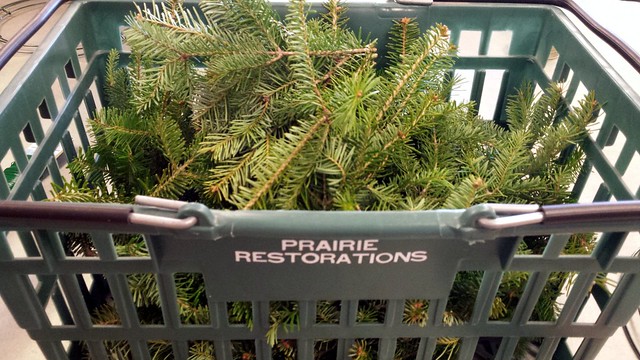
We each started with basket full of greenery:

basket full of evergreen boughs

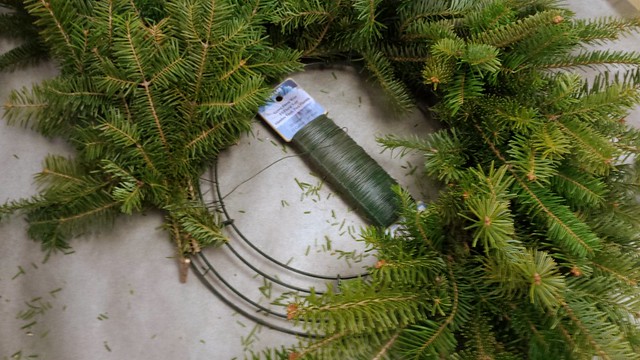
… and wired the sprigs to a wreath frame.

a nearly-complete wreath of greenery

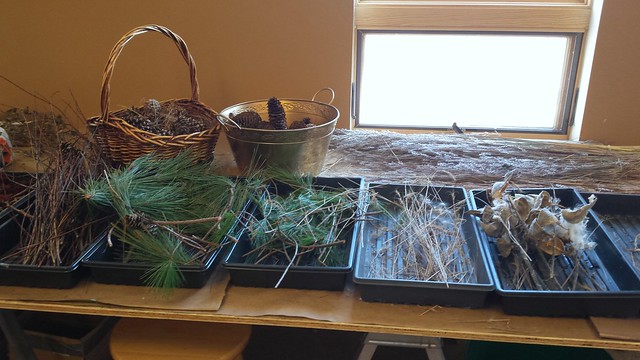
Then we got to pick out the “ingredients” from a table full of natural materials: pine cones, pine boughs, milkweed pods, little bluestem grasses, and more.

a table full of natural wreath materials

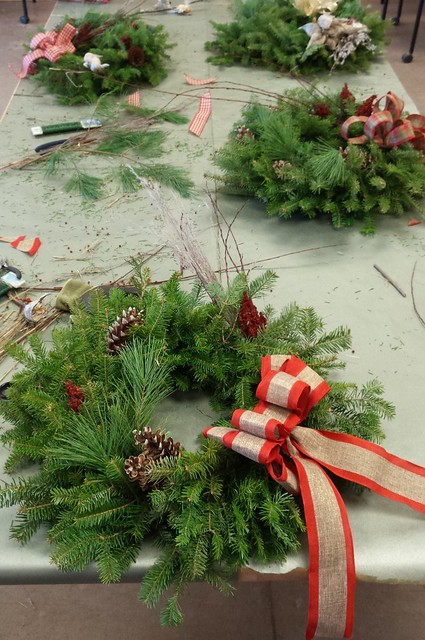
Each attendee’s wreath had a unique look:

wreaths made by other attendees

Sumac was a popular choice since the red stands out so well against the greenery:

two wreaths made by other attendees

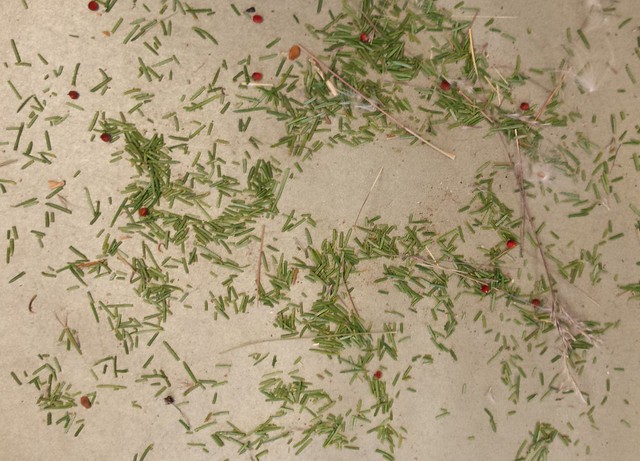
After about an hour, all that was left was a table full of pine needles and other scraps. It seemed like milkweed fluff was everywhere.

leftover wreath materials - pine needles and sumac pieces

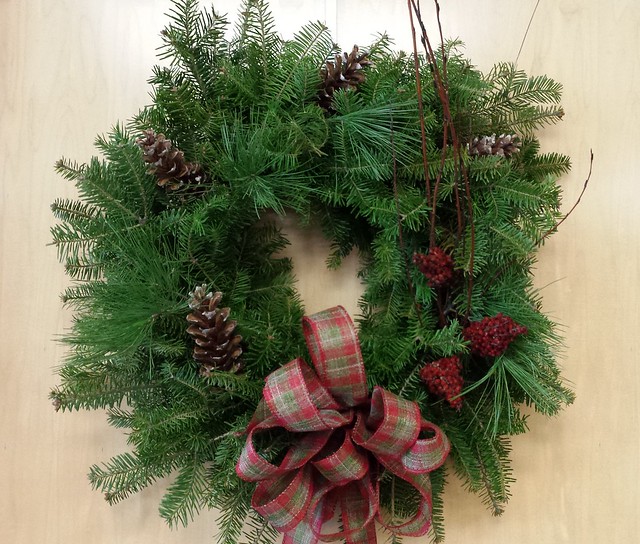
My mom’s pretty wreath:

Mom's wreath

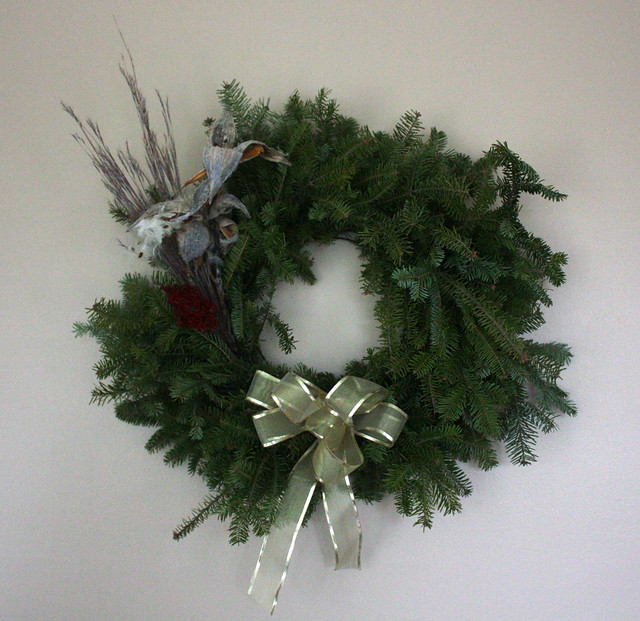
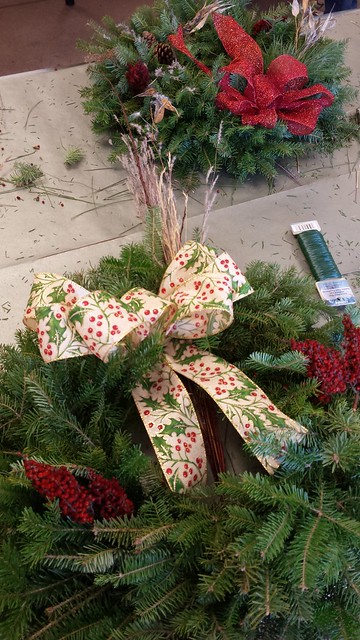
My wreath ended up as a simple, asymmetrical design using little bluestem, milkweed pods, and sumac berries. I’m already thinking about what types of materials to save from my own 2015 garden for next year’s wreath.

my wreath

Turtlehead stems, coneflower seedheads, giant hyssop stalks, goldenrod fluff, and hollyhock pods all look nice when dried. I don’t have any red plants, but I have plenty of pearly everlasting, whose white sprigs would be pretty on an evergreen wreath.