In mid-July I finally started seeing a few monarch butterflies in the garden, but I did not find even one caterpillar all summer. That changed today – the first day of autumn – when I was collecting flower seeds and a line of yellow-and-black stripes caught my eye.
With the nights getting colder, I brought this little one inside to form a chrysalis (at any moment). When he or she emerges as a butterfly in about two weeks, I hope it will not be too late to join the migration to Mexico.
Spring ephemerals are plants that bloom for a short amount of time and then die back completely.
Are trilliums ephemerals? They bloom at the same time as other ephemerals such as Dutchman’s breeches, bloodroot, and spring beauty. It seems every site on the internet says they are indeed ephemerals.
But I am sure I once read an argument that trilliums are not true ephemerals because they don’t die back right away. And now I can’t find that source.
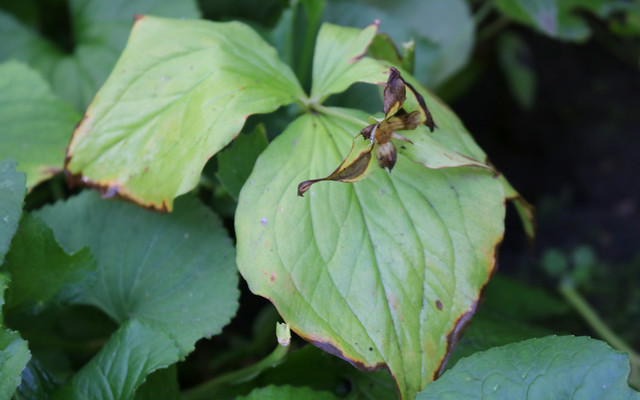
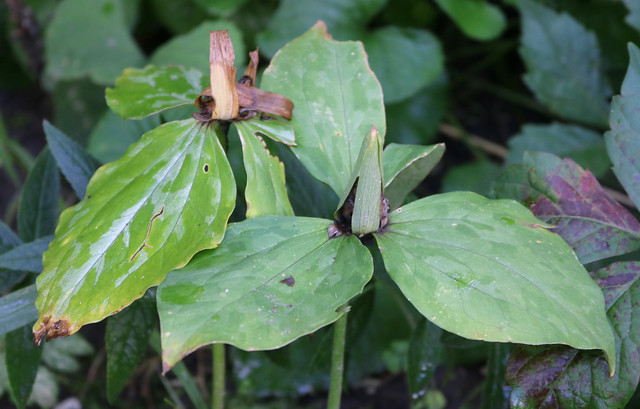
I have seen trillium leaves linger into early summer, but I don’t think I’ve ever seen trilliums stick around until September – but they did this year. Both the large-flowered trilliums and the Trillium sessile are still visible today.
The stiff goldenrod began blooming this week, and that’s attracting many bumblebees and honeybees and at least three locust borers, which are yellow-and-black longhorned beetles. And then I spotted this:
It looked like a tiny hummingbird moth with its transparent wings and tail shaped like a lobster’s. In fact, when I searched for “clear wings lobster tail,” all the results were about hummingbird moths – but this is just a fraction of the size, and it doesn’t flit like a hummingbird but instead it acts like a bee or fly. It swishes its “tail” up and down like a mermaid.
Instagram to the rescue. Just 20 minutes after I posted a photo and asked for help identifying the insect, one of my buddies identified it as a clearwing borer moth, and I think I’ve further identified it as a dogwood borer.
The University of Minnesota’s Center for Urban Ecology and Sustainability calls clearwing borers “native pests” that sometimes kill trees and sometimes don’t cause serious damage.
This is the third borer I’ve seen in the last two years. The others:
Perhaps the most famous borer these days is the destructive, invasive emerald ash borer beetle – fortunately, I haven’t seen one of these yet. And there are others that aren’t quite as destructive, though they do cause damage.
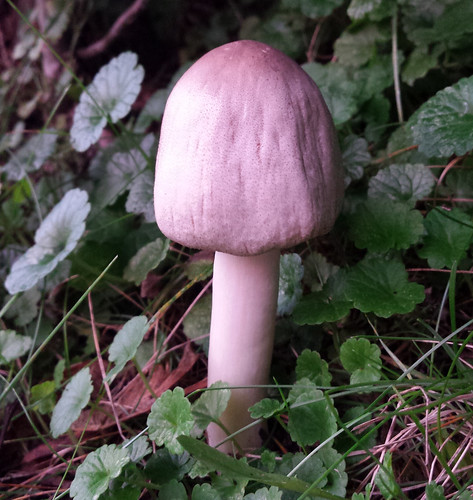
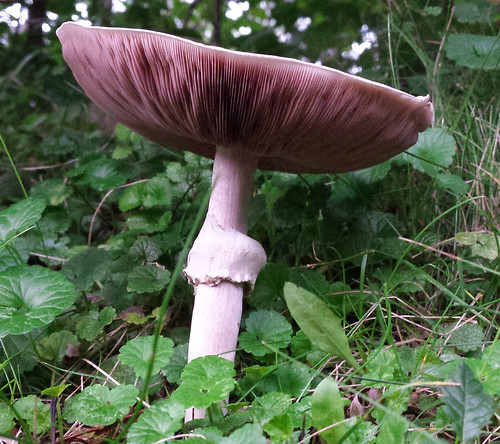
We’ve received a lot of rain over the last two weeks. On Wednesday when I got home and was making my rounds through the gardens, this cute mushroom jumped out at me from under a tree on the hillside:
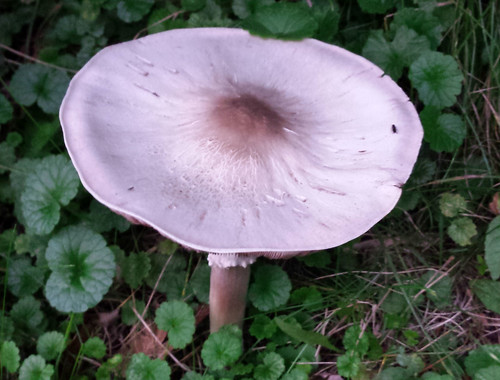
The next day its “umbrella” had unfurled.
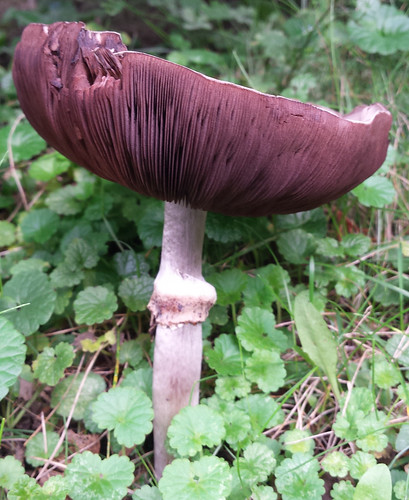
And one day later, the umbrella was turning brown.
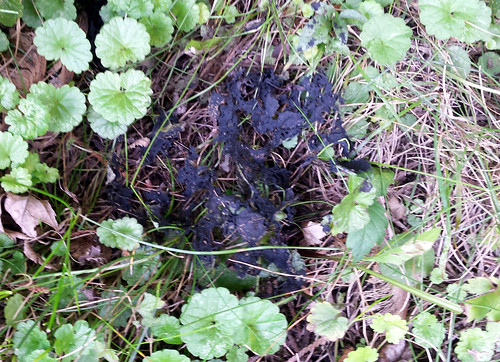
We were out of town for the weekend, so I didn’t see what happened next. All I know is that on Monday evening, this is what I found:
…which makes me very interested in finding another one so I can watch it every day until the end to see what happens at each step.
Though I can guess that it’s some type of inky cap mushroom, based on the disintegration behavior, DO NOT take this as confirmation or denial for identification purposes. I am way too nervous about mushrooms’ potential for being poisonous, so I’ll just enjoy them in nature and leave my mushroom-eating to what I find in the store.
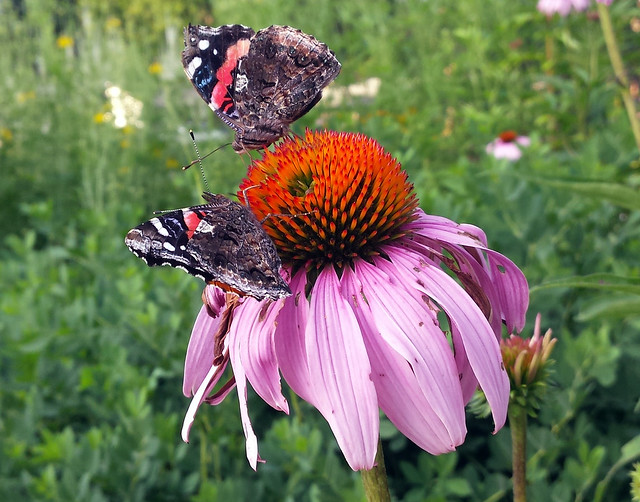
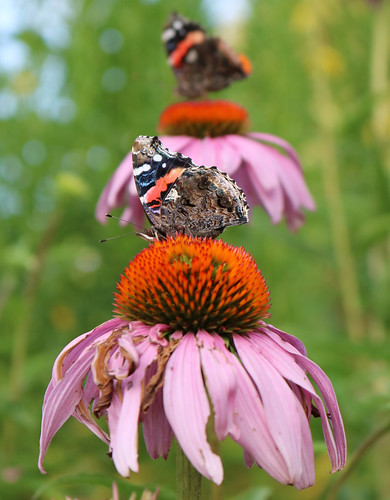
One morning last week I found five Red Admiral butterflies on the purple coneflower. Of course, I was running late and didn’t have time to grab the camera. That evening three butterflies returned.
Two of them danced on one past-peak flower and then separated.






 crystallofolia