Over the last two weeks I’ve been reviewing and tagging and editing and sometimes deleting the thousands of photos I took in our garden last year. As usual, not every plant survived. Several of the failures on this list were considered successes just a year ago.

Lady’s mantle: This one was never one of my favorites – mostly because it was so subtle it was easy to overlook. The flowers are so tiny they are barely noticeable against the leaves. In 2015, not even the leaves grew. (This photo is from 2012.)
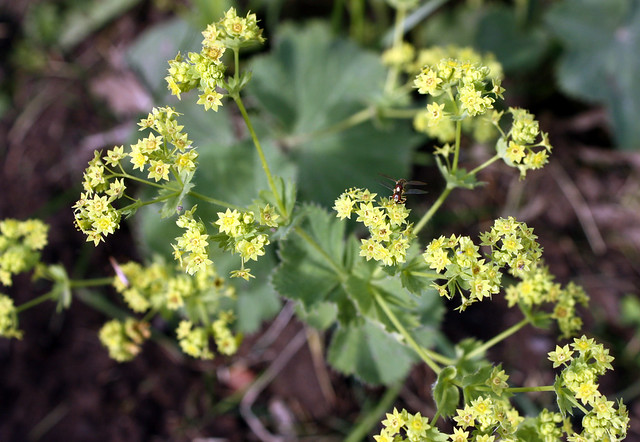
a dozen bunches of tiny yellow-green flowers on one stem

Columbine was on my bigger and better list in 2014, when this photo was taken, but it was completely gone in 2015!
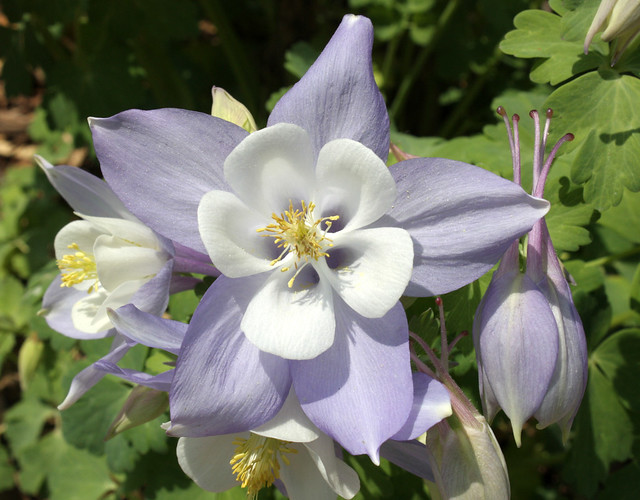
close-up of a blooming columbine and two buds

Evening primrose apparently didn’t survive a squirrel attack in 2014. We have another variety of evening primrose in a different location, though. (This photo is from 2013.)

one big yellow flower from a plant with large, wide leaves

Dutchman’s breeches: This early-spring flower was planted in late 2014; nothing came up in 2015.
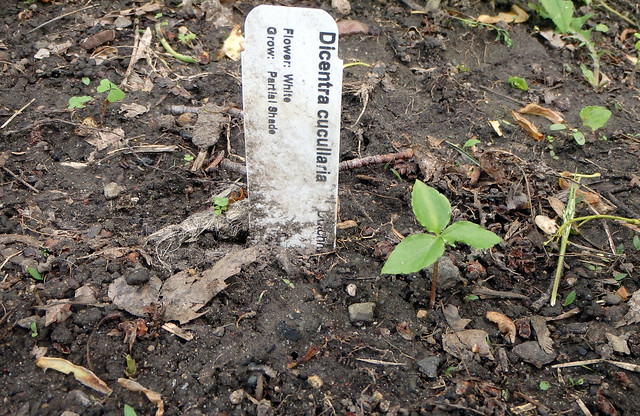
a plant marker in the ground next to an unrelated plant

Cardinal flower was planted a couple years ago, but it’s never done more than this.
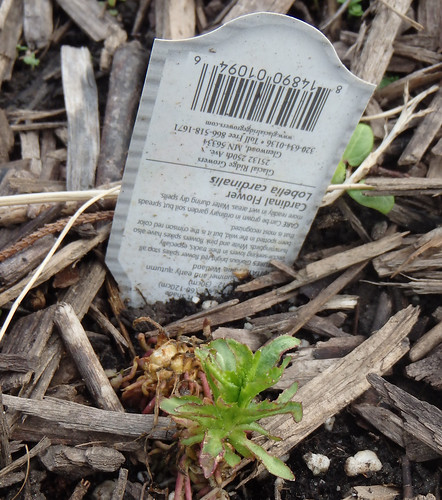
a plant marker next to a small green shoot

Blue-eyed grass: We’ve had mixed success with this one in the past; in fact, in 2014 I listed it as a failure in one location and a success in another. This year, the successful location disappeared too. (This photo is from 2014.)
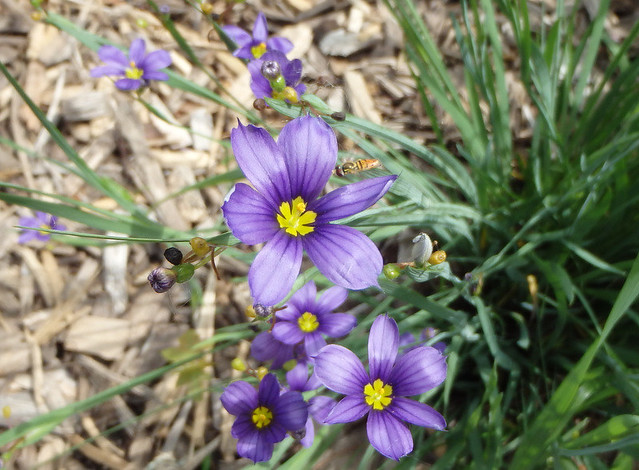
a hoverfly entering a blue flower

Still not getting much traction on native asters or New England asters. The native one did come back, though not anywhere close to its 2013 level, perhaps because giant hyssop seedlings are crowding it.
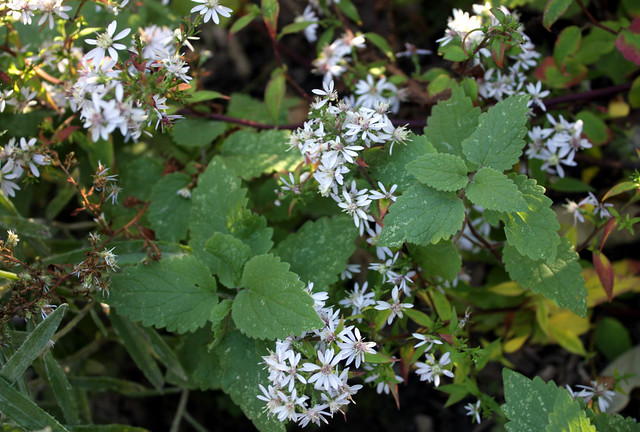
a mix of small flowers and unrelated green leaves

The New England divided plant came back decently in one location…

purple flowers and many buds yet to open

…and flamed out in another; will need to re-remove the grass from that location.
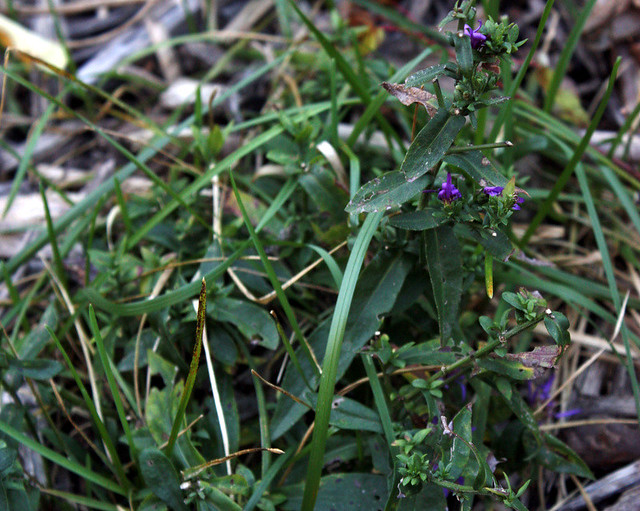
a few shriveled purple flowers, mostly leaves and grass

A hybrid New England aster (“Woods Pink”) started strong but crusted over early.

half pink flowers, half brown stems

Hens-and-chicks: This was on the success list in 2014, when it bloomed for the first time. I put this on the failures list for 2015 because I think it disappeared. It was there in the spring, though smaller than in previous years, and then I never saw it again. When not blooming, it was nearly invisible against the woodchips, and I was always worried about accidentally stepping on it. It may be that it is still there and was hidden by another plant, likely the far-spreading geranium. (This photo is from 2013.)

four large main flowers with two dozen babies

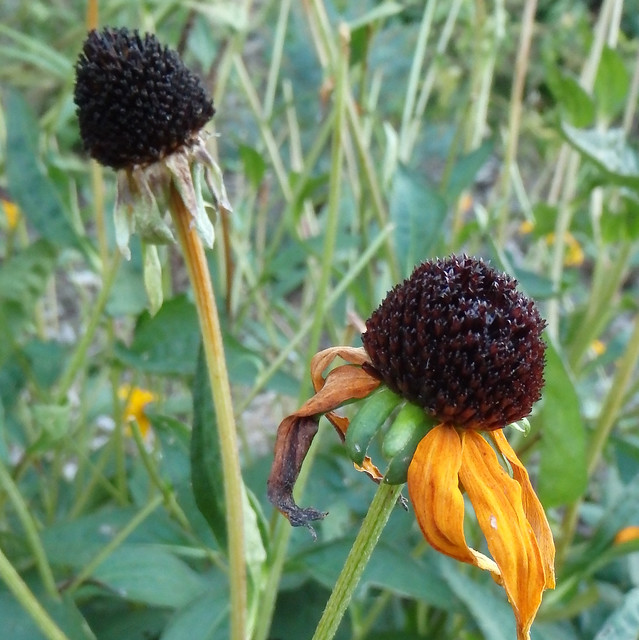
Our backyard “testing ground” had a lot of what I’m generically calling black-eyed susans, because I haven’t found a closer match yet. These were planted from a “seeds on a stick” mix from the DNR. (I wish I would have saved the label!) Some were fine, but some had green growths… and some were green flowers.
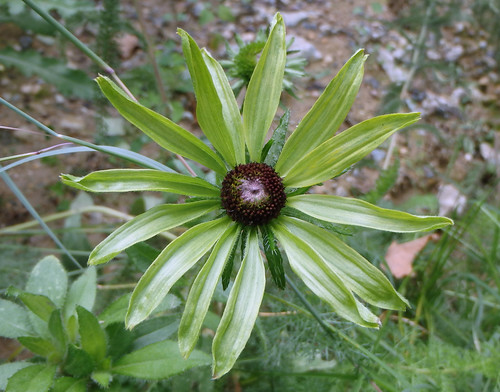
black-eyed susan with green petals

Seems to be aster yellows, which has no cure, so I pulled all of the affected plants.

black-eyed susan with tiny green flowers growing out of the brown cone

(In researching this disease I found images of affected coneflowers, and I have seen that – though not green – in our purple coneflower. Will need to check that one carefully this summer.)

Most disappointing flower of 2015: native coreopsis. It was growing so well and flowering just a few months after we bought a six-pack of plants late in 2014, I was sure that we would need to divide it at least once in 2015 – but it disappeared. We kept the spot free all year, just in case, but nothing appeared.

But there were many more successes than failures – and I’ll show those soon.

We were treated to a nice autumn that lasted about two weeks longer than it usually does, but suddenly it’s cold. Our first lasting snow fell this week, and there is more on the way tomorrow. In the last couple of weeks, I collected lots of seeds from our yard.

Yellow coneflower,

blazing star,

joe-pye weed,

culver’s root,

stiff goldenrod,

cup plant,

purple prairie clover.

I packed up some seeds to share with coworkers…

…and made my own custom mix of these and eight more whose names didn’t fit on the envelope. (Now I’m noticing a mistake: we have stiff goldenrod, not smooth goldenrod.)

19 wildflowers listed on the back of an envelope

We’ll use these seeds – along with a grass mix from Prairie Restorations – next spring in a big area of our backyard that we’re converting from lawn. It would’ve been best to get them planted this autumn, but the lawn hasn’t been removed yet. I’m not sure how many of the seeds will grow in 2016 without being winterized, but I’ll try keeping them in the fridge until spring to help the process.
Some seeds were gathered to share – and some were gathered to prevent more growth. Milkweed is both. It’s pretty as one pod…

…but it creates hundreds more seeds than I need, especially since the plant also spreads underground.

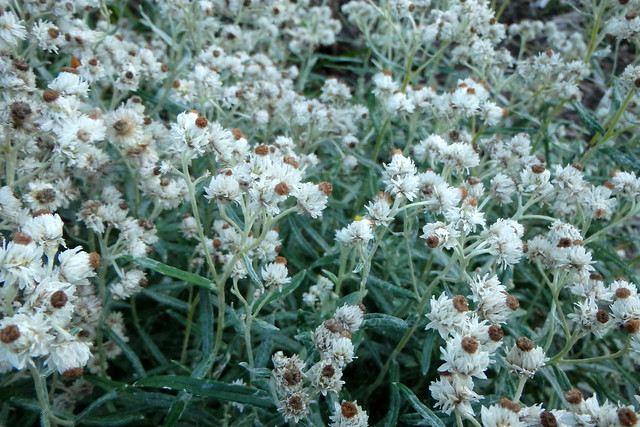
Pearly everlasting results in thousands of seeds. I love the plant – and so do butterflies and bees – but it is spreading aggressively. I collected the seeds to get them out of the garden.

We also spent some time in cleaning up the garden before winter. I left most of the plant stalks where they grew, but I cut down the enormous cup plant and a couple others, storing the stalks in the backyard until spring, in case insects need shelter to hibernate.

And we divided and moved some plants. The irises were a couple years overdue, so their bulbs were packed tightly together. We split this group into three and moved it to new areas.

a two-foot circle of iris bulbs in a wagon

The snowdrop anemone doesn’t flower long, and now its leaves are taking over. We removed this big section from the main garden and planted it under a pine tree. I suspect that sometime in the future, we might be permanently removing it from the yard, but for now, we’re going to try it in a new location where it won’t crowd out the joe-pye weed and giant hyssop.

a shovel digging up a solid groundcover of snowdrop anemone

The most satisfying move: removing a giant dandelion that had been growing for three summers. It started out as a nuisance right next to a pretty allium two years ago. The dandelion’s leaves are barely visible in the bottom of this photo.

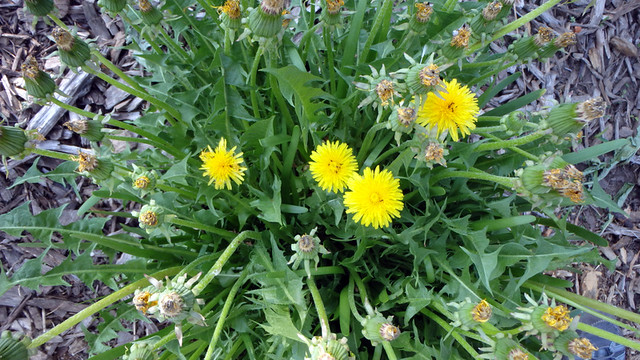
A year later it was intertwined with the allium, preventing us from easily removing it. The number of flowers was impressive. We always meant to separate the two plants, either in the spring or fall, but didn’t get around to it.

two dozen blooming allium bulbs, with barely visible dandelion leaves

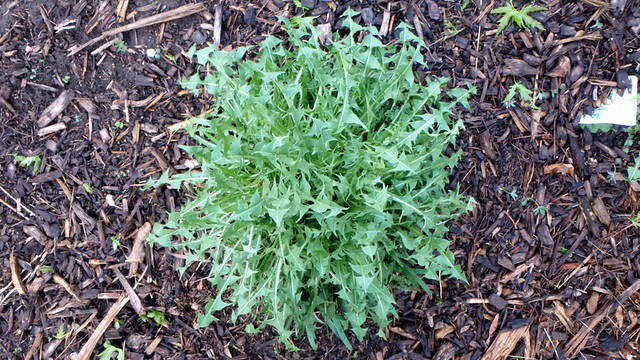
By this year, the dandelion was so big that it choked the allium.

giant dandelion, with no allium in sight

This fall it was finally time. We were able to dig way down to the bottom (hopefully) of the root. Now the allium can come back.

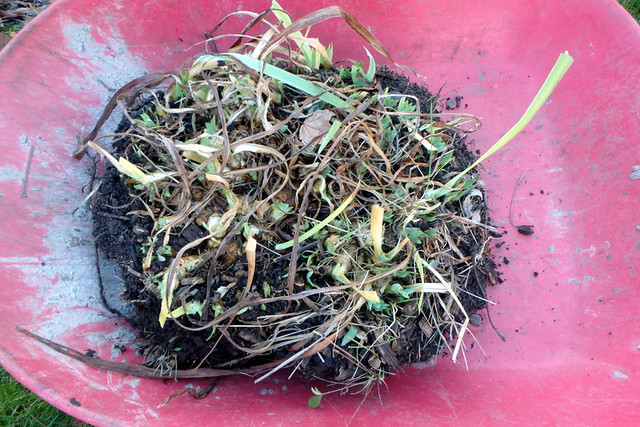
dandelion leaves above a two-foot taproot

October is lingering into November. The temperature today was above 70, and the trees that still have leaves are gorgeous colors. Most of our garden is done for the year, but there are some signs of life.

Hollyhocks: one blooming, one budding

Native black-eyed susan

A couple yellow coneflower blooms

My best guess for this one is false aster. It’s been a cloud of white for weeks and shows no sign of stopping.

Ornamental kale – the only thing left in the pots of annuals

Reblooming rudbeckia – not as pretty as it was earlier this season, but spunky

One lonely dandelion

Lots and lots of calendula

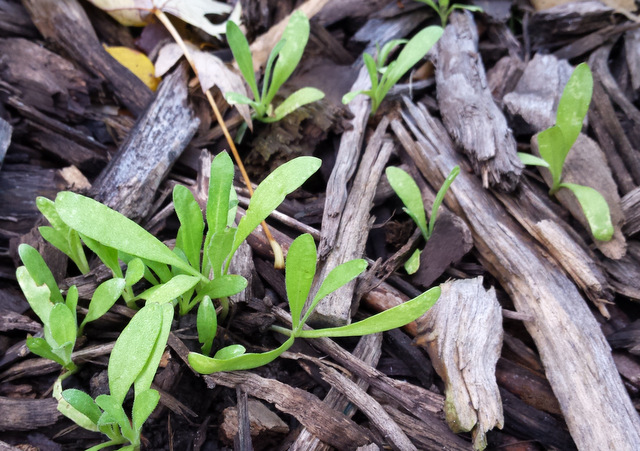
The calendula is getting a head start on next year, too.

calendula seedlings

It’s the first of October, the prettiest month of the year. Our garden is much thinner than it was in the summer, but there is still plenty of activity.

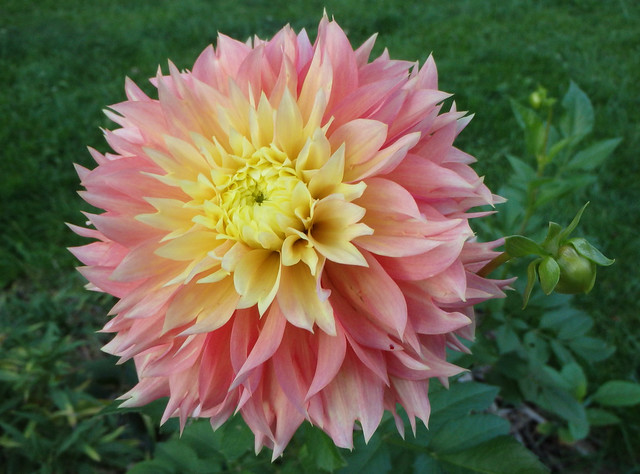
Finally, one dahlia is blooming:

light-pink dahlia with a pale yellow center

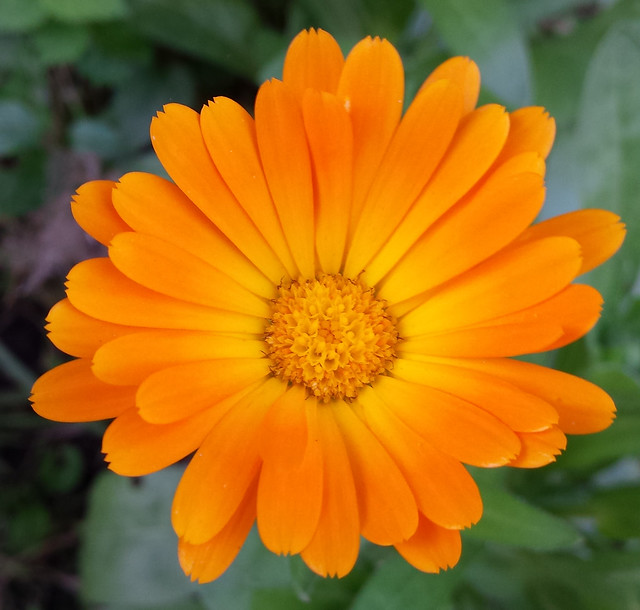
Along with lots of calendula:

bright orange calendula

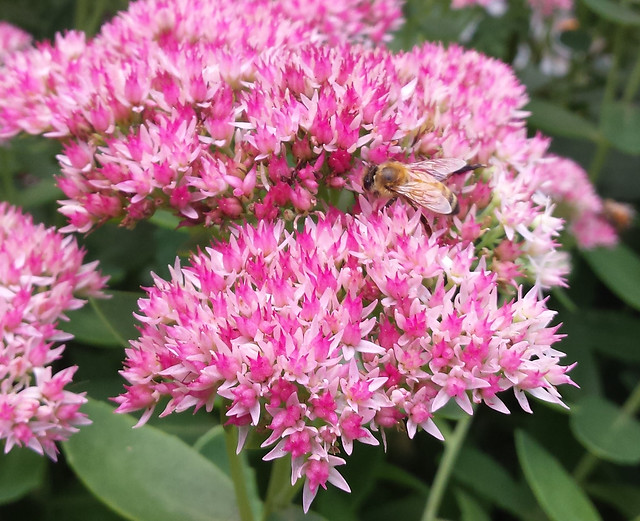
The appropriately named “autumn joy” sedum:

bright pink sedum flowers with a honeybee

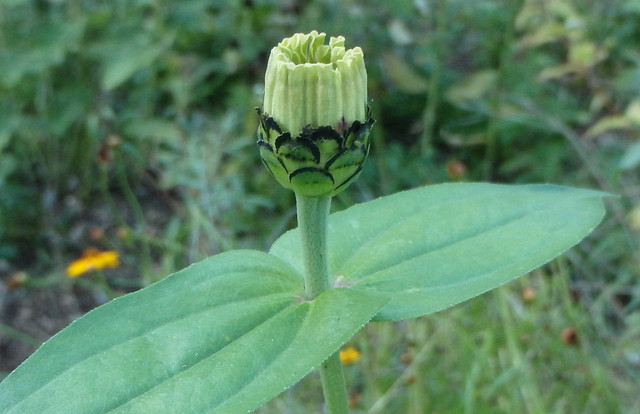
Zinnias and cosmos are still flowering…

zinnia bud that's about to open

…while other flowers are at the end of their blooming, like this pearly everlasting:

pearly everlasting just before going to seed

and the black-eyed susan:

a seedhead and one shriveled flower

I haven’t figured out what’s been snipping off the black-eyed susan flower heads:

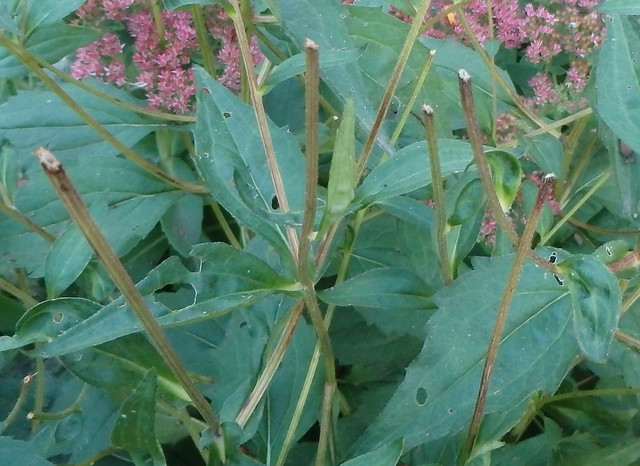
several stems without flowers

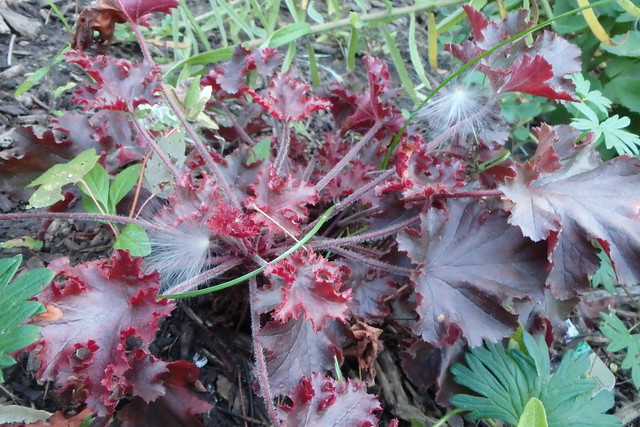
Coral bells are pretty all year but fit in best in autumn:

dark purple coral bells

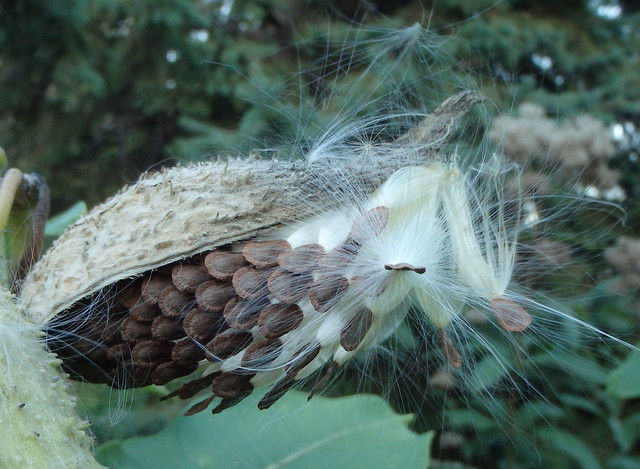
The milkweed pods burst open this week without my noticing…

milkweed seed pod that has just opened, with seeds still inside

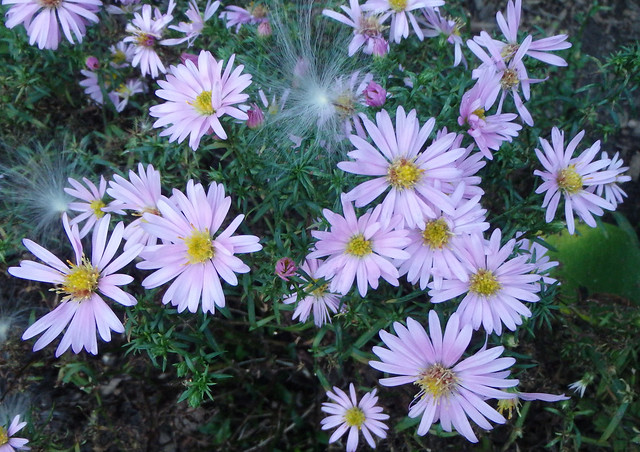
…and milkweed fluff is ending up everywhere, like in this wood’s pink aster:

aster with a couple milkweed seeds

Grasses are in seed:

possibly little bluestem

And even the raspberries are reacting to the season:

raspberry branch with yellow and red leaves

Some confused flowers, like pearly everlasting, are sprouting new plants after the recent rain and warm temperatures:

sprouting pearly everlasting

…or reblooming, like the tiny monster geranium does every fall:

one dark pink geranium flower

I love bee balm – which just might be prettier after it’s done blooming:

many seedheads with bright pink leaves

So many bees. Lots and lots of big and little bees have been visiting the garden this summer, and they’re getting busier and busier as August rolls along. It’s been fun to watch their antics.

I had a video of several types of bees all ready to go – even uploaded to YouTube – and then realized there are many other pollinators I could include. I have photos but not video of any wasps, like the great black wasps that have been spotted on several occasions. And the turtlehead is blooming now, enticing bumblebees to climb into its blossoms. Soldier beetles are all over the black-eyed susan. Several kinds of butterflies have visited the common milkweed. And how could I forget joe-pye weed, which attracts pretty much every insect in the yard? I need to get back into the garden and add more.

Of course, I could think of more flowers and insects to film until it snows, so I need to start somewhere. Here’s a short compilation of six flowers and their bees.

Someday I may be able to identify more than just bumblebees and honeybees. My guesses:

  • Honeybees on butterfly weed
  • Small bees (resin bees?) on culver’s root
  • Bumblebee and other bees on cup plant
  • Bees (resin bees again?) on blue vervain
  • Tiny bees (sweat bees?) and soldier beetles on goldenrod
  • Bumblebees on bee balm