After the warm spell in February, it returned to more seasonal weather and even snowed a bit. The snow didn’t last long, and then we were in a long stretch of the awkward time period when it was still cold but not quite winter and not yet spring. I was pretty jealous of all of my Instagram friends’ posts of early-spring blooms, when everything was still completely brown in my yard.
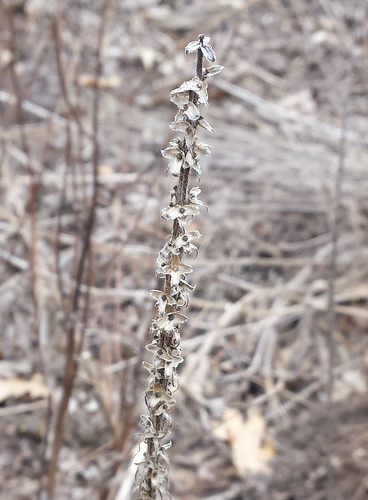
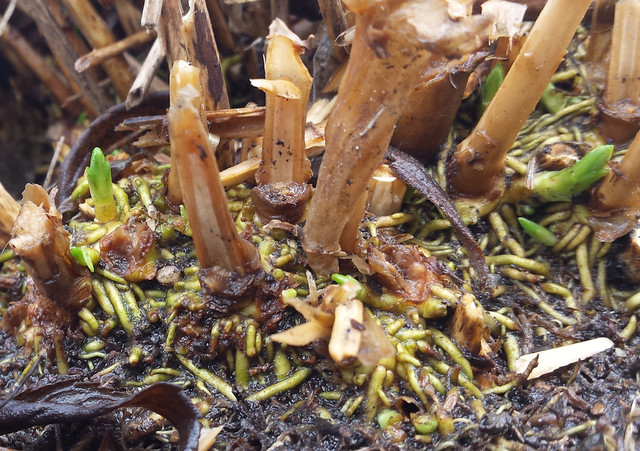
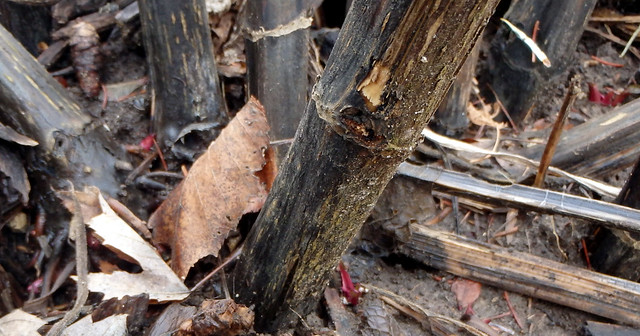
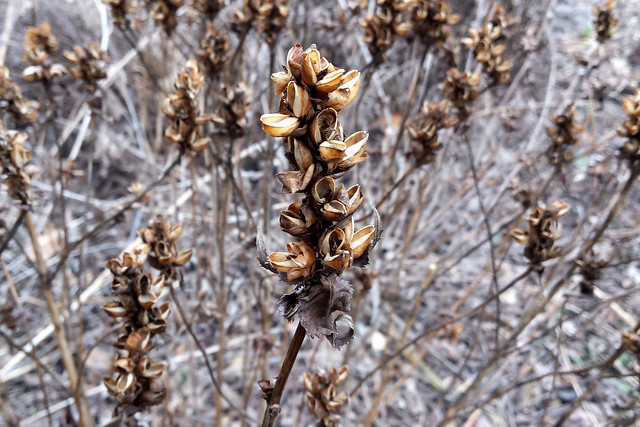
tall stem of blazingstar from last year, brown stem on a brown background

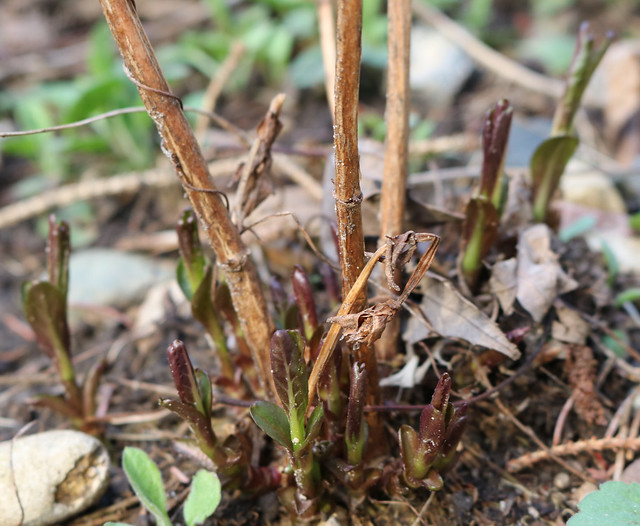
Then one night it rained, and suddenly there was a small patch of pearly everlasting and what I assume to be Canada goldenrods.
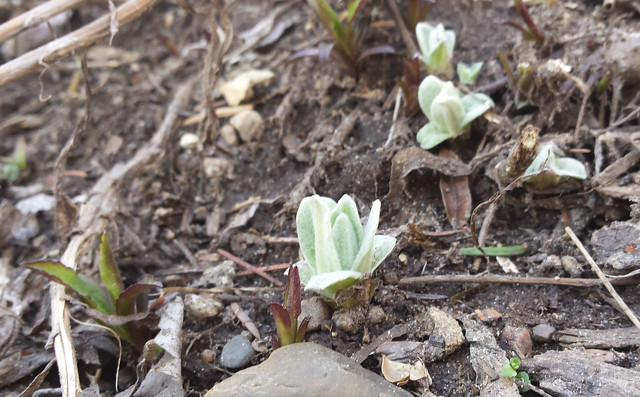
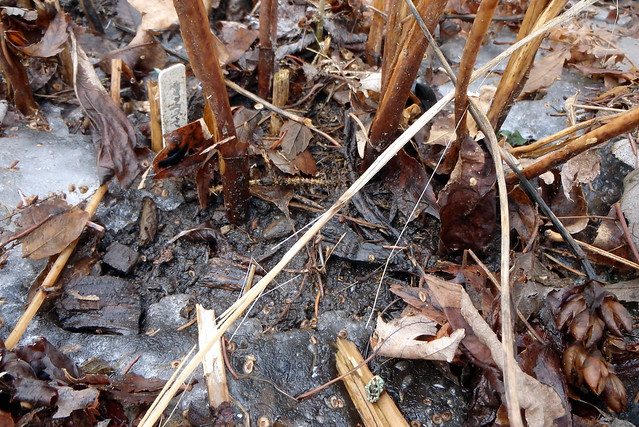
a few purplish-green plants and a few light green plants

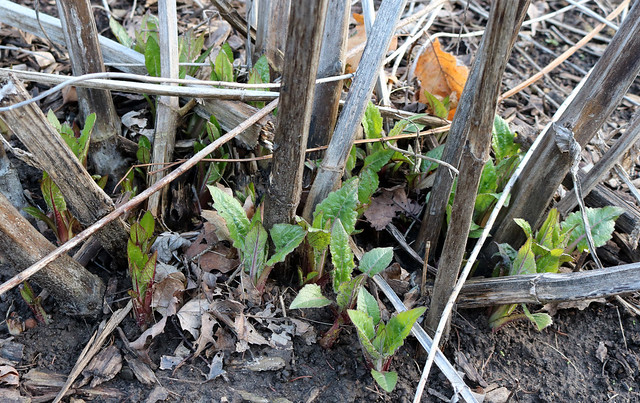
(In the two weeks since, these have multiplied.)
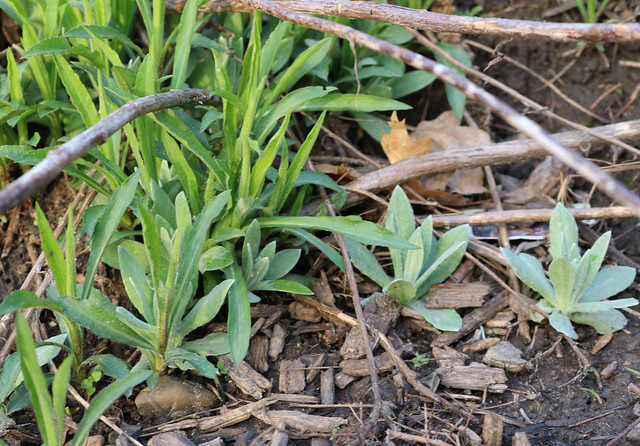
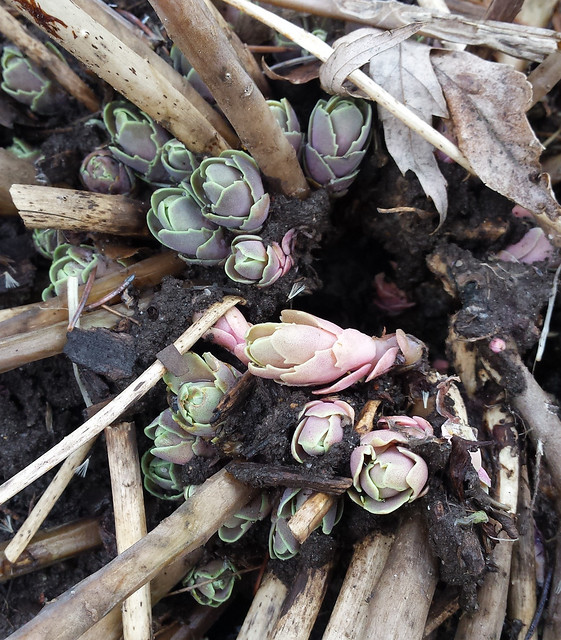
many skinny green plants and many other stout green plants, much more similar in color this time

I traveled to the backyard and when brushing away the leaf layer, I found spring beauty leaves that were growing unnoticed.
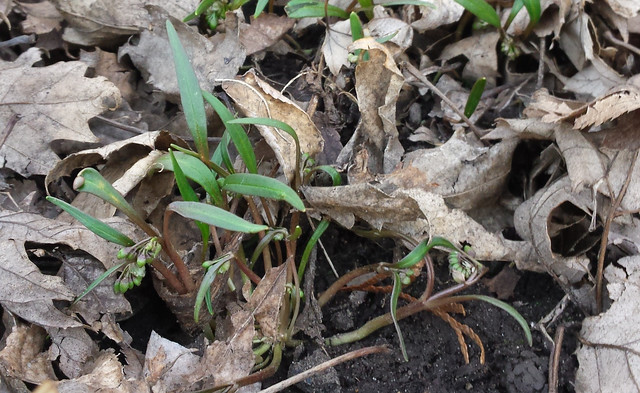
several skinny grasslike leaves, some with bunches of tightly closed buds

And lots and lots of violets, which are taking over the woodland garden — proving once again that just because a flower is native, it doesn’t mean that it’s desired everywhere.
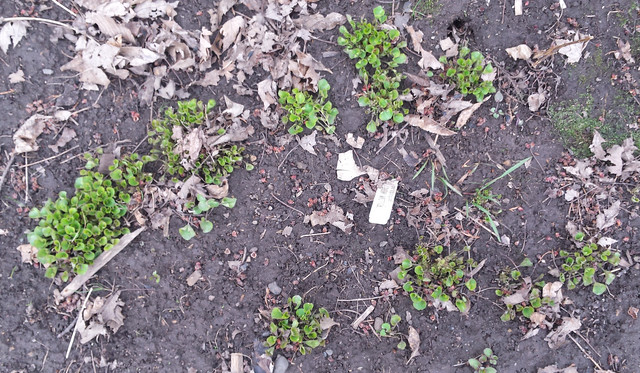
10 clumps of violet leaves growing close together with no other flowers visible

Since I’m still waiting on blooms in my own garden, I headed to Eloise Butler’s garden on April 8 to see some. Things seemed to be a week behind where they were last year. First, hepatica:
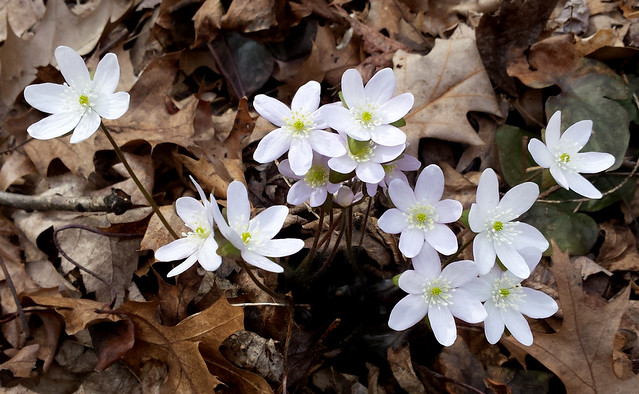
six-petal white leaves on skinny stems with no visible leaves

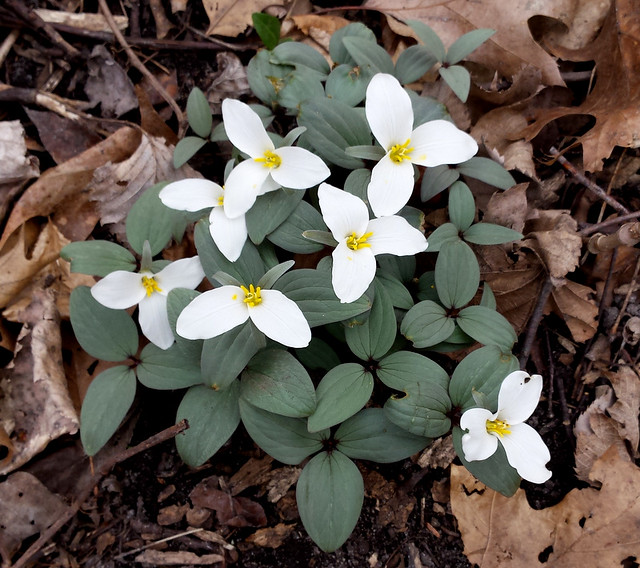
then snow trillium…

seven small trillium flowers and many leaves without flowers

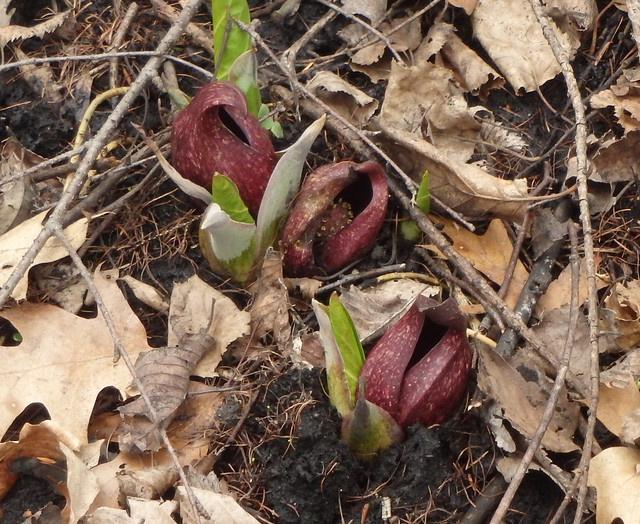
…and skunk cabbage.

three purple skunk cabbages close together

When I got home, when I was still in the car in the driveway, I saw my first butterfly of the season, a red admiral. (But I scared it off before I could get close enough for a photo.) Later that evening, in the woodland garden, I saw one ant, three worms, and unfortunately, two mosquitoes. A full, 70-degree day.

Just three days later, it snowed, showing how fickle spring can be. Of course, it all melted within hours.

pointy iris leaves with water drops at the tips, poking out of wet snow

The plants that were emerging in February seem to be okay now, if not quite normal. They’re growing around last year’s stems, which are still in place. I won’t remove them until it gets a little warmer, just in case insects are still hibernating.

Here’s sedum; I think the smaller, purply leaves are the February ones that have been stunted, while the bigger ones are new. And the middle of this plant seems to be digging itself up.

two big green sedum leaves at the left, with a dozen smaller purplish leaves to the right, roots visible in a hole

The pink turtlehead is fine…

more than a dozen green, tall, skinny stems with purplish leaves standing straight up

and the white one is finally growing after taking awhile to get started, almost as if it were nervous to start growing in case the temperatures plummeted again.
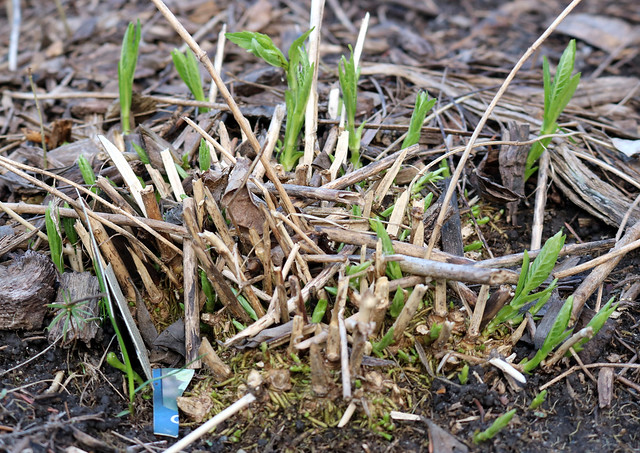
a dozen very skinny two-inch stems with tightly bound leaves, and many more stems that are less than an inch

And the cup plant looks really good.

two dozen plants, each with several unfurling leaves

One night I saw a bat fluttering around in the twilight, swooping back-and-forth and up-and-down in front of my window for about 10 minutes until it got too dark for me to see it anymore. Birds have showed up, too, such as goldfinches and robins.

With all the rain this week and warm temperatures forecast for the weekend, we’re about to see an explosion of plant growth. Looks like hepatica might be the first one to bloom — and I’m thrilled to finally see so many of these buds, since in past years there were only one or two. (Spring beauty is getting close to opening, too.)
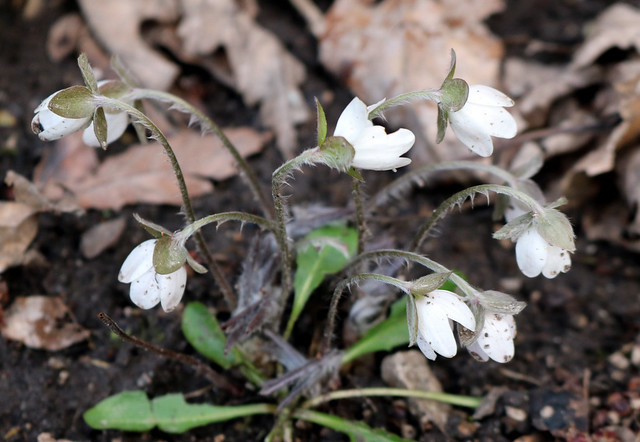
nine drooping white nearly-open buds on hairy stems but no leaves

I’ve wanted to create a list of all the plants in my garden for several years, and the time is now. I’m recording them as they appear this season.

This is what the yard should look like right now: seedheads sticking out of the snow.

brown turtlehead seedhead in the sunlight, with other turtleheads in the shade in the background and snow

And this is what it looked like earlier this month.

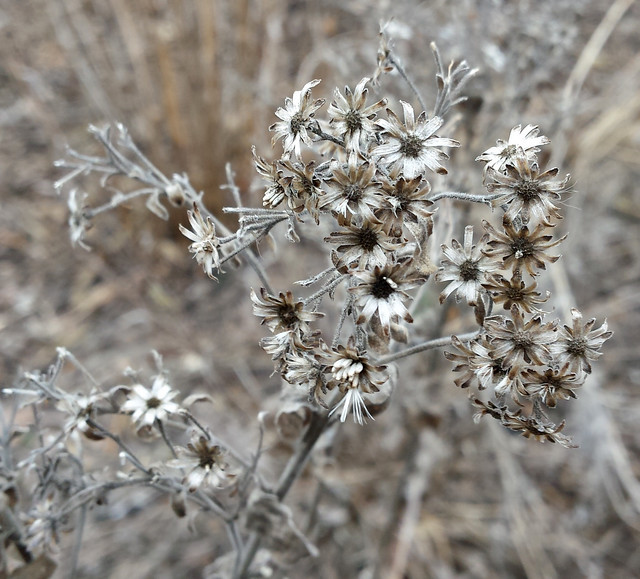
grayish-brown stiff goldenrod plant with barely any seeds left, with snow in the background

Two years ago today, I was talking about below-zero temperatures“It’s the time of the year when it feels like winter will never end, when even though we’ve had less snow than normal, it’s been bitterly cold for weeks.”

This year, though, it seems like we barely even had a winter. In the middle of February were 14 straight days of temperatures above freezing. It started with five straight days above 40, which was weird enough. The temperature dropped a bit for one day before climbing back up to 42 and then shooting up to 63. That was the start of six straight days above 55, with five daily records set. On five of those nights, the low didn’t get below freezing.

In February. In the Twin Cities of Minnesota. Not surprisingly, the little snow we had disappeared. The ground got squishy, and then the perennials started appearing. It’s usually such an exciting sight when the first shoots are spotted – but I cannot muster the energy to be anything but concerned in February.

Lilacs and tulips are bad enough. But then the turtleheads started emerging, too. Turtleheads! They’re far from flowering, but we still should not be seeing any plant growth this early. This one gets a fair amount of sunlight, especially in late afternoon.

broken brown stems from last year, with green roots showing above the ground and four bright-green shoots

This one, however, is in full shade during the winter.

unbroken brown stems from last year, with greening-up roots showing above the ground and about a dozen purple shoots

(To be fair, another one that’s in between the two locations is still in ice.)

brown stems from last year, with bare dirt showing in places and ice and others, no shoots

But the sedum has really popped.

two dozen purplish-green leaf balls and one tipped-over pink leaf ball between last year's stems

(Three years ago, it was late April when the sedums and turtleheads looked like this.)

And the cup plant has lots of little purple shoots.

six thick brown stems from last year, with several small, blurry dark pink or purple spiked leaves

To end the month we were back down into the 30s and 40s, and teens and 20s at night, still warm but closer to normal for this time of year. The ground firmed up again. I had to wonder if the trees – which had begun to bud – were confused about what just happened.
suspended silver maple branch with three sets of buds

Final data is not in yet, since the month hasn’t officially ended, but as of Feb. 27, the average daily high temperature was 39.9 degrees, more than 10 degrees warmer than normal.

This is not normal. This is what the garden looks like now, without snow – more like November than February.

brown turtlehead seedhead, with other turtleheads in the background and no snow

grayish-brown stiff goldenrod plant with barely any seeds left, and no snow

It seems strange to talk about snow after days and days of 50- and 60-degree temperatures and rain have left us with virtually none. This observation happened just over a week ago.

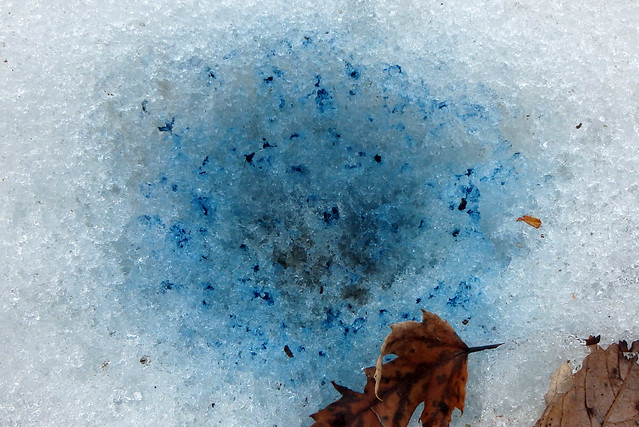
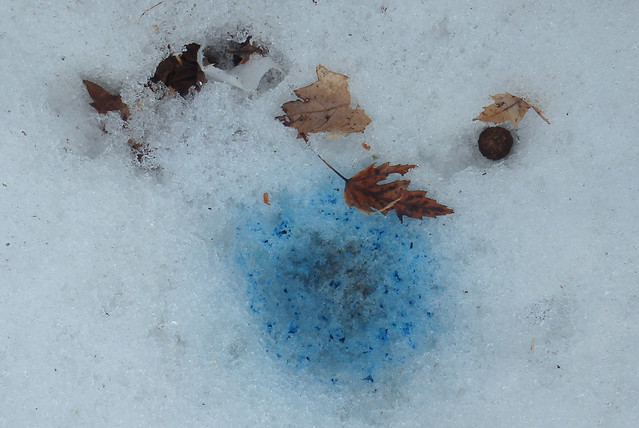
Near the compost pile I noticed a bright blue spot

round spot of bright-blue snow, with dark blue spots, several inches wide

and then another that I had walked right by without noticing.

oval-shaped dark blue snow next to a hole with a leaf

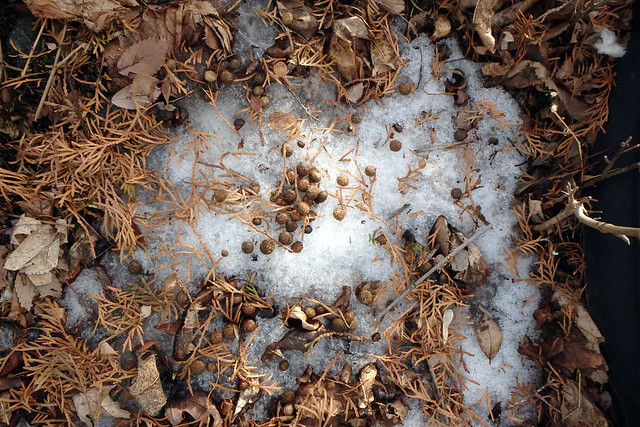
I had heard of this phenomenon before: animals eat some kind of plant, which turns their urine blue. I thought I had heard it was caused by deer or rabbits, and either could be the culprit in our yard. So I started looking around, and then I started noticing lots of round scat, which means rabbits. (Deer scat is more oval.)

small pile of snow with lots of brown emerald cedar leaves and rabbit scat

The plant: was it buckthorn? Hmm, didn’t we just realize we have a patch of buckthorn in the yard?

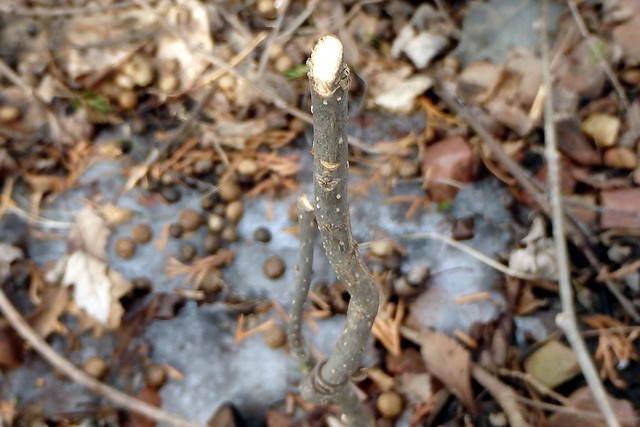
small woody stem cut off several inches from the ground

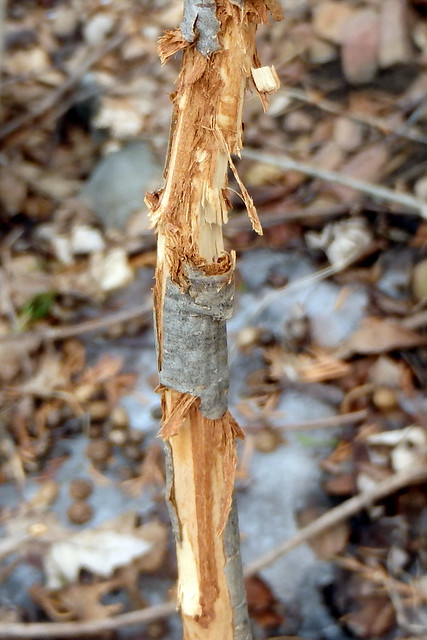
Yep, the stems of these small trees (which I suspect are buckthorn, given their appearance and location close to confirmed buckthorn) seem to have been snacked. An Instagram friend told me last year that rabbits chew the stems of plants cleanly at a 45-degree angle, like the photo above, while deer cuts are more crushed or ragged. Rabbits are also known to remove the bark all the way around a tree, potentially like the messy work below – though so are deer. This damage’s cause is less clear to me.

a tall, thin stem with more than half the bark removed to various depths, with ragged pieces hanging off

Several unofficial sources agree that both rabbits and deer are the animals in the equation, and the chemical is almost always from buckthorn (though apparently salts could be another culprit). Interestingly enough, it’s the bark of buckthorn, and not the berries, that causes this phenomenon.

And a closer look at the first spot showed some rabbit scat right next to the blue.

blue snow

If only the rabbits could eat enough of the buckthorn to kill it.

References

I’m still contemplating my new year’s resolutions but before looking forward, I want to take a quick look back. Here’s a short list of what happened in my garden in 2016:

Failures

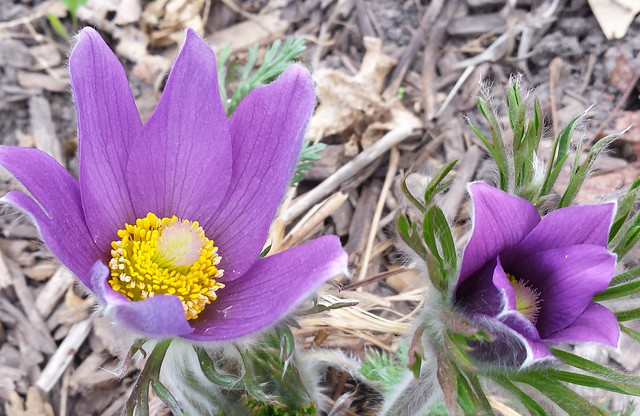
Pasque flower simply didn’t come back, after a couple years of doing well. This was a cultivar, and I bought a native to replace it.

large purple flower near the ground and another beginning to open

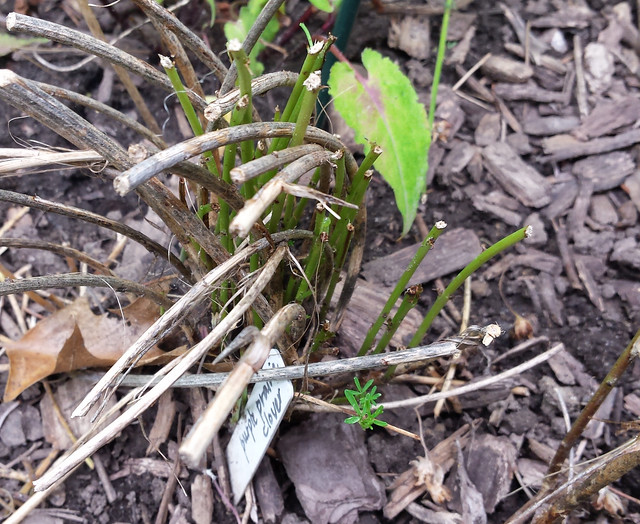
Purple prairie clover started fine but was eaten by rabbits.

about a dozen stems chewed off two inches high

I scattered swamp milkweed seeds in the fall of 2015, but nothing sprouted.

Successes

Wild columbine thrived in its first year in the yard, after being transplanted late the year before

focus on one pinkish flower with several other buds and flowers blurred in the background

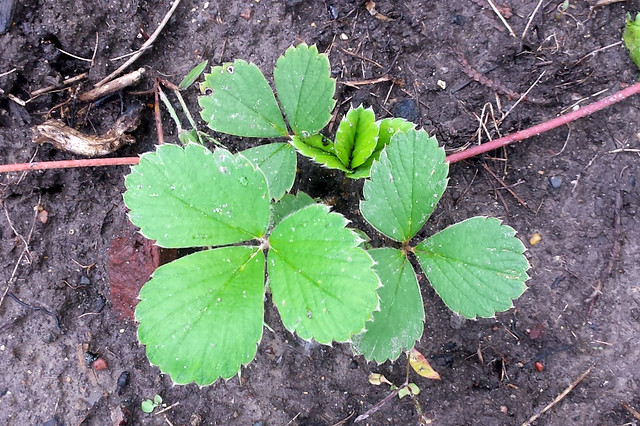
Strawberries not only survived their first winter, they produced several berries. The plants spread far in late summer, so we’re hoping for a real crop next year.

three strawberries on a vine, two white and one bright red

four sets of three strawberry leaves, one just opening, with vine to the left and right

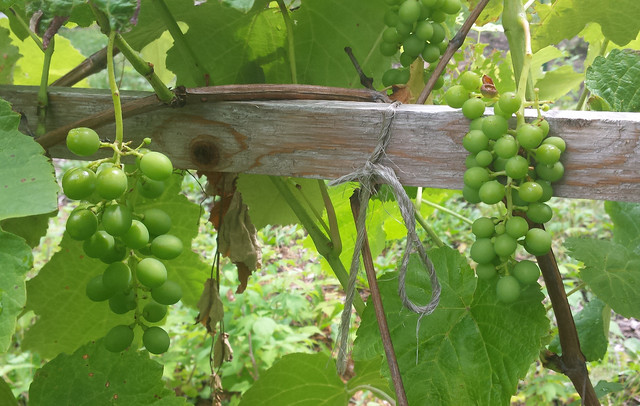
Our first-ever grapes, after years of relatively healthy grapevines! (Though not surprisingly, something ate them before we could.)

three bunches of green grapes

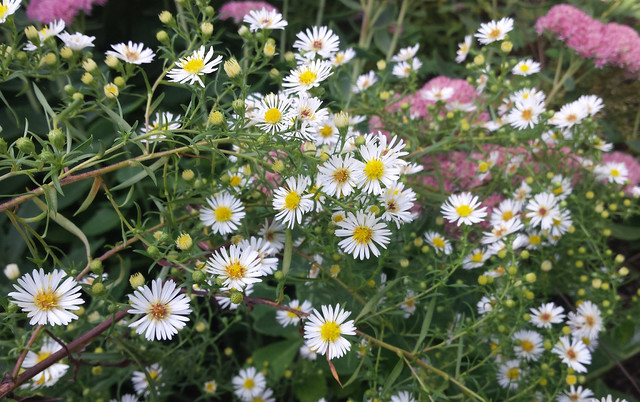
Some kind of super-tall (8-foot) aster.

dozens of small white flowers on a stem that's bent near the ground

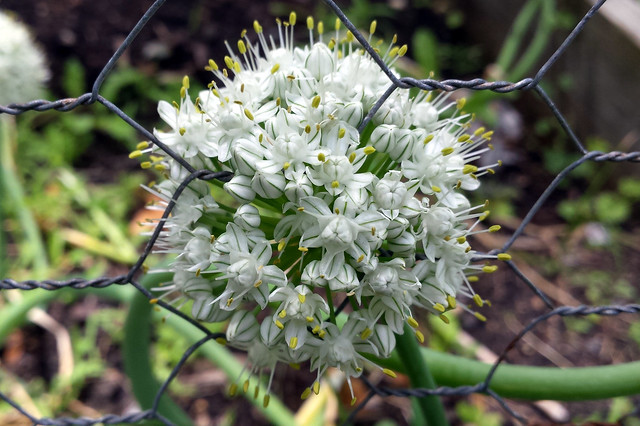
Unintentional beauty of onion flowers, which were leftovers from 2015 and continued growing on their own.

a globe of white flowers with green veins

New creatures

More and more insects (and other creatures) are finding a home, or at least dinner, in our garden. These are some of the things spotted for the first time:

mourning cloak

side view of a dark brown butterfly with a line of lighter brown at the edge of the wings

swallowtail caterpillar

large caterpillar climbing up a short stem and eating the top

hairstreak butterfly

gray butterfly on bright orange butterfly weed

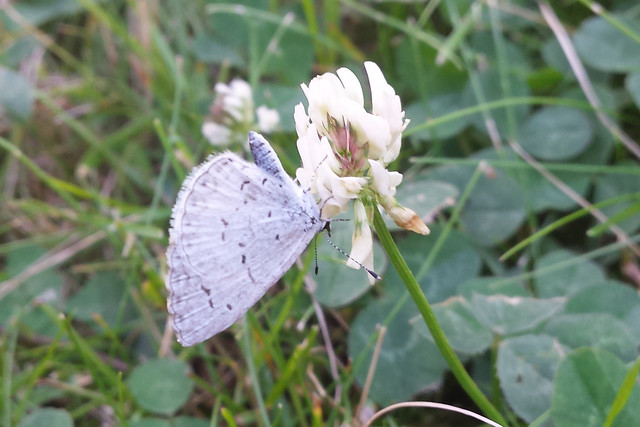
summer azure butterfly (I think)

very light purple butterfly upside-down on a clover in the lawn

a similar, but I don’t think the same, butterfly

small purple-ish butterfly in milkweed blossoms

hummingbird moths

yellow-and-black fuzzy moth with its proboscis curled near a bee balm

brown, black, and red fuzzy moth with its proboscis in a bee balm

thick-headed fly

skinny black fly with narrow white stripes, looks a lot like a wasp

clearwing borer moth

skinny black insect with a feathery tail and clear wings on stiff goldenrod

potter wasp

black wasp shoving a green caterpillar into a small mud pot

another kind of wasp (I think)

mostly black insect with a couple yellow stripes flying between bee balm blossoms

some kind of orange dragonfly

dragonfly perched on butterfly weed

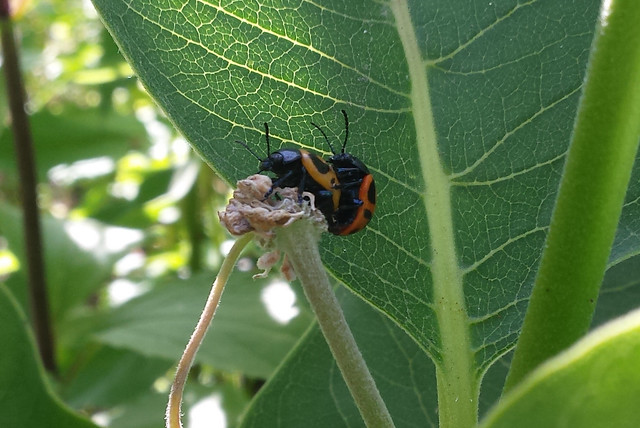
swamp milkweed leaf beetles

yellow beetle and red beetle copulating on a milkweed leaf

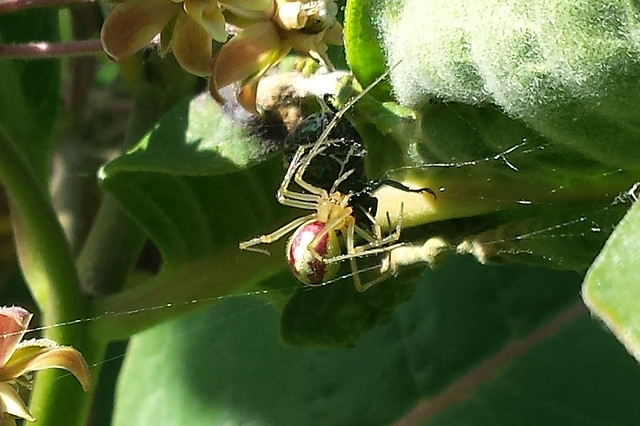
candy-stripe spider fighting a Japanese beetle (more to come on this encounter)

white spider with a bright pink spot, near a dark beetle

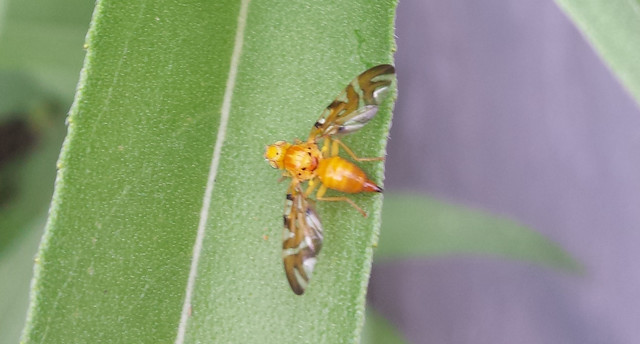
whatever this little orange bug is

bug with an orange body with marks that look like a smiling face, and tiger wings

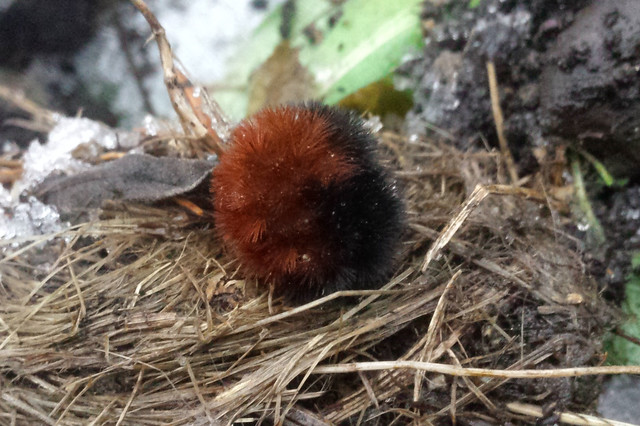
hibernating wooly bear caterpillar, accidentally uncovered when doing late-season planting

orange-and-brown caterpillar curled into a ball

Overall

I always have several blog posts in my head and an even longer list of potential ideas, but it’s hard to get them written. So there were not nearly enough blog posts in 2016, but I posted almost daily during the growing season on Instagram.

My biggest personal success was becoming a master naturalist. I anticipate this will become a bigger and bigger part of my life going forward.

Previous recaps