A large, strange insect was flying clumsily above the milkweed. It dropped to a leaf and I saw that it was a wasp carrying a green caterpillar (possibly a cabbage looper).
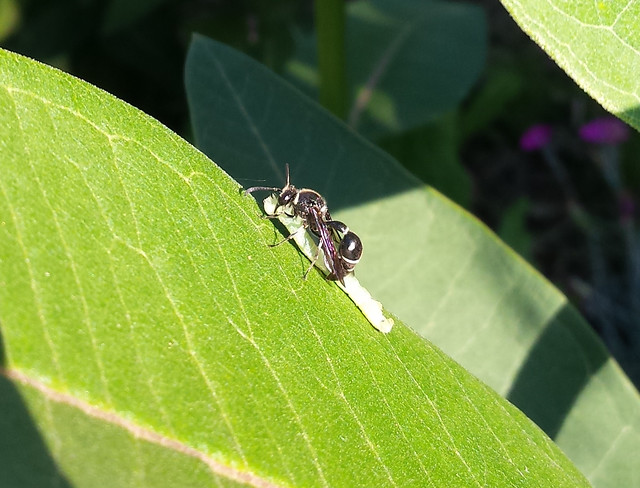
potter wasp standing above a long green caterpillar on a large, green leaf

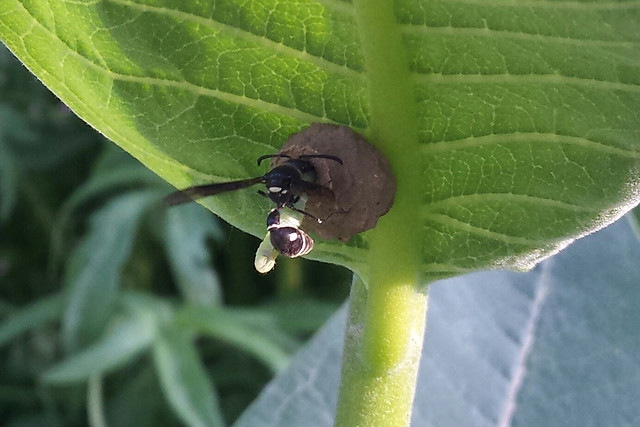
I thought it was eating the caterpillar until I noticed a mud nest on the underside of another leaf.
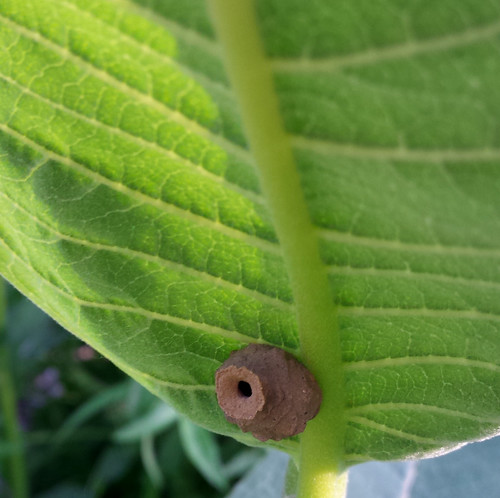
small mud nest at the base of the underside of a milkweed leaf

Soon the wasp flew to the nest and crammed the caterpillar in.
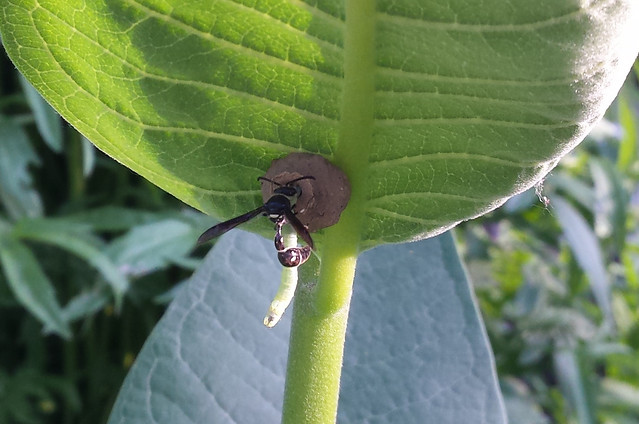
wasp at the base of the mud nest, with nearly the entire caterpillar hanging down

more than half of the caterpillar has disappeared

less than an inch of the caterpillar is still visible

Then I realized that this is a wasp that was paralyzing the caterpillar to store it as food for its young (currently an egg) in the nest. An Instagram friend identified it as a potter wasp, which shouldn’t be surprising, given the shape of the nest. The next day, I was lucky enough to catch the scene again.
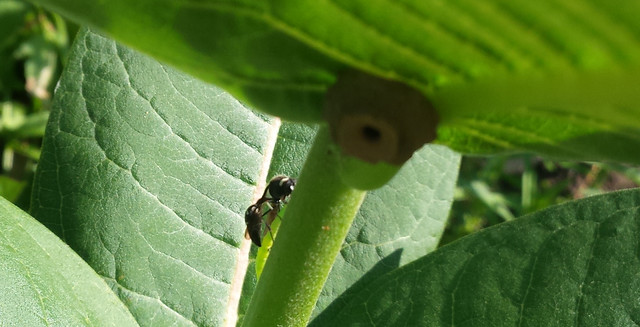
wasp walking up the milkweed stem while carrying a paralyzed caterpillar

This time it started out the same, but the last inch or so of caterpillar took a lot longer.

Perhaps the pot was too full this time? She worked and worked from all angles to make it fit.

Eventually she was done.
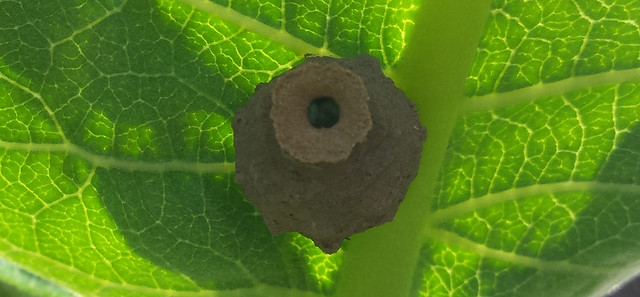
potter wasp nest, just before sealing, with some green showing inside the pot hole

A couple minutes later, she apparently came back and sealed it up (unfortunately I missed that step) and in the process, part of the “lid” chipped off.
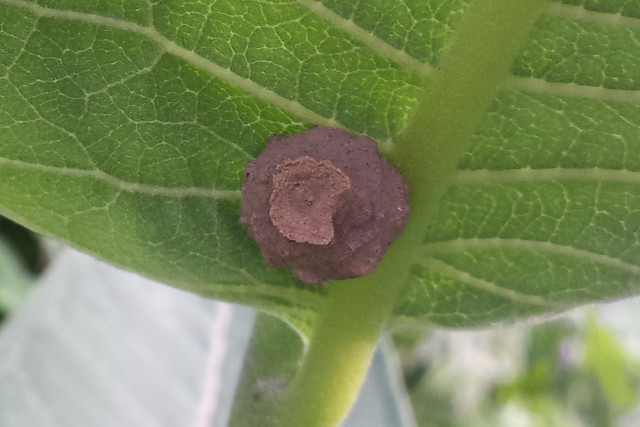
nest with the hole sealed, and a chip off the right side of the lid

It’s now two weeks later, and the pot looks the same. The egg will eventually hatch, and the larva will eat the stored caterpillars and then chew its way out of the side of the pot. One of the coolest things I have ever seen in nature – and it was all in my own front yard.
A number of bugs from last summer’s garden don’t fit into any category I’ve used so far. I’m not making any judgments about whether these are “good bugs” or “bad bugs.”

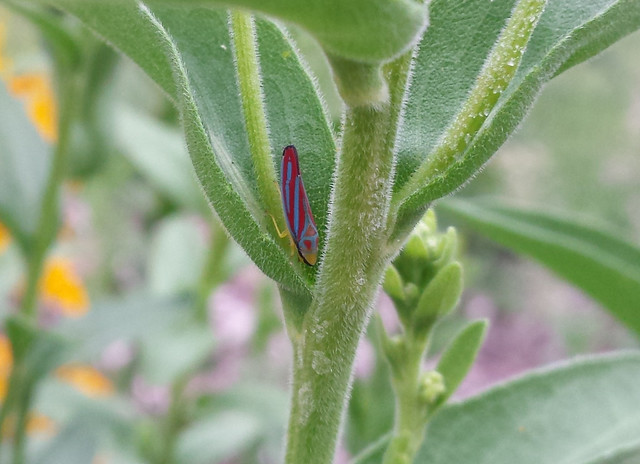
candy-striped leafhopper:

skinny red and baby blue bug with yellow face and legs

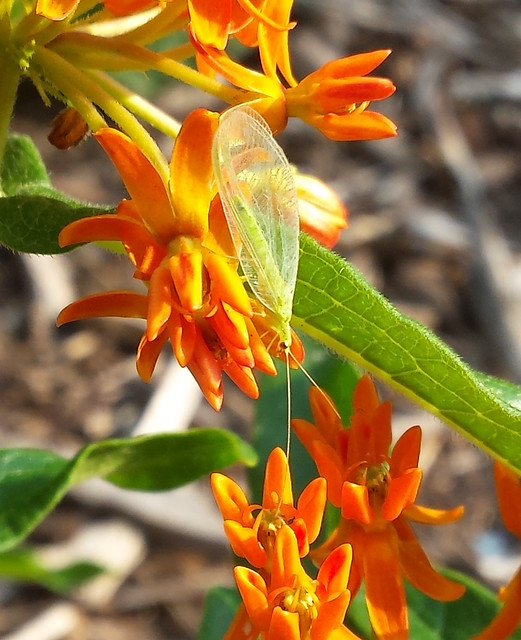
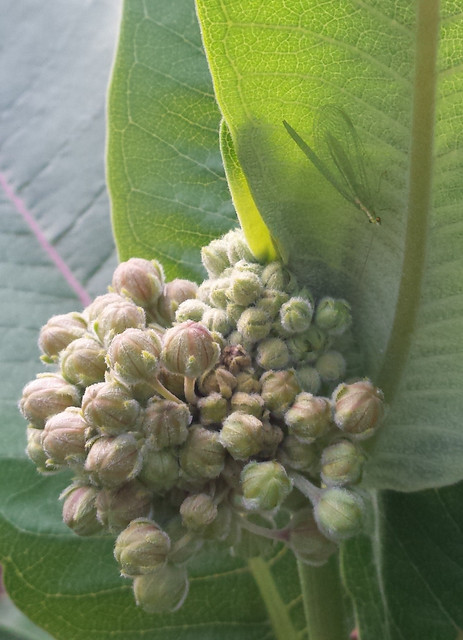
lacewings:

skinny green bug with long antennae and two big clear wings, obvious on a butterflyweed

same bug, nearly invisible on a milkweed leaf

sawfly larva (and hollyhock leaves they’ve damaged), and sawfly adult:

three light green caterpillars on a leaf with the top layer removed in several spots; short and stout black fly with an orange head

inchworm:

small gray worm crawling down the cone of a black-eyed susan

grasshopper – every time I see this photo, at first I wonder why I took a picture of woodchips:

large grasshopper that nearly perfectly matches the grayish color of the woodchips he's standing on

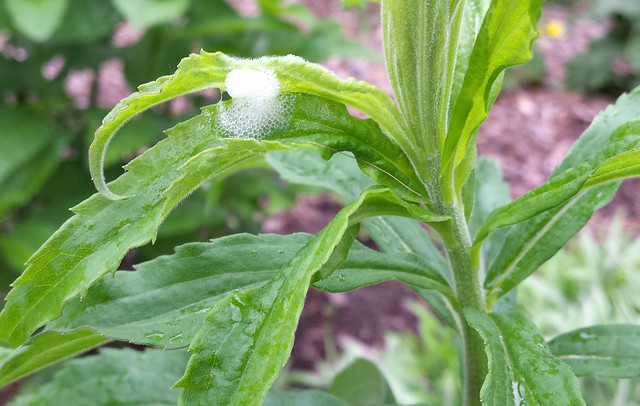
evidence of a spittlebug:

pile of tiny bubbles holding two goldenrod leaves together

slugs (not bugs, but I’m including them here anyway):

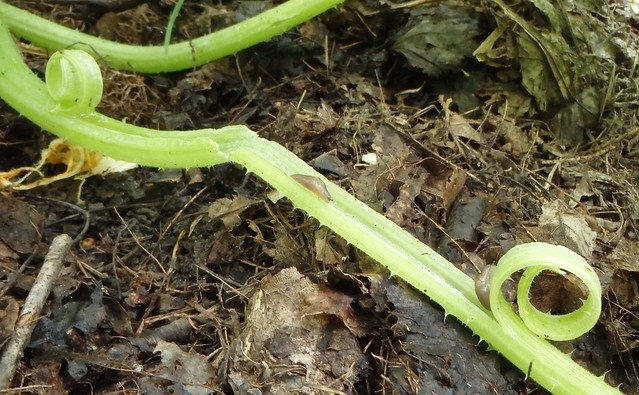
damaged squash vine with the top half curled back in both directions, and two slugs sitting on the bottom half

mayfly:

skinny bug with a big head and two tails, longer than the body, nearly forming a 90-degree angle, on a window screen

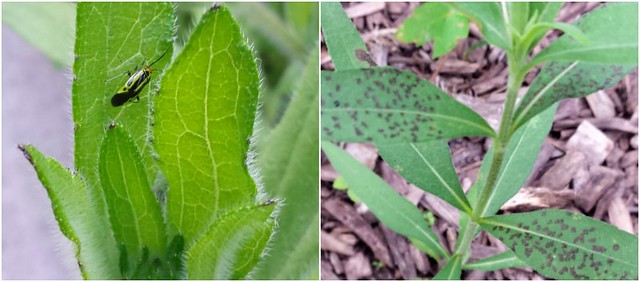
four-lined plant bug, and its damage:

short bug with black and fluorescent green stripes and a black hind end, and leaves of a black-eyed susan with dozens of small black spots

I thought this was an earwig, but now I’m not sure whether those are pincers at the top:

a medium-length black bug head-down at the base of a leaf, with two spikes sticking out of the tail end

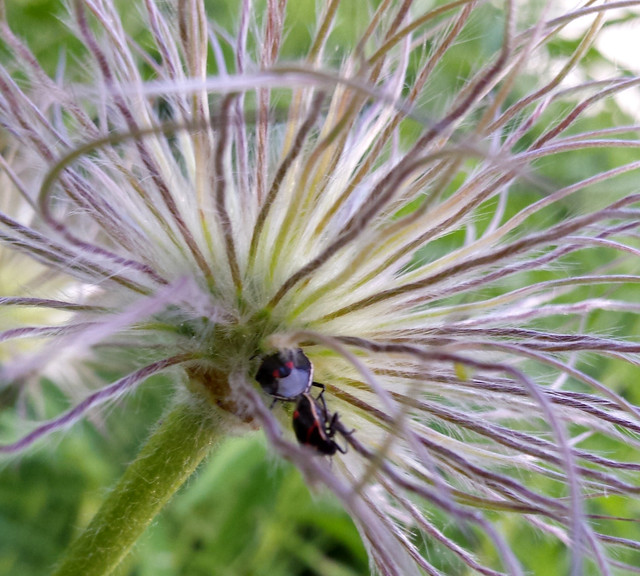
wee harlequin bug:

two shiny shield-shaped black-and-garnet bugs, connected at the tail end, in a pasqueflower seedhead

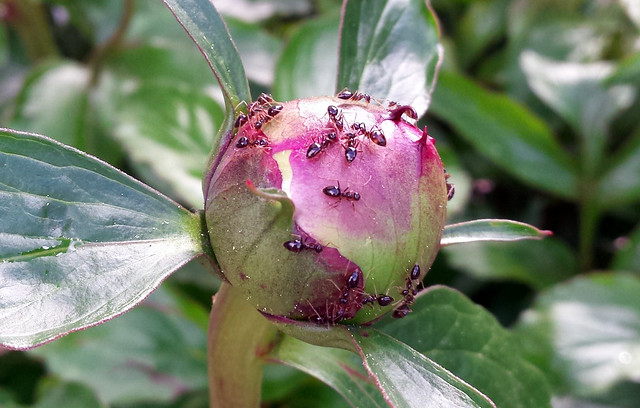
ants on a peony:

17 small dark-brown ants on a closed peony bud

one small ant in the middle of an open white peony blossom with bright pink streaks

ants on the move:

More bugs and critters:

Finally continuing the bee retrospective, after honeybees and bumblebees last week; I have a tentative ID for more of these than I thought.

Ground-nesting bee throwing a dandelion seed out of the way before getting back to business:

Video link


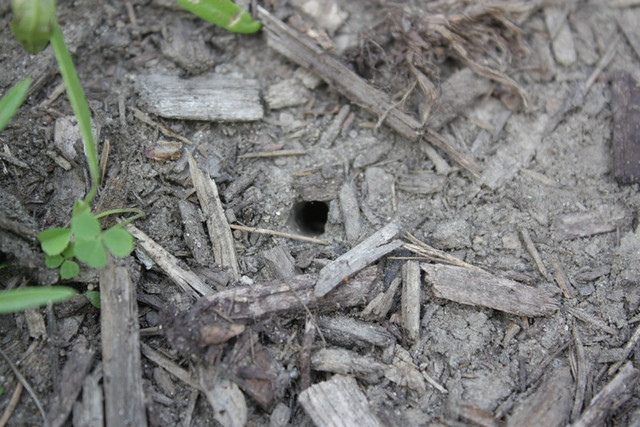
Entrance to a ground nest:

small hole in a the dirt/woodchips

Bee on yellow coneflower:

possibly honeybee covered in pollen, at the top of the cone heading down to the right

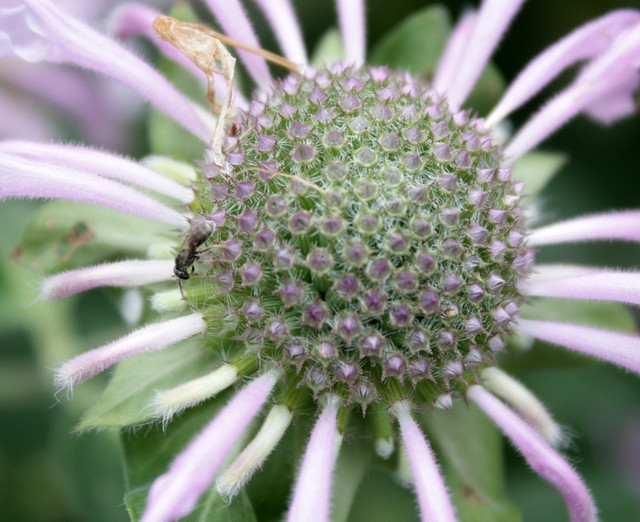
Resin bee on bee balm:

very small black bee at the edge of the center

Resin bees on autumn joy sedum:

Video link


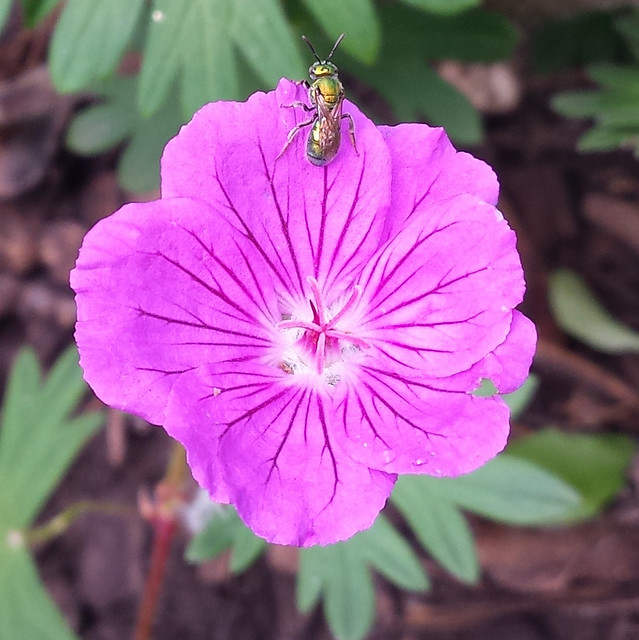
Some kind of metallic bee on tiny monster geranium:

small, shiny green bee

Paper wasps on stiff goldenrod:

many paper wasps, and one hoverfly, on smooth goldenrod

Video


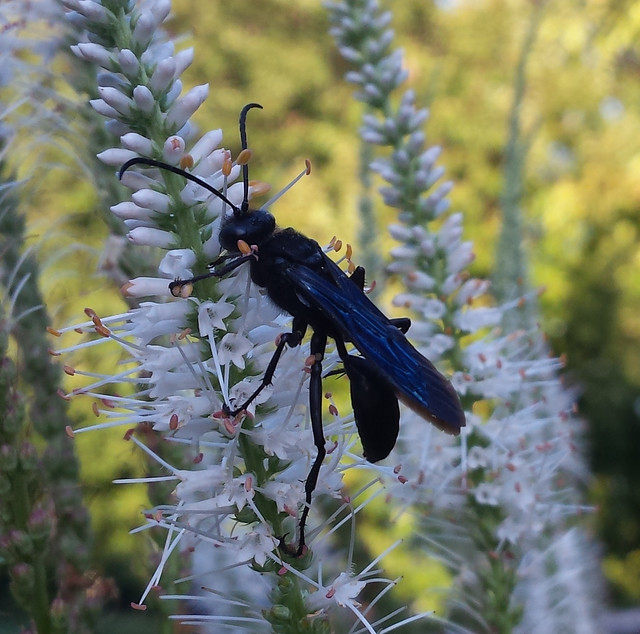
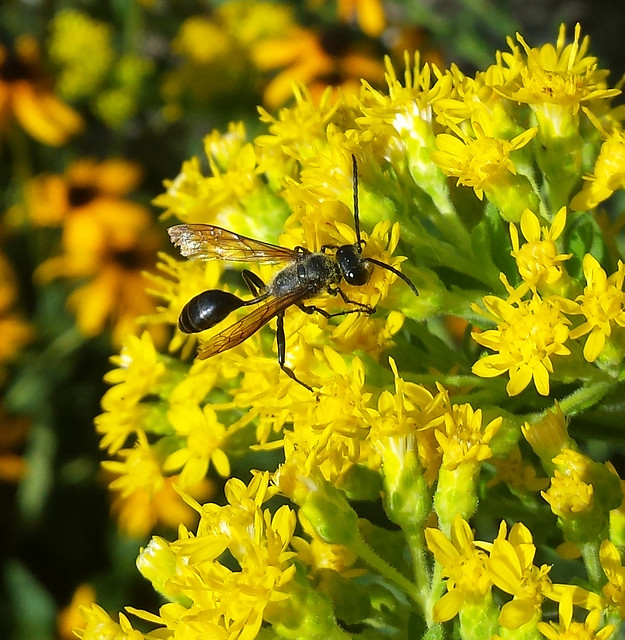
Great black wasp, skittish and way bigger than the honeybees that were also climbing this culver’s root. This photo is in shade; it looked iridescent blue in the sunshine:

very big wasp with its wings folded behind, holding tightly to culver's root

Wasp on stiff goldenrod:

smaller black wasp with its wings stretched out

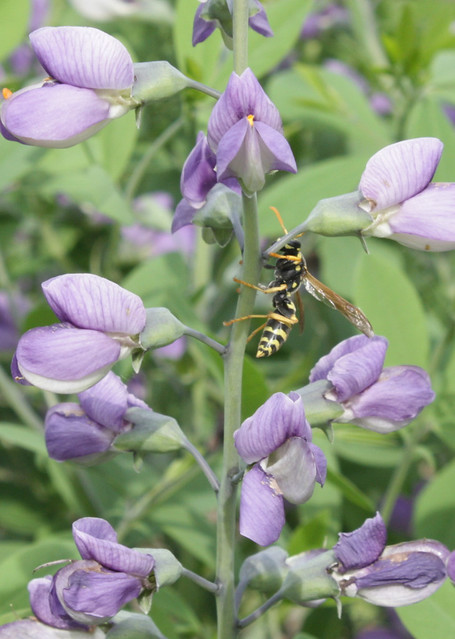
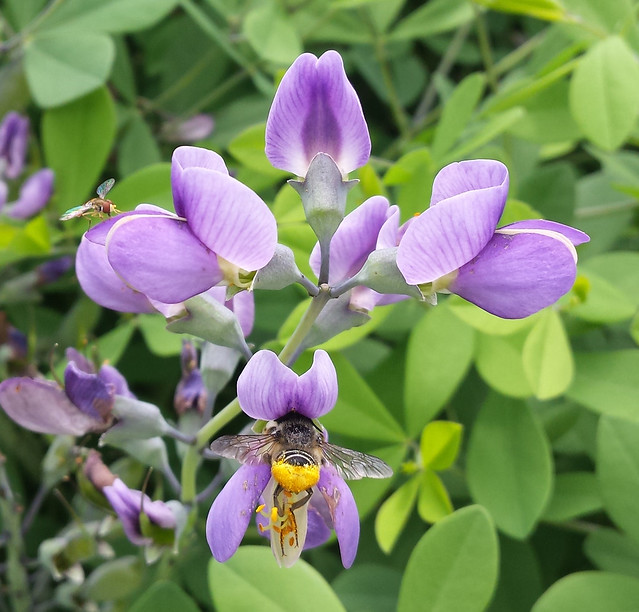
Wasp on baptisia:

possibly paper wasp climbing up the stem of baptisia

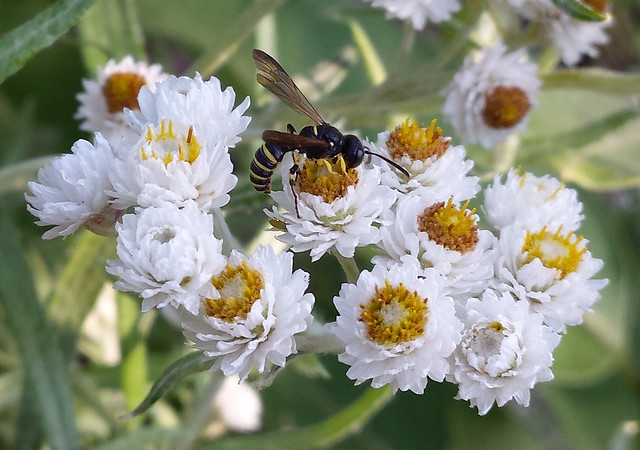
Weevil wasp on pearly everlasting:

wasp with black-and-yellow stripes curved on top of a small white flower

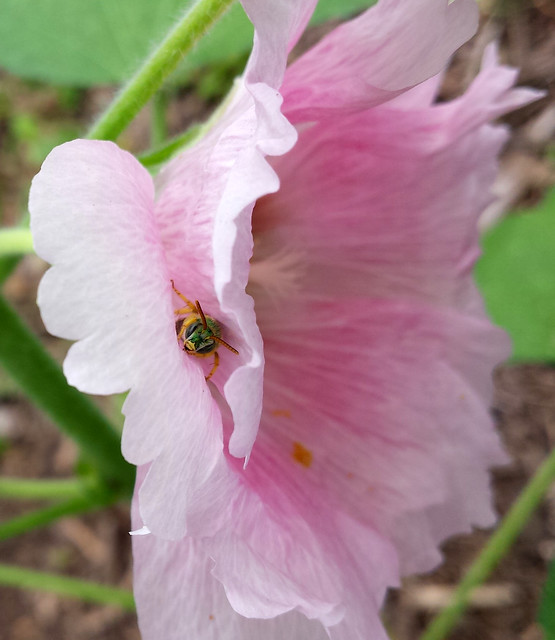
There were four green sweat bees crammed inside this hollyhock blossom. One bee decided to sleep between two petal “sheets” instead:

bee with a green head looking at the camera between two outer petals of a light pink flower

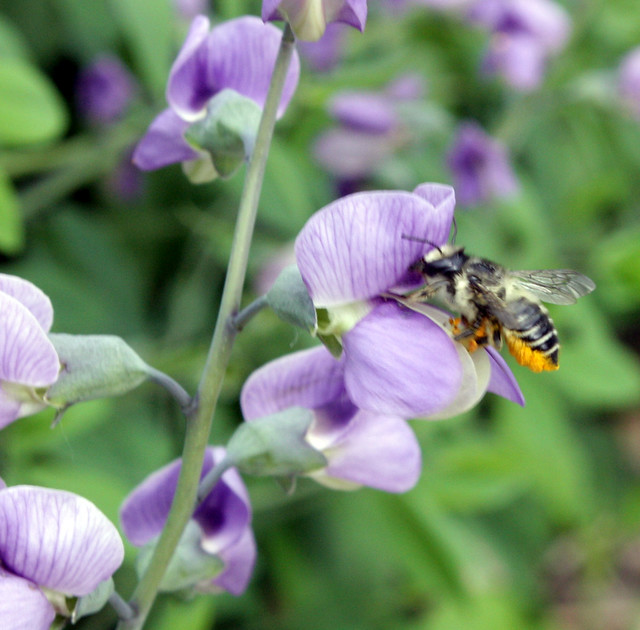
Megachile centuncularis on baptisia:

bee from behind with its head in a flower, abdomen covered in pollen, feet dangling below

same bee from the side, about to climb into a blossom

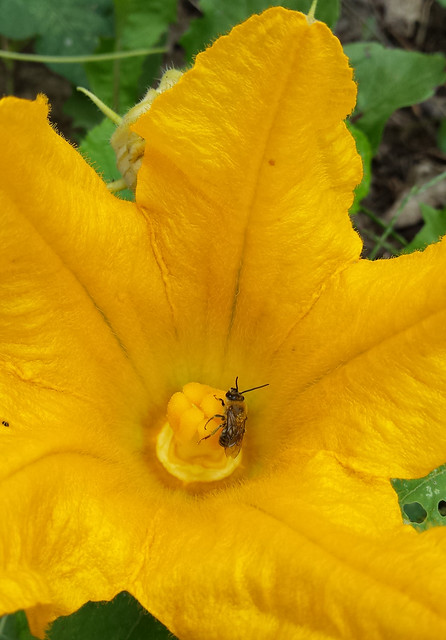
Bee in a squash blossom:

small orange bee standing on the stigma

Unknown on golden alexanders:

small black-and-white bee climbing toward the camera


More bugs and critters:

I took so many bee and wasp photos in 2015 that I’ve decided to split them up. But since I am not an entomologist, I expect to get some of these wrong. As I’m learning more about ground-nesting bees in particular, I’m realizing that what I assume are honeybees and bumblebees might not be.

bachelor’s button:

honeybee in the center of a blue flower

coreopsis:

honeybee standing on the disk floret

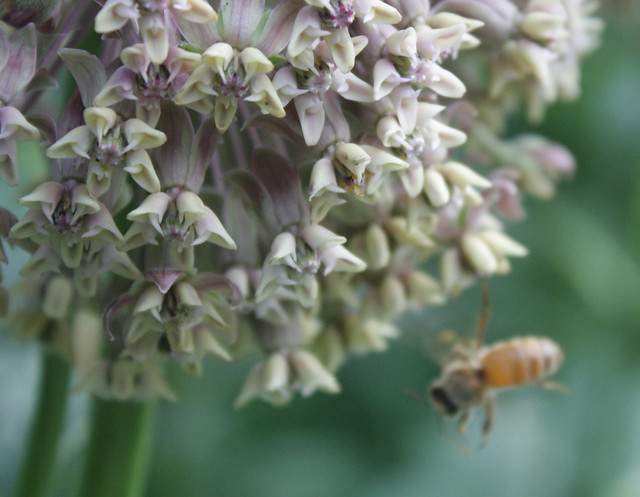
caught in a milkweed blossom:

honeybee hanging by its middle right leg

fighting hard to get free:

same bee holding on to the flower with its wings blurred in a circle

butterfly weed:

dark honeybee on a bright orange flower

baptisia:

light orange honeybee with its hind legs standing on baptisia and its head in the blossom

sleeping on purple coneflower:

bumblebee lying in the middle of a pink petal

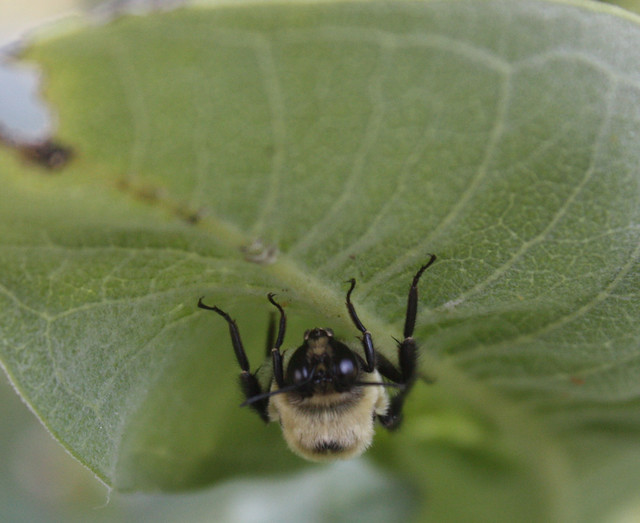
under a milkweed leaf:

upside-down bumblebee looking into the camera

sleeping in a sunflower:

bumblebee hanging upside-down from the lower right side of a disk floret

bee balm:

big bumblebee with a yellow abdominal band on the right side of a bee balm blossom

a different bumblebee on bee balm:

yellow on top, black on bottom, on the left side of a bee balm blossom

stiff goldenrod:

four bumblebees close together, with a barely visible green bee between them

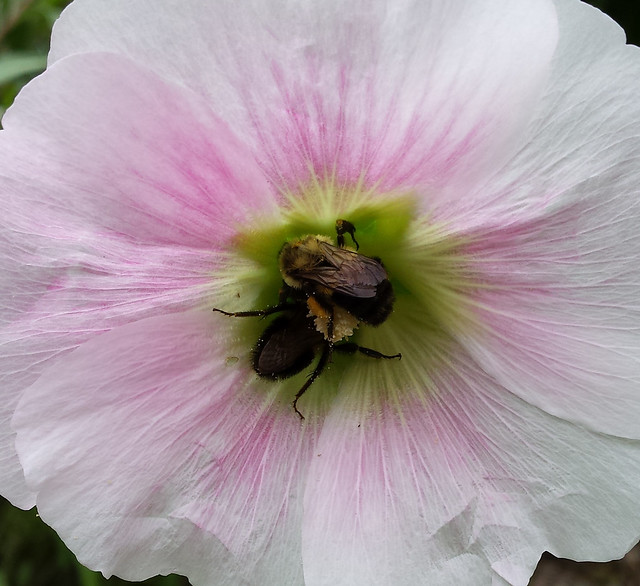
competing over a hollyhock:

a bumblebee in the center of a light pink hollyhock blossom, with another bumblebee further inside

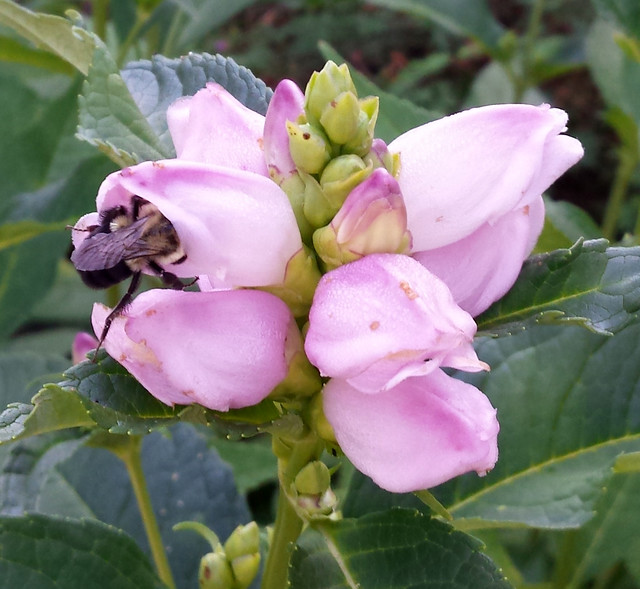
climbing into turtlehead:

bumblebee at an angle, with its right two hind legs still outside

orange-belted, or tricolored, bumblebee, on baptisia:

out-of-focus bumblebee, yellow on top and orange on bottom, on baptisia

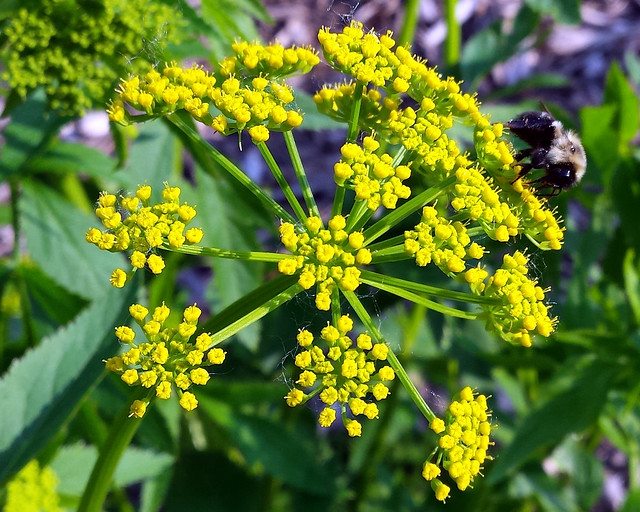
golden alexanders:

small bumblebee on the edge of small yellow flowers

yellow coneflower:

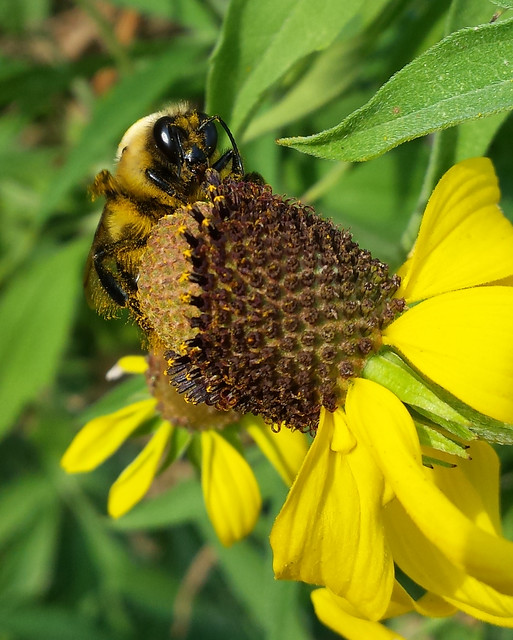
yellow bumblebee looking into the camera while holding onto the cone

spiderwort:

Video link

More bugs and critters:

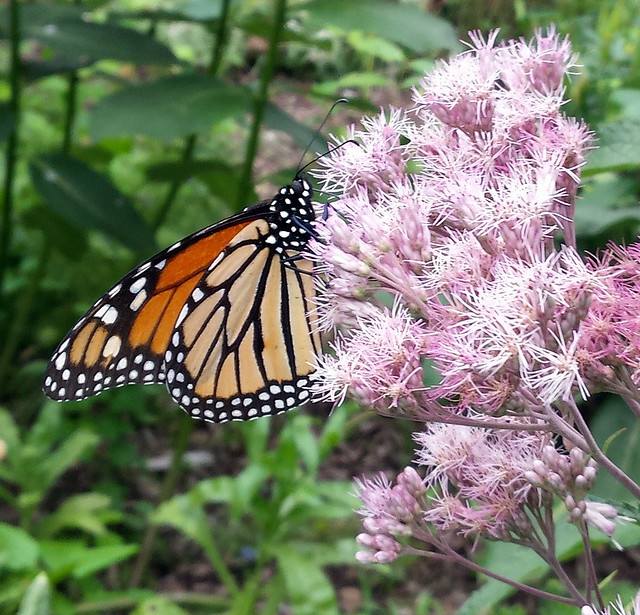
monarch from the right side, with its proboscis in joe-pye weed

Last month everyone was excited to hear that the overwintering monarch population in Mexico more than tripled over the previous year. As we now wait for news about the fate of butterflies who were caught in the winter storm in Mexico, I’ll look at other butterflies because I’ve already extensively noted our monarch activity (inside and outside) from last summer.

Here’s a phenomenon I noticed in previous years: pearly everlasting plants that appear to be damaged by fungus or insects.

pearly everlasting with dozens of caterpillar webs

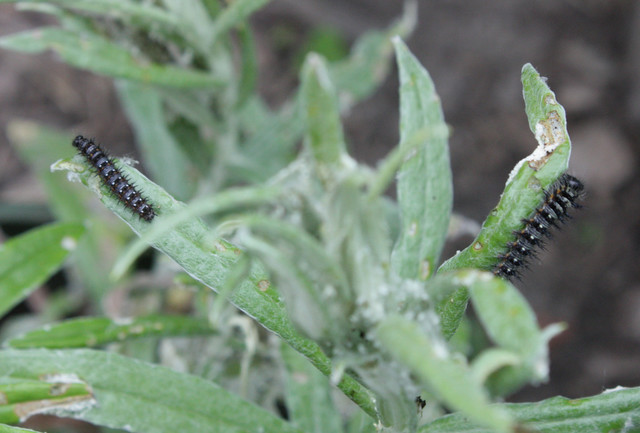
This year I looked closer and discovered that the white “fungus” was instead nests for caterpillars. Our four large clumps of hundreds of flowers were each covered in webs that protect American lady caterpillars.

two black, spiky caterpillars on opposite sides of a pearly everlasting plant

This went on for several weeks, with the caterpillars getting larger and larger, but one day I noticed that there weren’t any more caterpillars around – and this was the only butterfly I saw:

brown-and-orange butterfly with tattered left wings, viewed from above, on tiny monster geranium

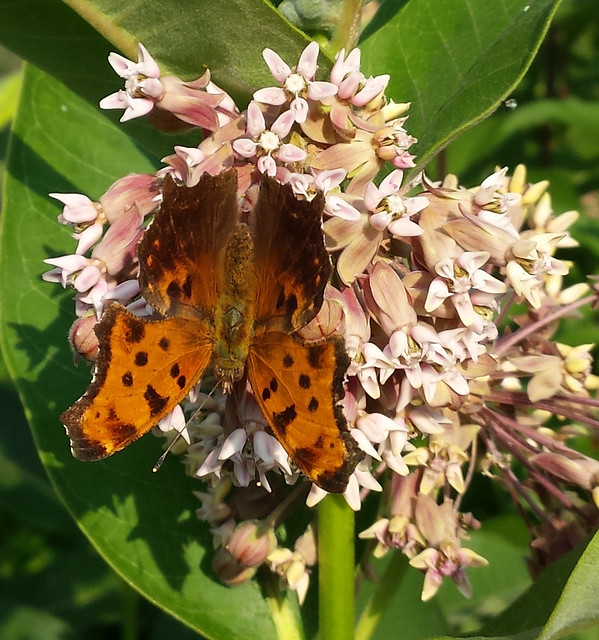
I went back-and-forth about this one: is it a question mark butterfly or a comma butterfly? I said “question mark” when I saw it on July 8:

big orange butterfly with brown spots, wings open, upside-down on common milkweed

And five days later I thought this one was a different butterfly, a comma:

brown butterfly with wings closed, with a white C on the lower wing, viewed from the right side

Now that I’m inspecting the images closely, I think they’re probably the same butterfly, and I think it’s a comma.

I only noticed tiger swallowtails a couple times. This year I will plant dill to attract them:

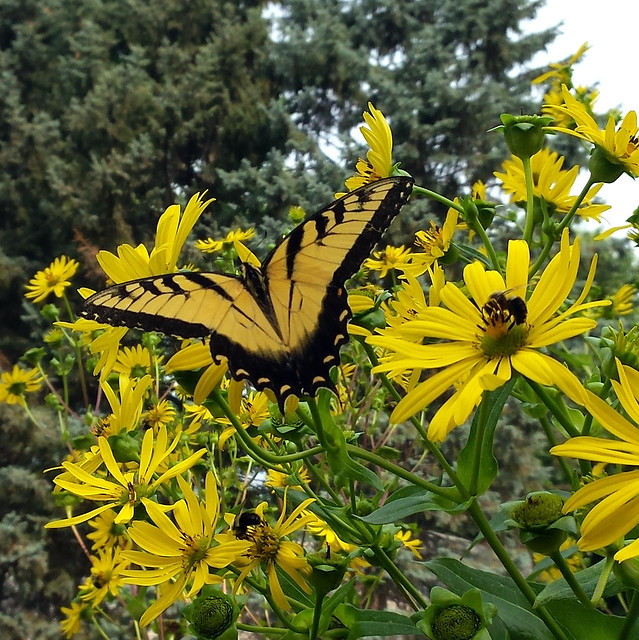
large yellow butterfly with black marks, sharing a cup plant with two bumblebees

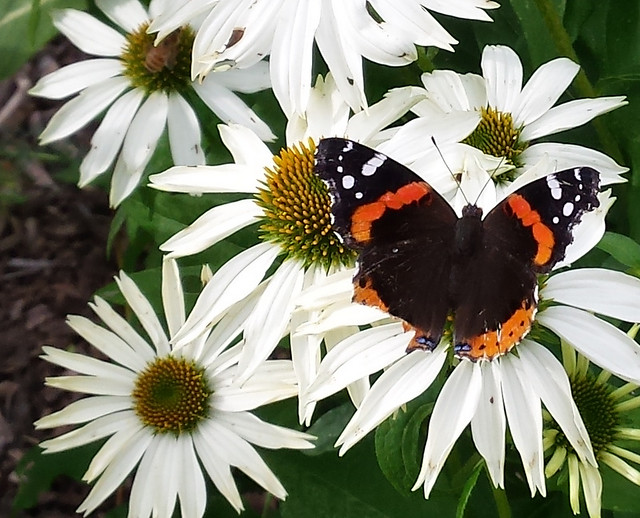
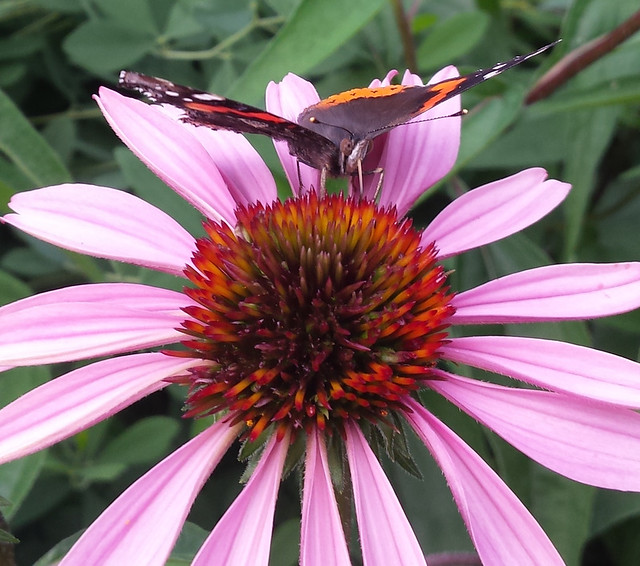
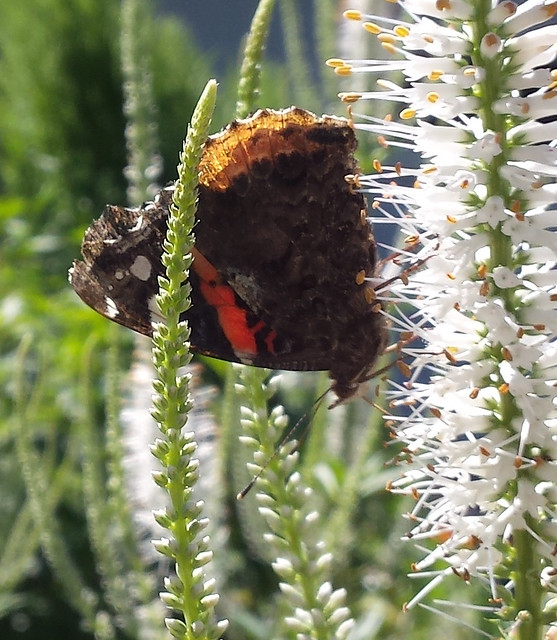
Red admirals:

tattered left wing on a red admiral on white coneflower

butterfly looking into the camera, its wings viewed straight on and nearly invisible, drinking from purple coneflower

viewed from left side, walking down culver's root blossom

Skippers:

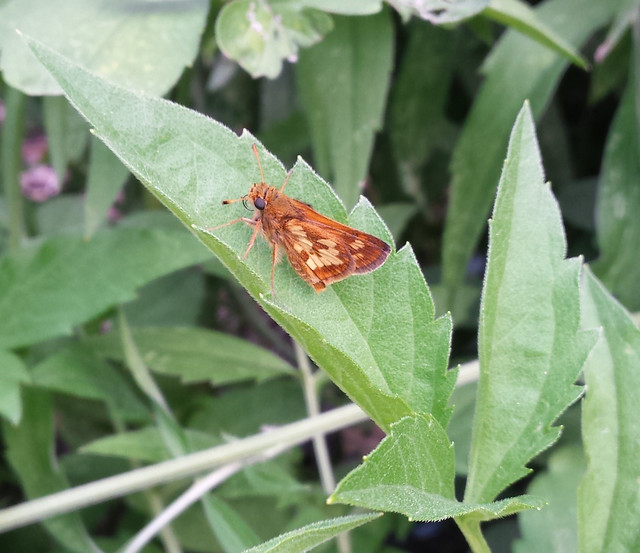
medium butterfly with yellow markings on its wings, viewed from the side, on yellow coneflower leaf with its proboscis curled up

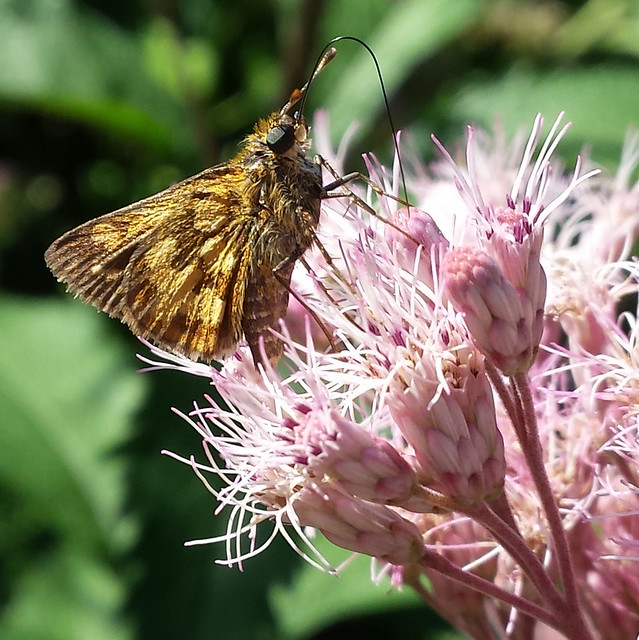
brown butterfly from the right side, leaning back with its proboscis extending up and then down into joe pye weed

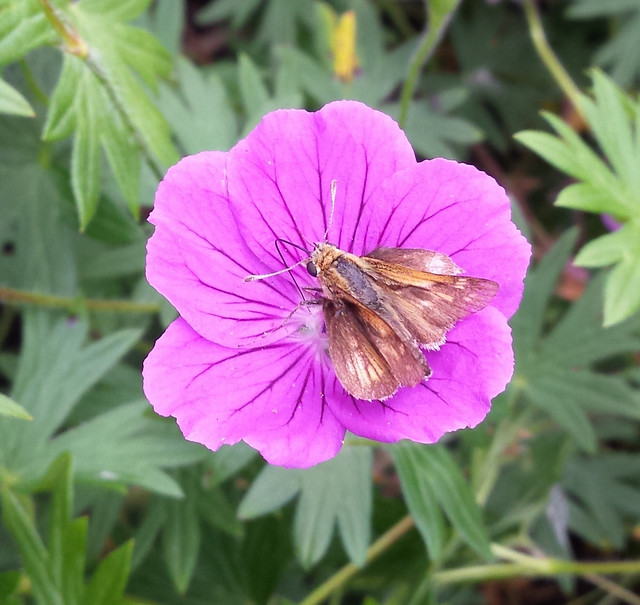
dark brown butterfly with faint whitish markings, viewed from the top, with its proboscis in tiny monster geranium

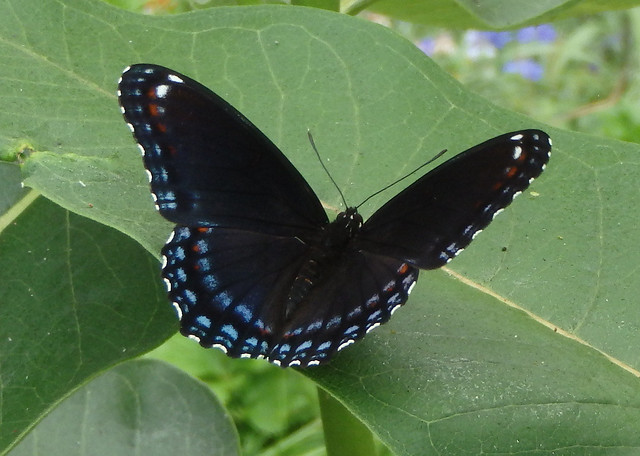
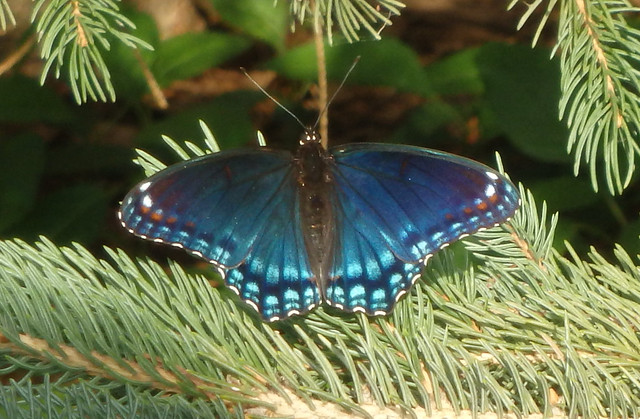
The most breathtaking find of last summer – a red-spotted purple:

black butterfly with its wings open, with white, baby blue, and orange spots all along the edges of its wings, in the shade

same butterfly in the sun, its wings turned iridescent blue

same butterfly in shade, viewed from the left side, with the same spots along the wing edges and orange spots over the rest of the wing

More bugs and critters: