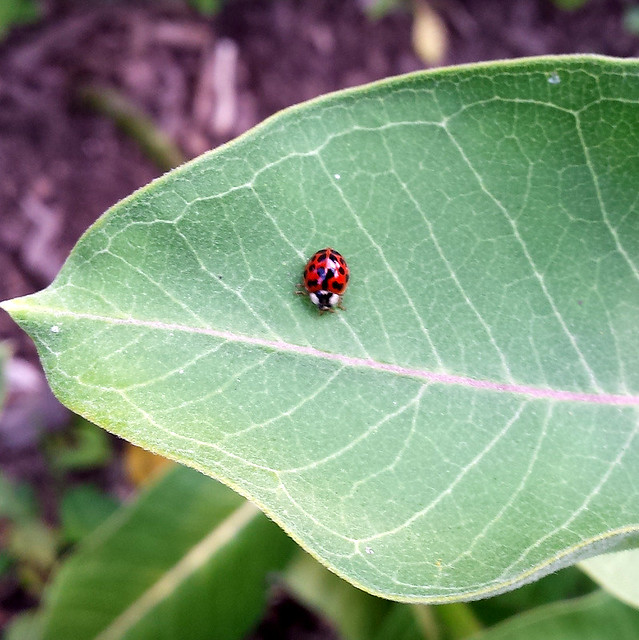
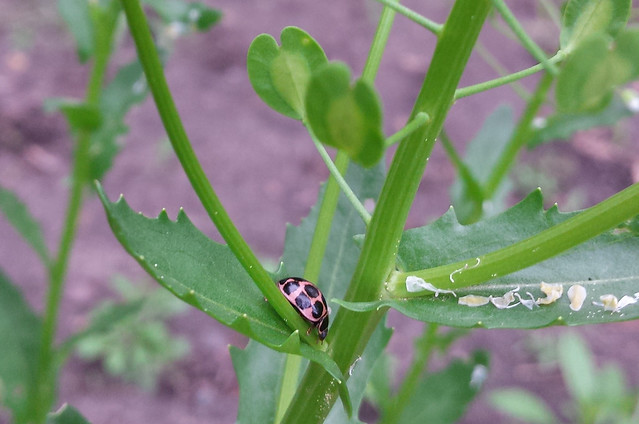
In 2015 there were lots and lots of ladybugs in our garden. Most of these are non-native multi-colored Asian lady beetles, identifiable by an M or W pattern of spots on their heads.
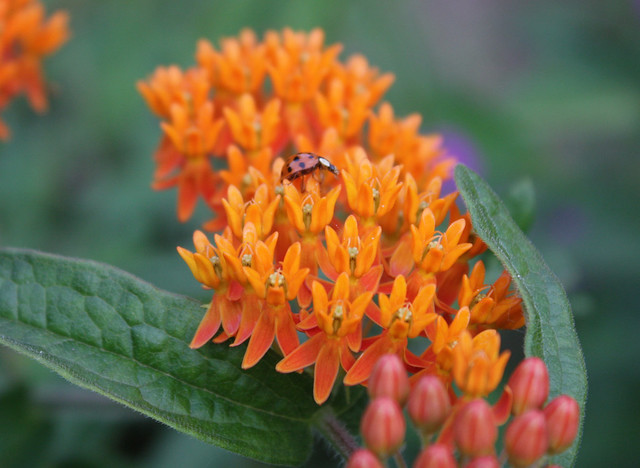
red beetle on orange butterfly weed

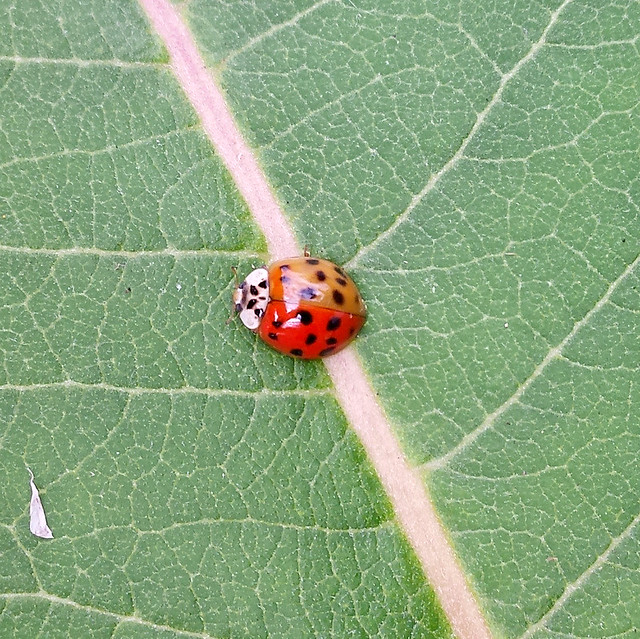
Two-toned:

red left wing, orange right wing

Orange:

yellowish-orange beetle with 18 spots

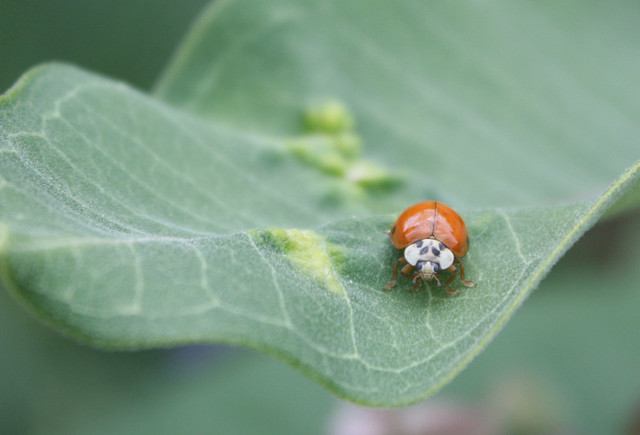
Two spots:

darker orange ladybug with a spot at the bottom center of each wing

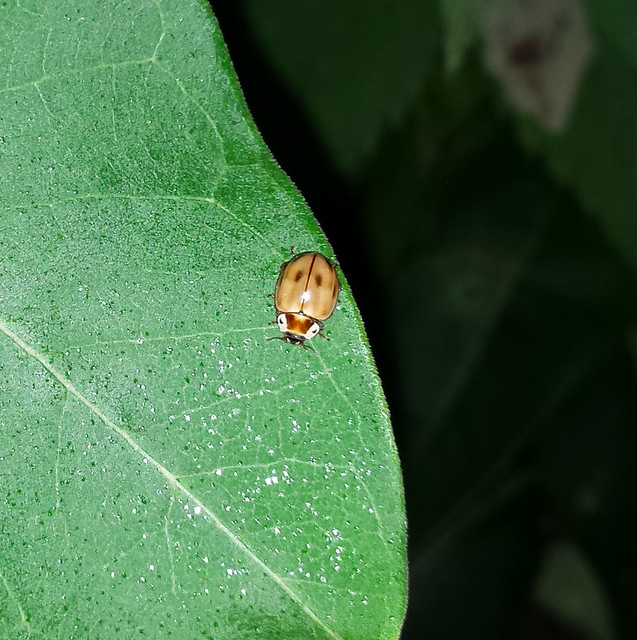
Six spots:

light brown ladybug with two spots on top, two in the bottom center, and two in the back

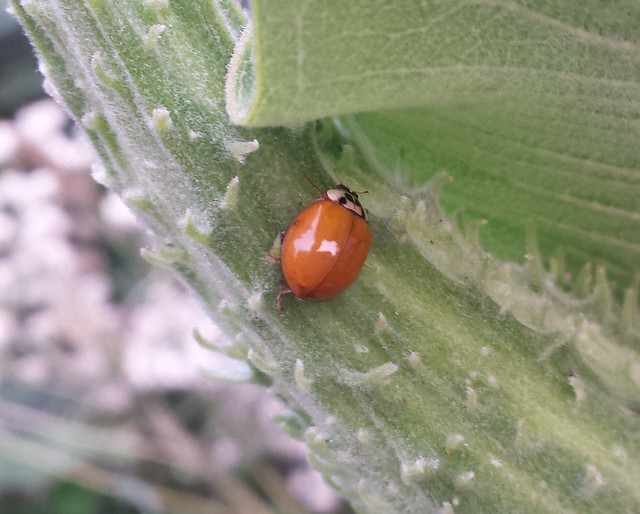
No spots:

orange ladybug

Lots of spots:

bright red ladybug with about 20 spots

Big spots:

pinkish ladybug with about 10 spots that are larger than on any other ladybug

(This is starting to feel like a Dr. Seuss book.)

Ladybug with a deformed wing:
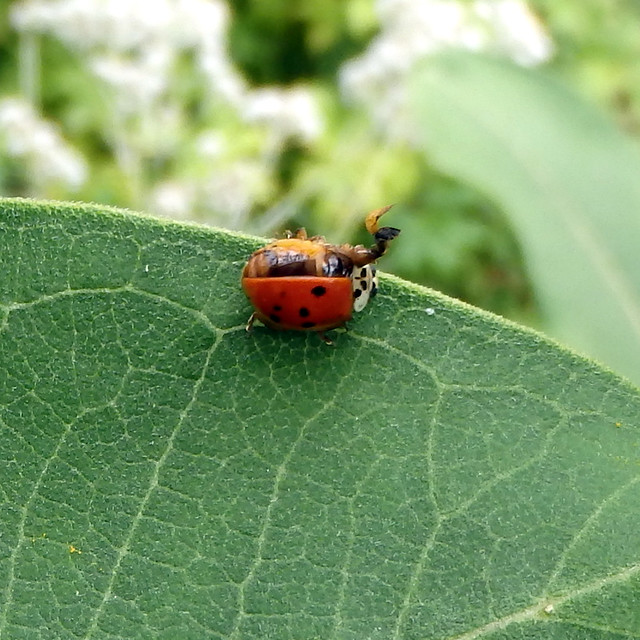
viewed from the top, a missing wing cover and a shriveled wing extending farther than its head

viewed from the side, it looks like a cross-section of a ladybug

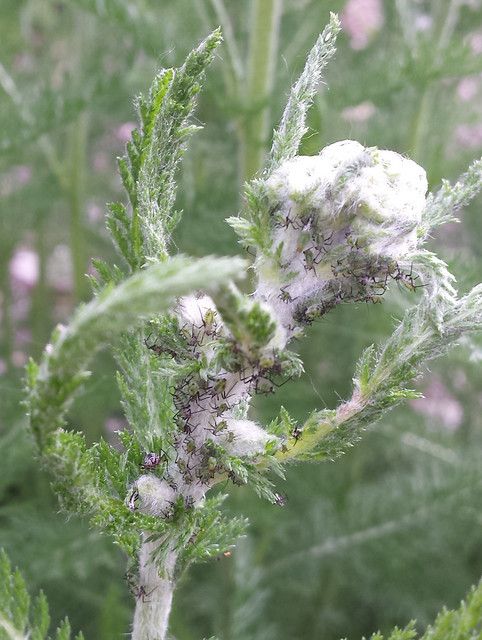
Aphids before ladybug arrival:

green aphids covering yarrow buds

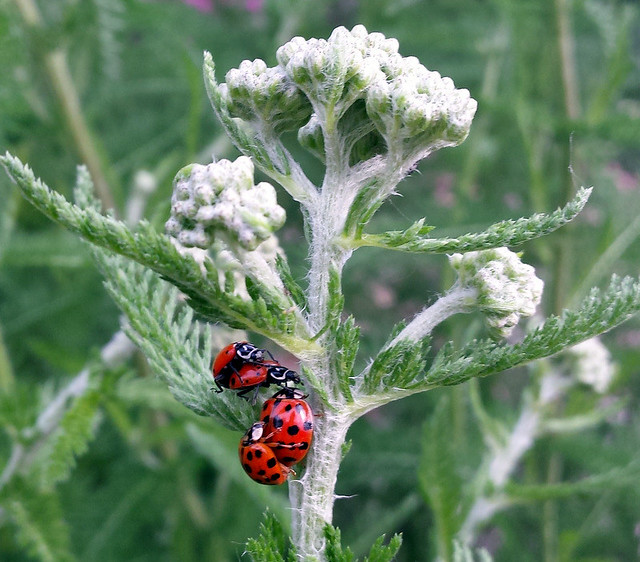
Aphids after ladybug arrival:

two pairs of mating ladybugs walking on yarrow with no aphids

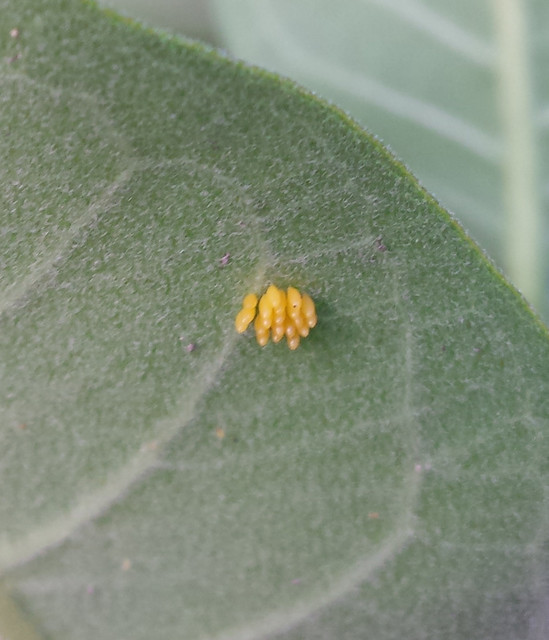
Ladybug eggs:

about 20 long yellow eggs on the underside of a milkweed leaf

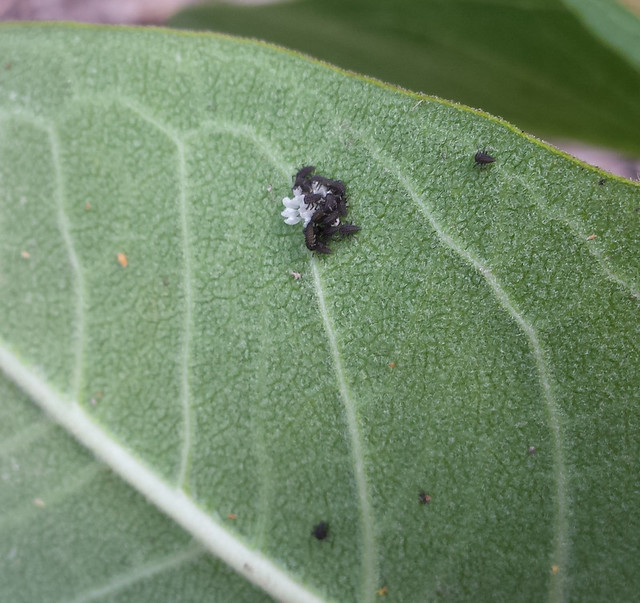
Just hatched:

tiny black bugs crawling out of white eggs

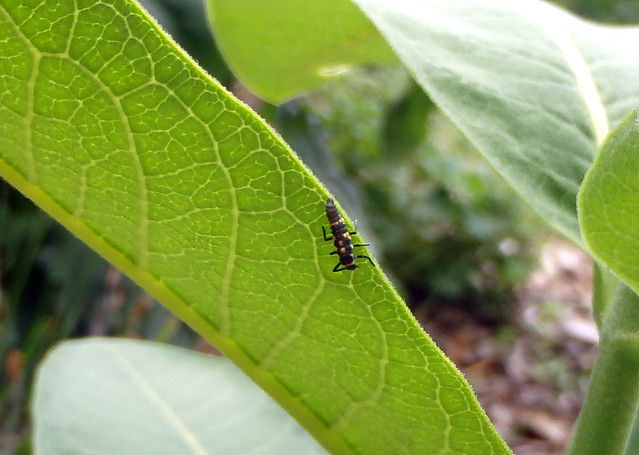
Ladybug larva:

long, skinny black bug with two orange spots and two orange bands on the bottom of a milkweed leaf

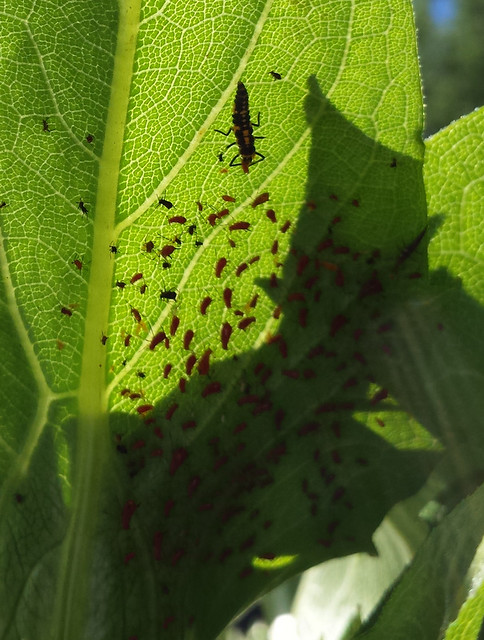
Grabbing aphids:

ladybug larva holding an aphid in its mouth with its front legs, with lots of other red aphids nearby

This year, I plan to participate in the Lost Ladybug Project to help document the species in Minnesota.

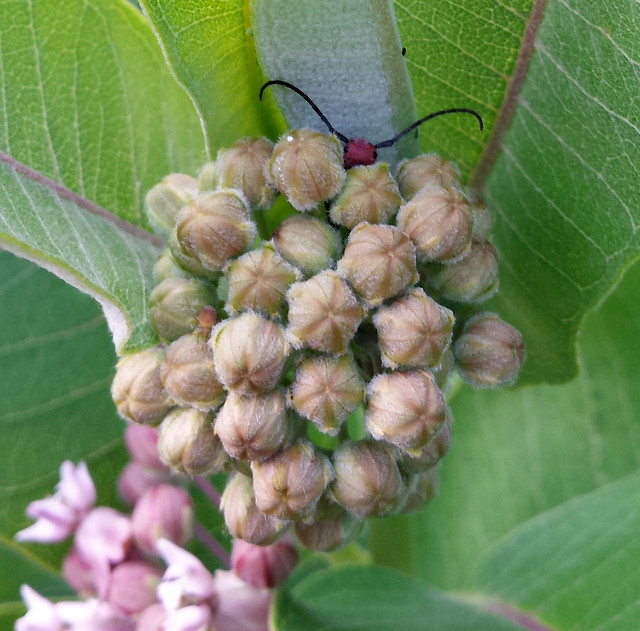
There were also other beetles, like the milkweed beetle:

long red beetle with black spots

milkweed beetle's head peeking out from behind milkweed buds

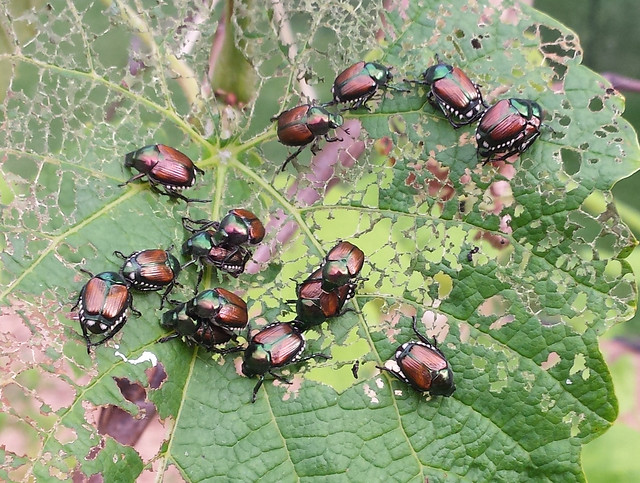
Non-native pest, Japanese beetle:

16 shiny black-and-green beetles, some mating, on a holey grapevine wreath

Grapevine beetle – much bigger than any other beetles I saw:
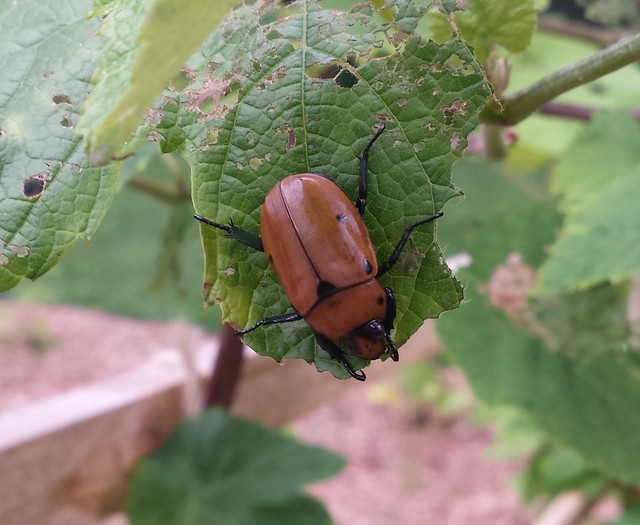
medium-brown beetle at least an inch long

Soldier beetle or Pennsylvania leatherwing:
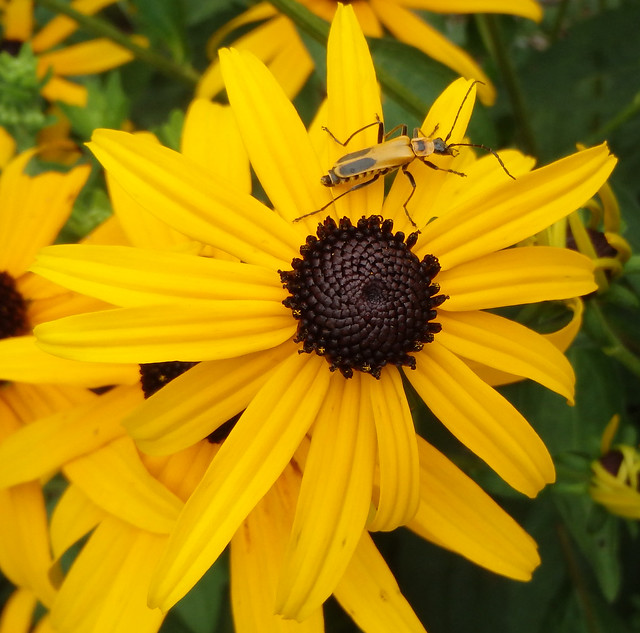
light orange beetle with long black spots at the ends of its wings, on black-eyed susan

And my favorite beetle sighting of 2015, locust borer:
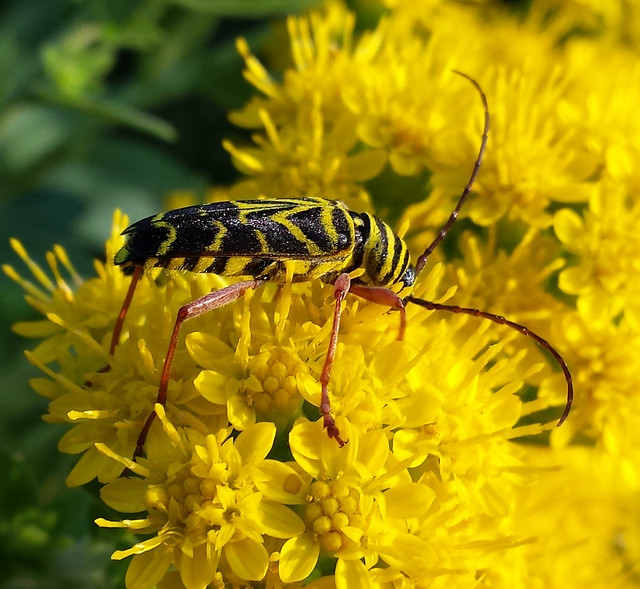
large beetle with black and yellow stripes around its entire body and head, with long red legs

More bugs and critters:

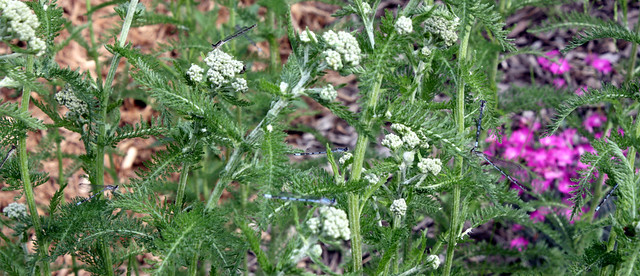
In early summer, when the yarrow was budding, damselflies were abundant in our wildflower garden.

brown damselfly perched on yarrow buds with its head pointing to the left

blue damselfly perched on yarrow buds with its head pointing to the right

They often congregated in large clusters. This photo has at least eight damselflies. (Click to see a larger image on Flickr.)

yarrow plants with eight mostly blue damselflies

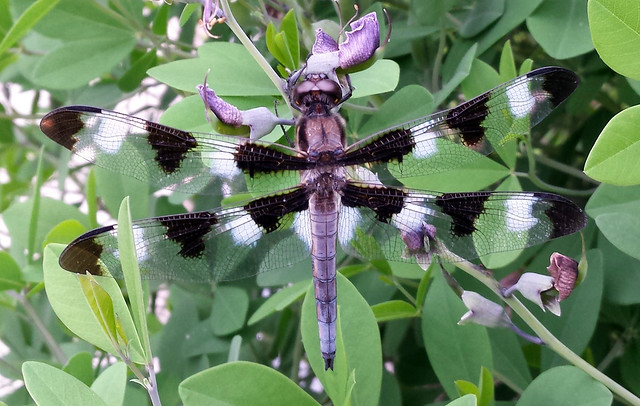
And then came the dragonflies. This twelve-spotted skipper stayed perched for hours.

black-and-white wing spots on a gray dragonfly perched on baptisia

One afternoon I was exploring the garden when it started to sprinkle. Something large and loud whizzed past my ear, and then I found this big green darner dragonfly hanging onto a black-eyed susan to wait out the rain. Monarch butterflies get a lot of publicity for their annual migration to and from Mexico. Green darner dragonflies also migrate south, though it’s the offspring that return north.

green thorax and brown abdomen, clear wings, head with a giant fake eye or bullseye

Meadowhawk dragonfly relaxing in the sun.

brown dragonfly with clear wings, each with a brown spot at the tip, on a milkweed leaf in bright sun

More bugs and critters:

Are flies pests or beneficial? Depends on the fly. It also may depend on who you ask! Some are pollinators; some are predators. Here are flies from last year’s garden.

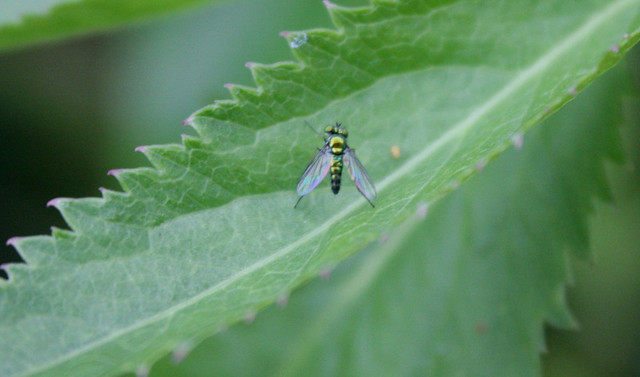
Long-legged fly:

small fly with a skinny metallic green body on a leaf

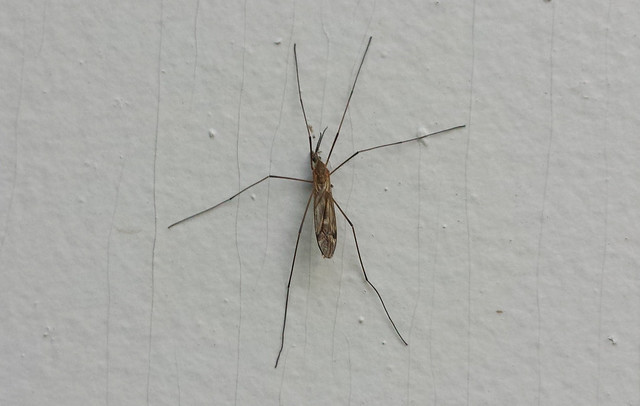
Crane fly:

large fly with very long legs and wings folded along its body resting on a gray wall

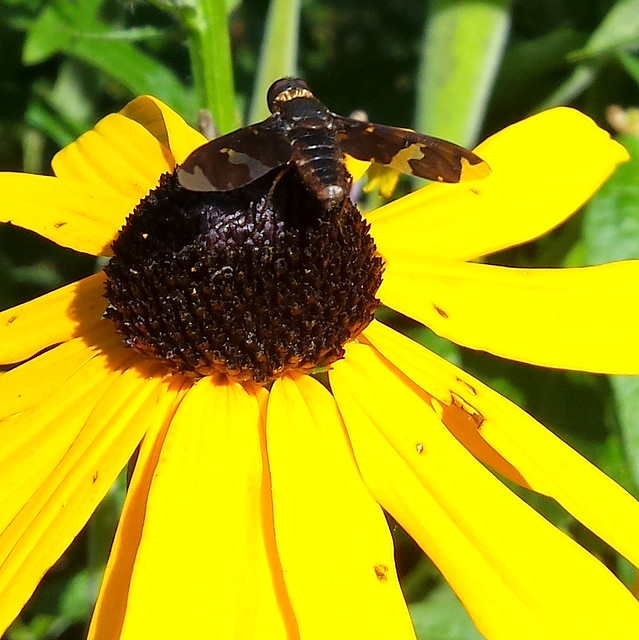
Tiger bee fly:

brown fly with brown-and-white camouflage wings on a black-eyed susan

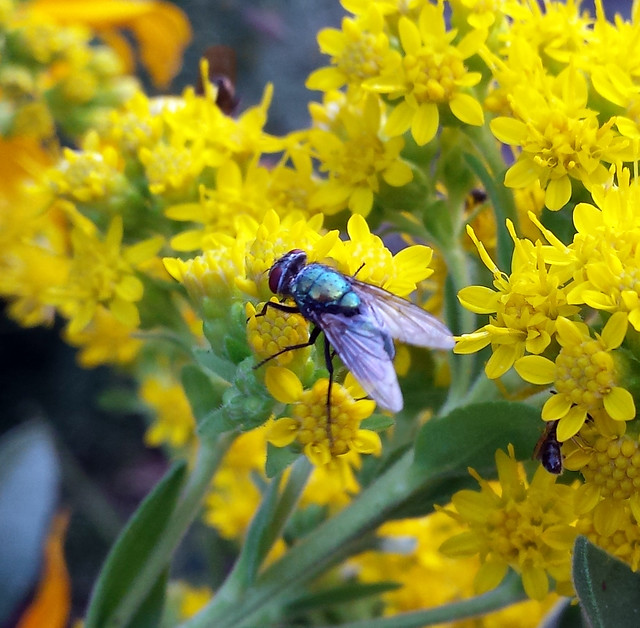
Common green bottle fly:

short, metallic light blue body

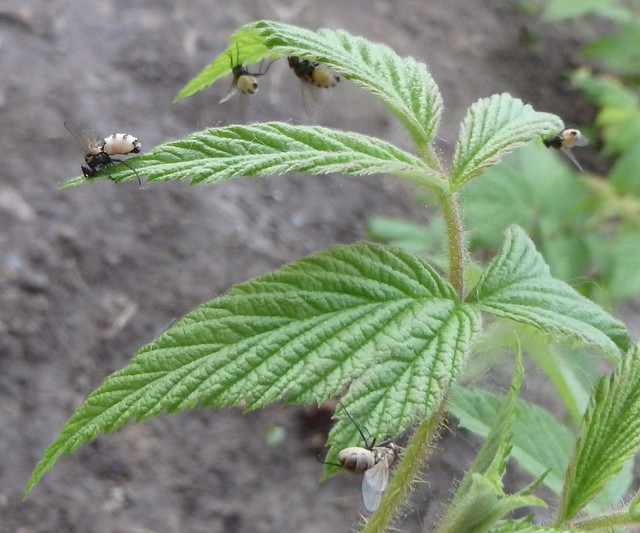
Unidentified dead flies, likely killed by a fungus. Other people have posted dead white flies like this on bugguide.net; University of Minnesota Extension has a potential cause.

five bloated white flies stuck on the top and bottom of raspberry leaves

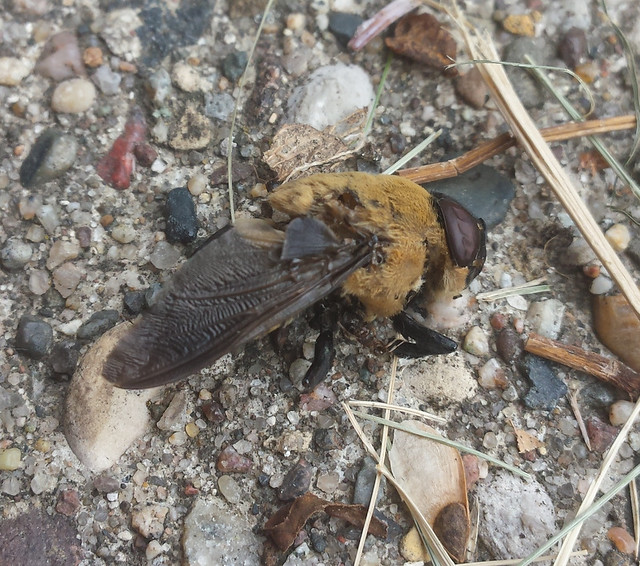
The end of a robber fly:

only half of a robber fly remains on a sidewalk

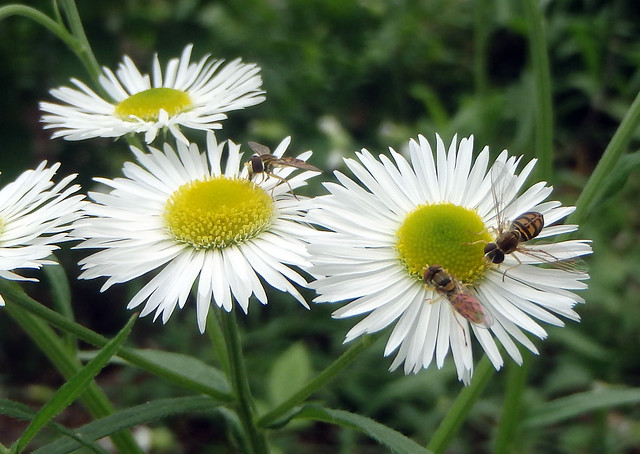
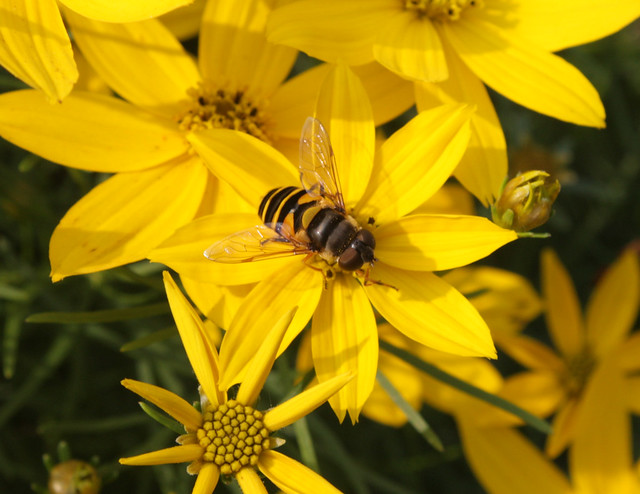
Small and large hover flies:

three small bee mimic flies on fleabane

a larger bee mimic fly on a bright yellow coreopsis cultivar

More bugs and critters to come soon:

Warm late-February weather left us with very little snow, so I’d better get going on the bug and critter recaps in case we have an early spring! Here are pictures of the spiders and other arachnids I found in our garden last summer.

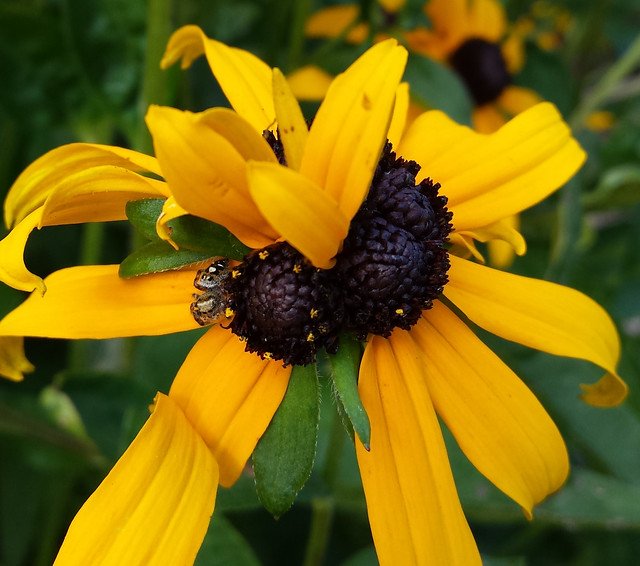
I call this a jumping spider – though I don’t whether it really is – hidden in the center of a multi-headed black-eyed susan:

spider hugging the left of a flower's center disk

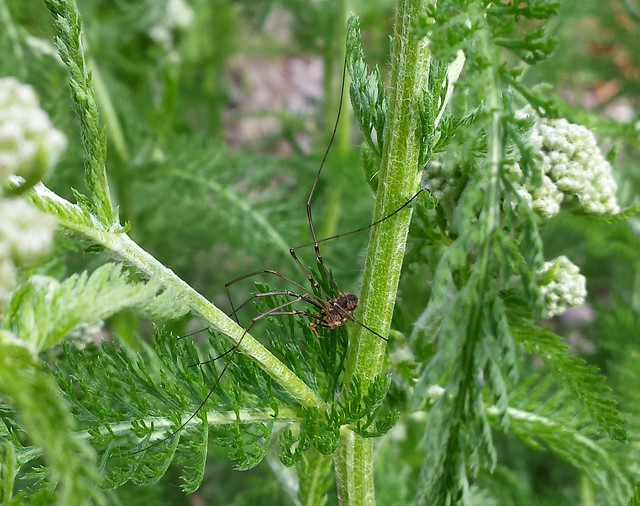
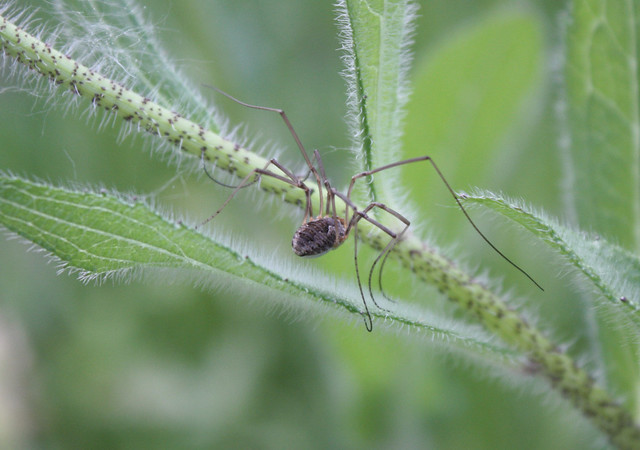
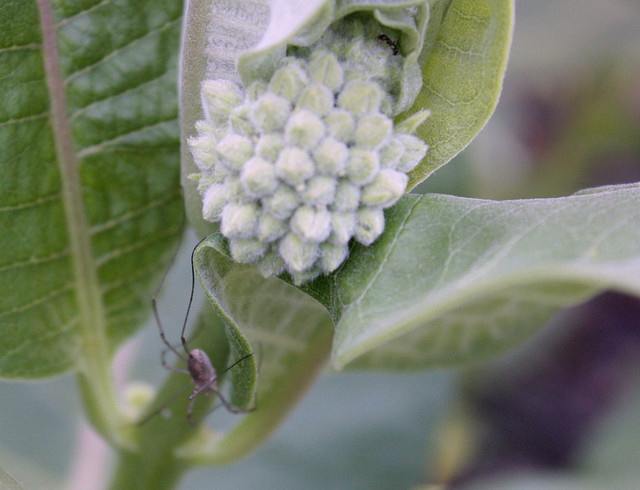
Harvestmen daddy longlegs (opiliones, not spiders) wrapped around leaves to hold on:

long folded legs climbing down a yarrow plant, with two legs still reaching high

long folded legs walking across leaves and stem of a native black-eyed susan

more compact daddy longlegs walking down a milkweed leaf

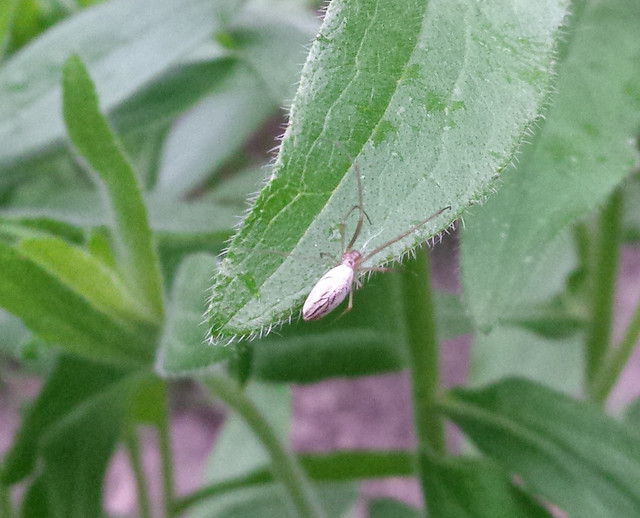
And two I don’t know:

long white body and medium-length light-brown legs

small yellow body and long yellow-and-black striped legs on the underside of a milkweed leaf

Other bugs and critters:

When we got married five years ago and I moved into his house, we started converting the lawn to flowers. It started very small – just a short hillside, which was hard to mow anyway. That was so successful that we’ve been chipping away at more and more of the grass every year.

We started buying flowers with gift certificates we received for our wedding: mostly perennials, some of them native plants. Now the only thing I will consider adding to the permanent garden is natives (though we do have annuals in pots each summer, too).

As the flowers have taken hold and expanded, more and more insects and other critters have been taking up residence. Who knew that swapping bluegrass for native plants would result in such a large insect community? (She wrote with dripping sarcasm.)

I recently added a list of my favorite flower posts to the sidebar. All five involve bugs.

This is the start of a multi-post series on critters, published in 2016 using photos from my 2015 garden. First, some bugs I haven’t yet identified (on plants I have identified).

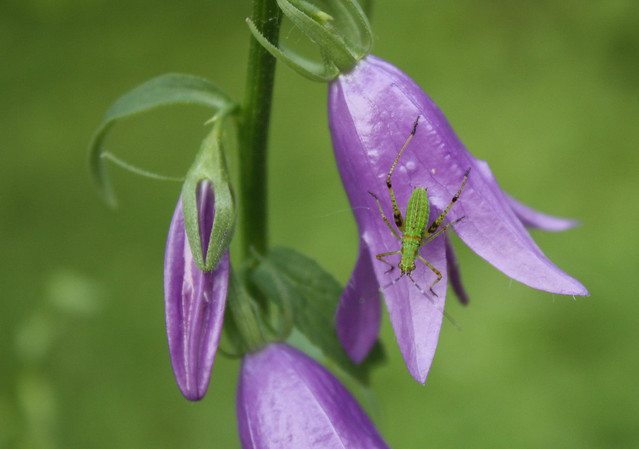
Invasive creeping bellflower:

long green bug with legs like a grasshopper

Native black-eyed susan:

short black-and-white bug

Common milkweed:

skinny bug or arachnid - not sure how many legs

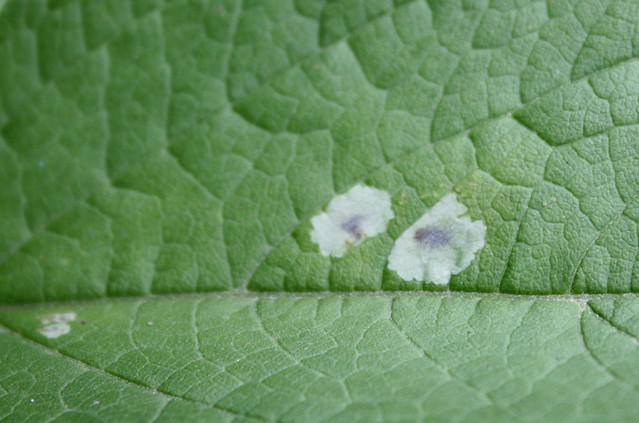
Joe-pye weed:

leaf damage - white spots with dark forms like tadpoles underneath

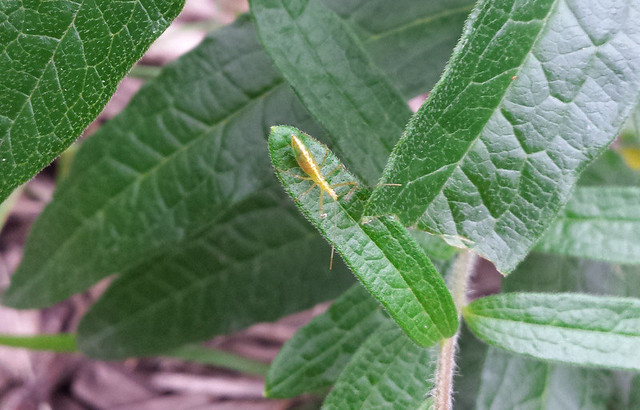
Butterfly weed:

long, skinny yellow bug

Common milkweed:

possibly a fly with very long antennae

Bee balm:

dark brown bug with a reddish spot and

Common milkweed:

light green bug with skinny grasshopper-like legs and very long antennae

More critters