Are flies pests or beneficial? Depends on the fly. It also may depend on who you ask! Some are pollinators; some are predators. Here are flies from last year’s garden.

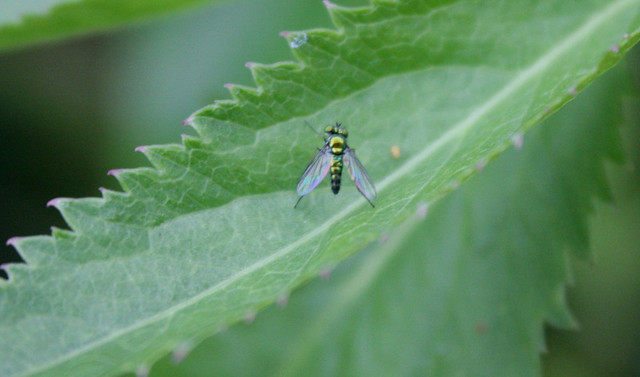
Long-legged fly:

small fly with a skinny metallic green body on a leaf

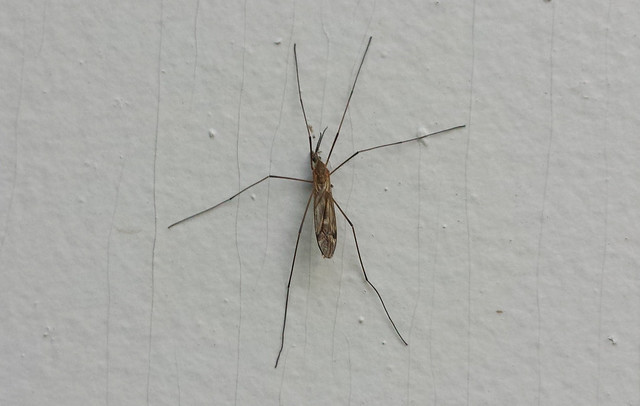
Crane fly:

large fly with very long legs and wings folded along its body resting on a gray wall

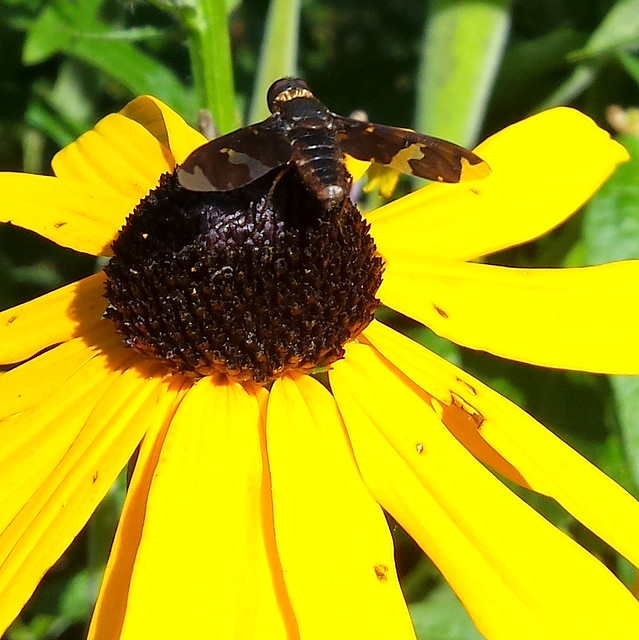
Tiger bee fly:

brown fly with brown-and-white camouflage wings on a black-eyed susan

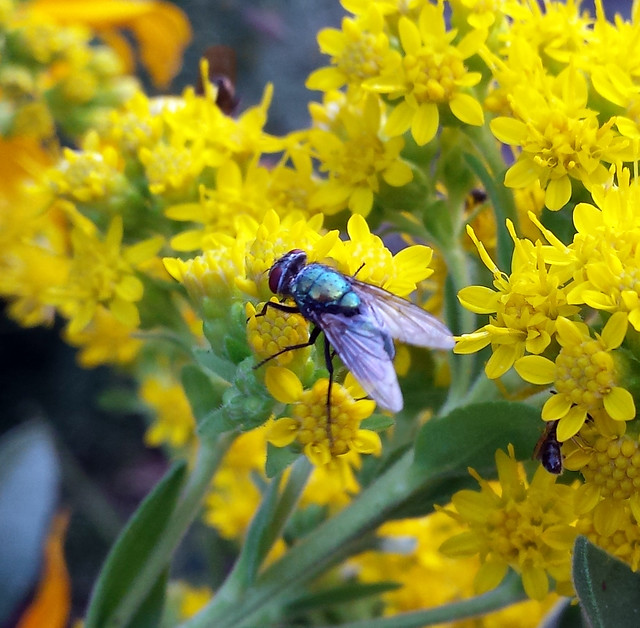
Common green bottle fly:

short, metallic light blue body

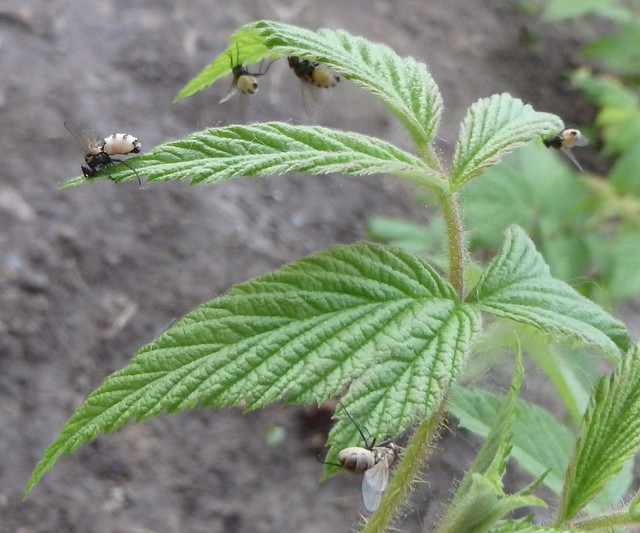
Unidentified dead flies, likely killed by a fungus. Other people have posted dead white flies like this on bugguide.net; University of Minnesota Extension has a potential cause.

five bloated white flies stuck on the top and bottom of raspberry leaves

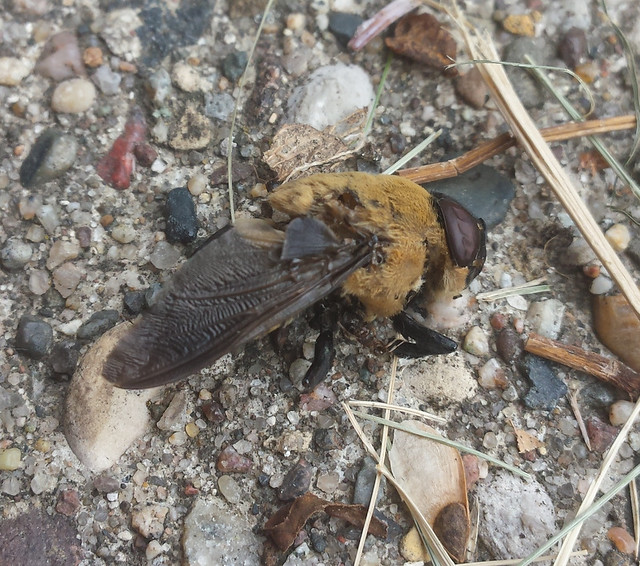
The end of a robber fly:

only half of a robber fly remains on a sidewalk

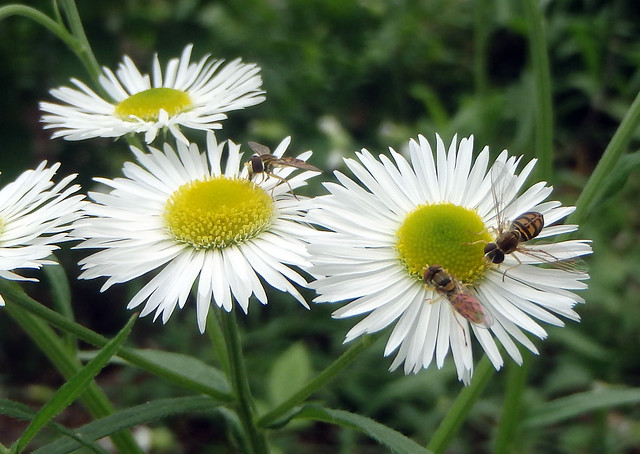
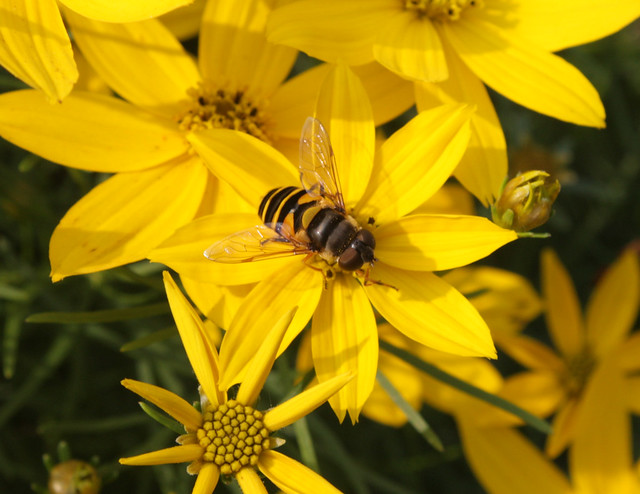
Small and large hover flies:

three small bee mimic flies on fleabane

a larger bee mimic fly on a bright yellow coreopsis cultivar

More bugs and critters to come soon:

Warm late-February weather left us with very little snow, so I’d better get going on the bug and critter recaps in case we have an early spring! Here are pictures of the spiders and other arachnids I found in our garden last summer.

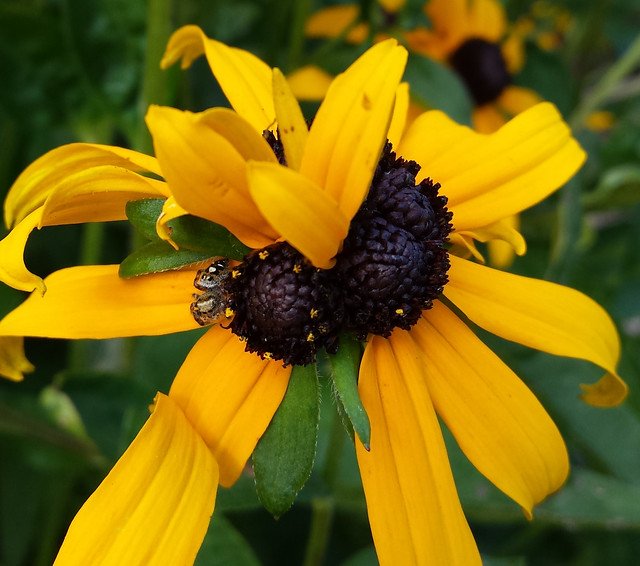
I call this a jumping spider – though I don’t whether it really is – hidden in the center of a multi-headed black-eyed susan:

spider hugging the left of a flower's center disk

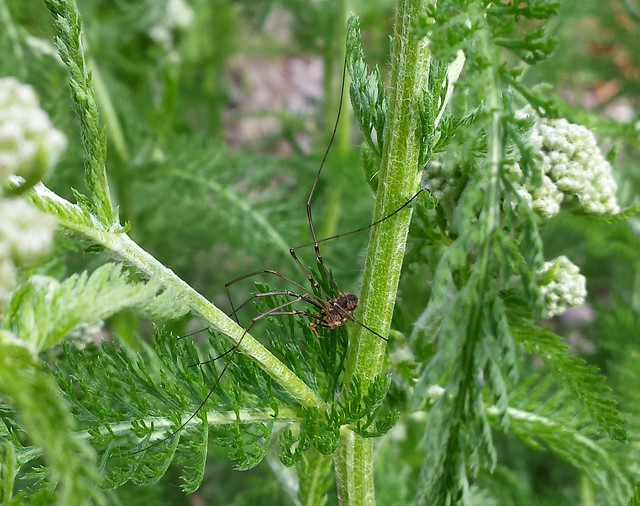
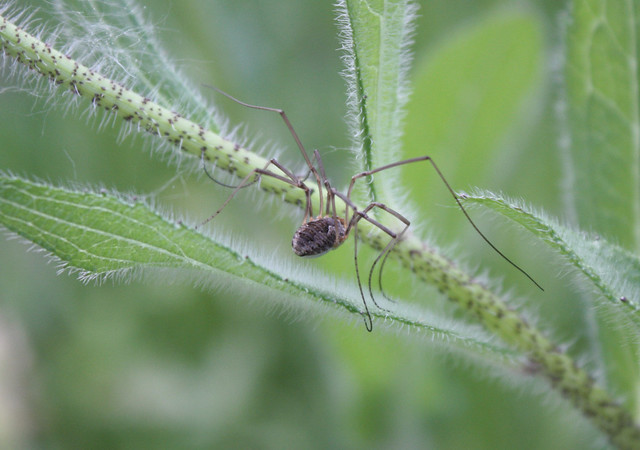
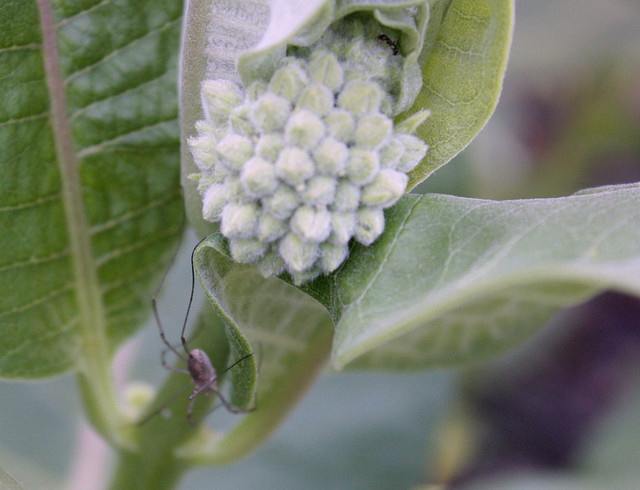
Harvestmen daddy longlegs (opiliones, not spiders) wrapped around leaves to hold on:

long folded legs climbing down a yarrow plant, with two legs still reaching high

long folded legs walking across leaves and stem of a native black-eyed susan

more compact daddy longlegs walking down a milkweed leaf

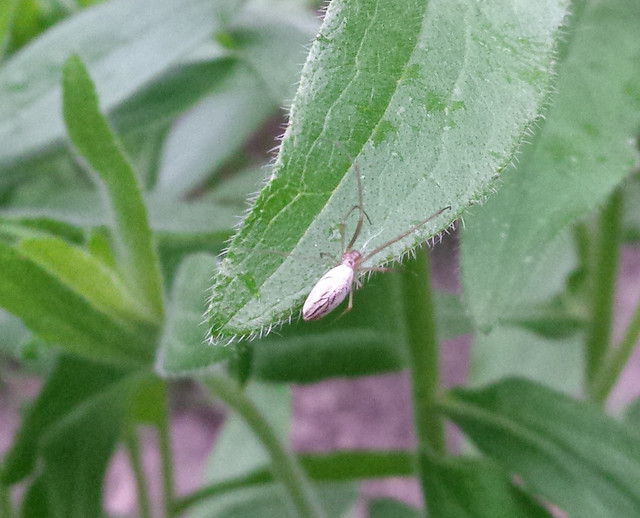
And two I don’t know:

long white body and medium-length light-brown legs

small yellow body and long yellow-and-black striped legs on the underside of a milkweed leaf

Other bugs and critters:

When we got married five years ago and I moved into his house, we started converting the lawn to flowers. It started very small – just a short hillside, which was hard to mow anyway. That was so successful that we’ve been chipping away at more and more of the grass every year.

We started buying flowers with gift certificates we received for our wedding: mostly perennials, some of them native plants. Now the only thing I will consider adding to the permanent garden is natives (though we do have annuals in pots each summer, too).

As the flowers have taken hold and expanded, more and more insects and other critters have been taking up residence. Who knew that swapping bluegrass for native plants would result in such a large insect community? (She wrote with dripping sarcasm.)

I recently added a list of my favorite flower posts to the sidebar. All five involve bugs.

This is the start of a multi-post series on critters, published in 2016 using photos from my 2015 garden. First, some bugs I haven’t yet identified (on plants I have identified).

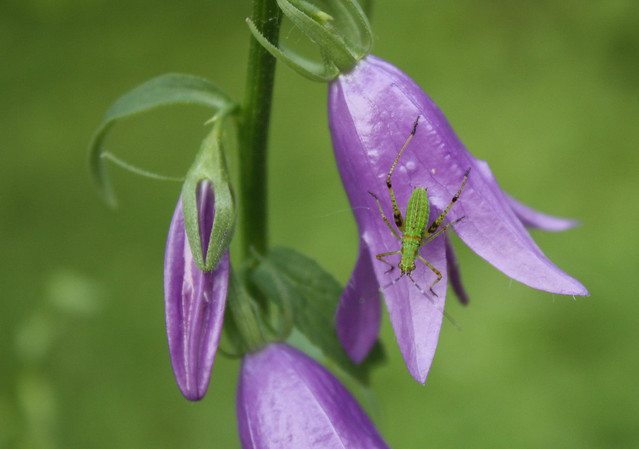
Invasive creeping bellflower:

long green bug with legs like a grasshopper

Native black-eyed susan:

short black-and-white bug

Common milkweed:

skinny bug or arachnid - not sure how many legs

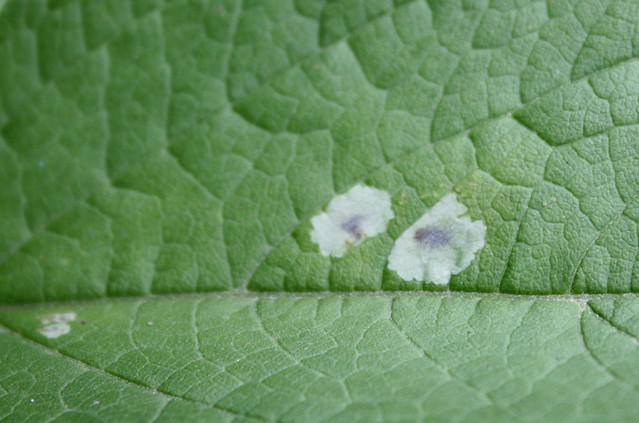
Joe-pye weed:

leaf damage - white spots with dark forms like tadpoles underneath

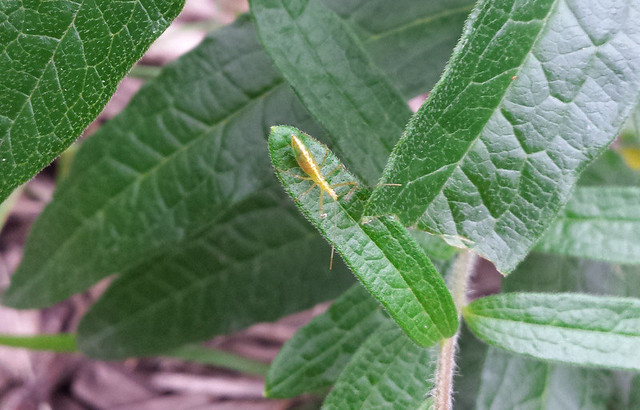
Butterfly weed:

long, skinny yellow bug

Common milkweed:

possibly a fly with very long antennae

Bee balm:

dark brown bug with a reddish spot and

Common milkweed:

light green bug with skinny grasshopper-like legs and very long antennae

More critters

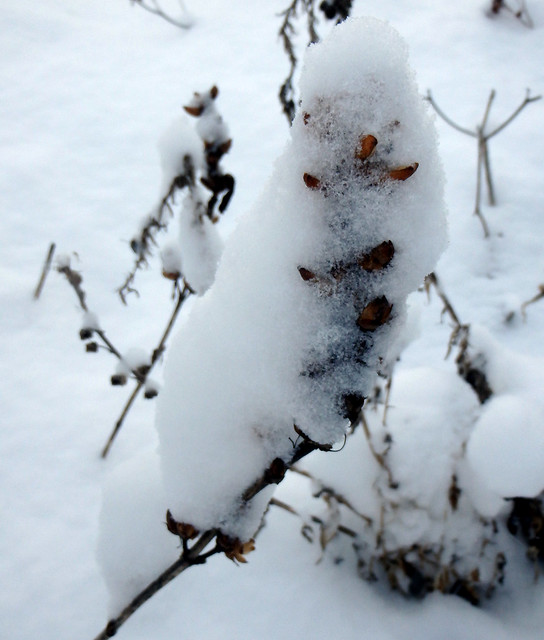
We’ve had cold weather and some snow this winter, but not much. Last week we got more than eight inches at once. I caught these flowers before the wind could blow off the snow.

joe-pye weed:

joe-pye weed covered in snow

turtlehead:

turtlehead covered in snow

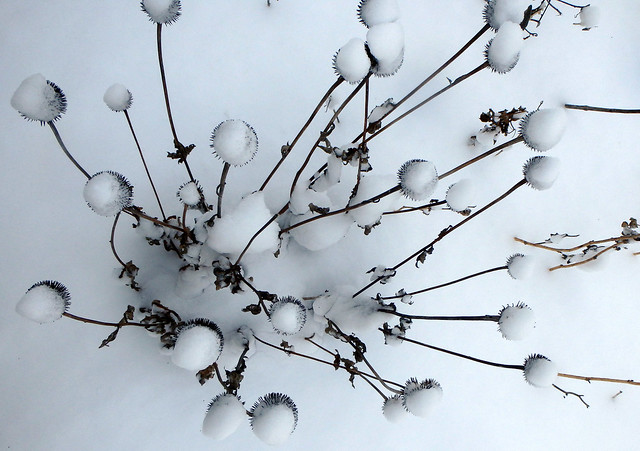
white coneflowers from the top:

white coneflowers covered in snow

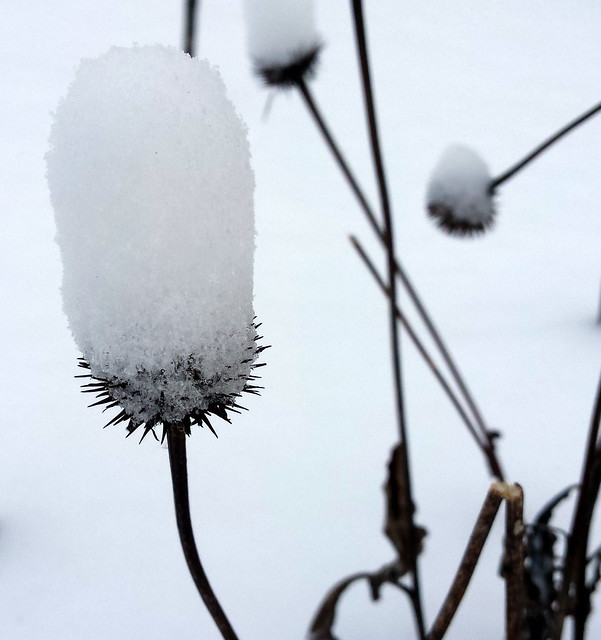
the coneflower’s tall “hats” are funny:

white coneflower covered in snow

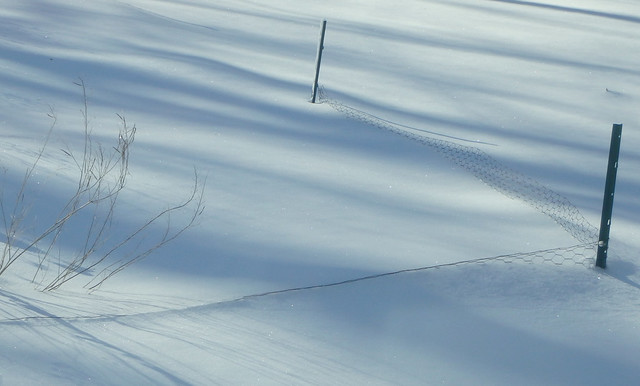
drifts so high in the vegetable garden that the rabbit fence is almost buried:

garden fence covered in snow

wind gusts blowing snow off pine branches:

You’d think with all the time I spent observing and cleaning up after caterpillars, I wouldn’t have had time for the outside garden, but I did. In fact, I’m having a hard time coming with my favorite success stories because there are so many to choose from. These more than make up for the few garden disappointments.

Milkweed‘s success goes without saying since I’ve so thoroughly documented our monarchs, though this photo is a reminder that butterflies aren’t its only visitors. We’ll keep the common milkweed (though we may thin out the number of plants) and butterflyweed, and this year we’ll try adding swamp milkweed and possibly others to extend the monarch season.

closeup of a honeybee on common milkweed

Iris was on the bigger and better list in 2014. That photo comparing 2013 to 2014 looks so quaint now because these flowers are multiplying exponentially. We divided the biggest clump and will need to be even more proactive at the end of 2016.
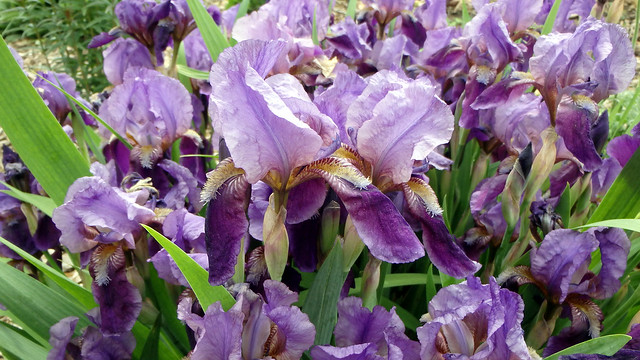
a clump of at least two dozen tightly-packed irises

Trilliums: This is the first time we’ve successfully grown trilliums – one of my all-time favorite wildflowers back to fourth grade science class – after a couple attempts! First up were trillium sessile, which we added in 2014 after they bloomed.
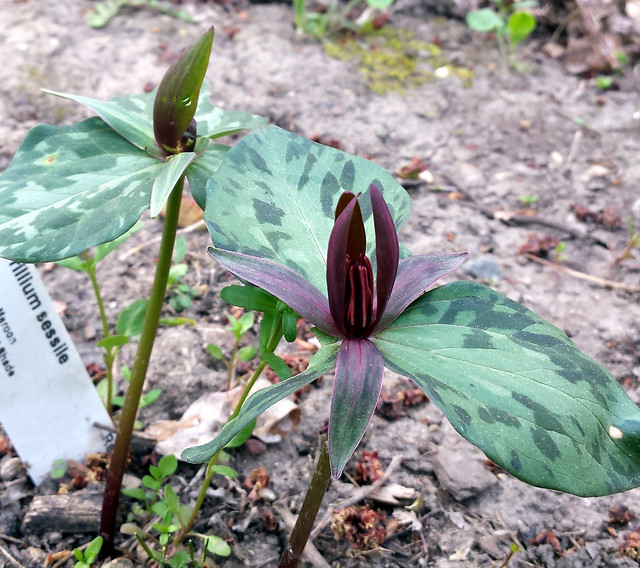
two purple trilliums, one missing a leaf and one missing the blossom

Then came many large-flowered trilliums that were transplanted from my parents’ yard.

three white blossoms and two buds

Wild geraniums are another childhood favorite transplanted from my parents’ yard, growing for the first time in ours. They were also used as a bed for some cute native bees.
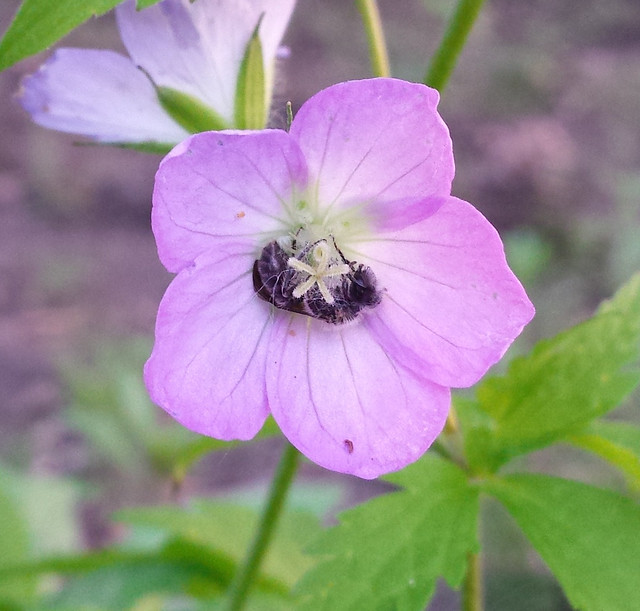
wild geranium with a bee sleeping upside-down

I didn’t see this jack-in-the-pulpit until it popped out of a patch of violets – a fun surprise. It’s the first one to bloom after a couple years of planting seeds. There were also lots of non-blooming jacks, so I expect more next year.
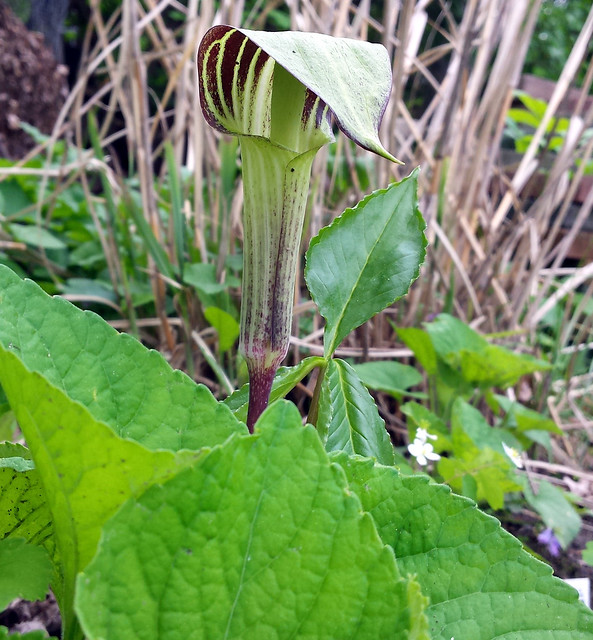
jack-in-the-pulpit above many violet leaves

Cinquefoil was blooming by April 27, though the tag says it should happen in mid- to late summer. This is one plant; a second, planted right next to it at the same time, is hidden somewhere under these leaves. Not sure why this one did so much better than its sibling.
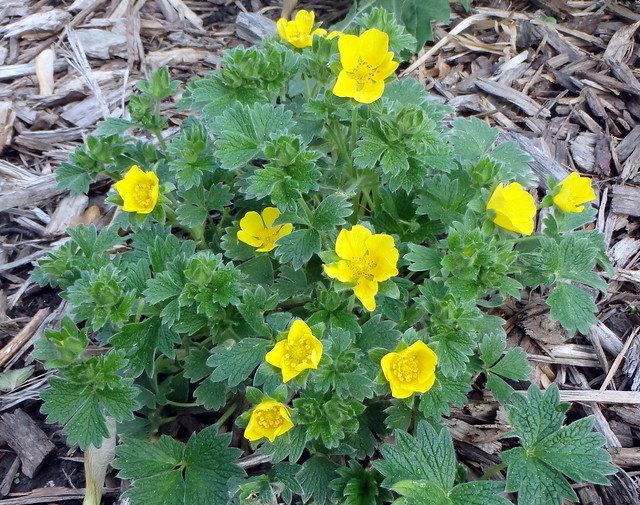
large clump of green leaves with many small yellow flowers

Snowdrop anemone was on the bigger and better list last year, and this year it got even bigger. It’s threatening to take over a large chunk of the garden, so during autumn cleanup we tried moving it to a new spot under a pine tree. I am afraid that this might be one we need to remove completely, if it keeps up its aggressive nature.

closeup from above of more than 20 large white flowers

Lamb’s ear was on the success list last year so I hesitate to include it again, but in 2015 it flowered for the first time.
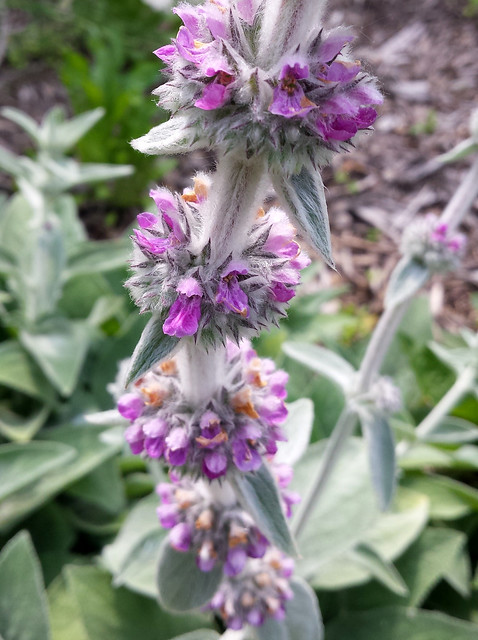
five clusters of small purple flowers on a tall white stalk

Stiff goldenrod: Who buys goldenrod, when it’s a “weed” that grows everywhere? Me, that’s who. We already had a volunteer Canada goldenrod, and I bought a stiff goldenrod to diversify. Boy, did bees like this newcomer. Maybe it’s because by the time it bloomed, most of the other flowers (including the Canada version) were done, but I couldn’t keep track of all of the honeybees, bumblebees, tiny native bees, wasps, beetles, and flies that converged on this one. They did not sit still for me, so this is the best photo I could get of the variety of insects.
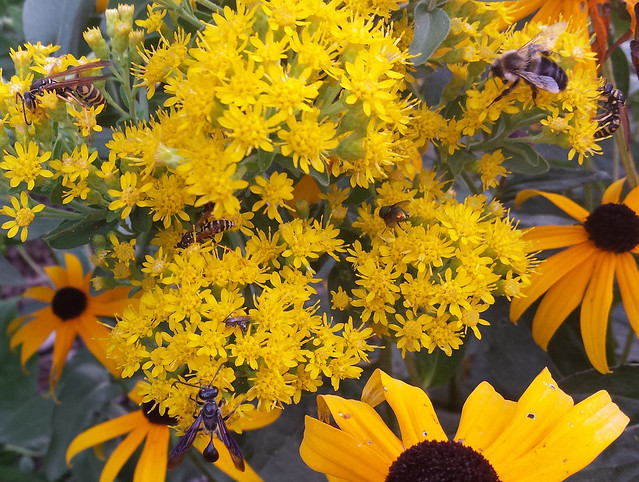
yellowjackets, bumblebee, fly, small native bee, wasp on small yellow flowers

Culver’s root really shined this year. It was fun to watch insects climb up its spikes.
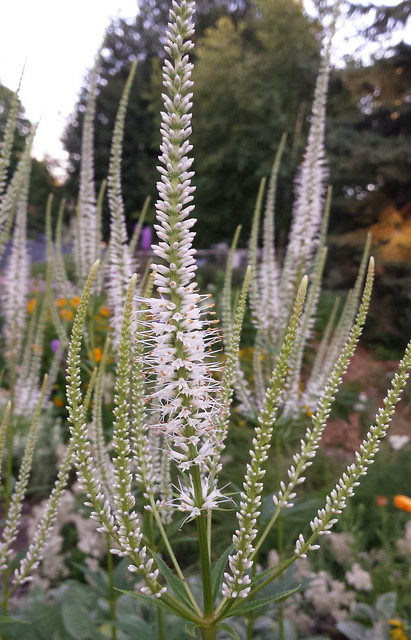
six clusters of tall white spikes

Finally, one blue vervain grew after multiple attempts at planting seeds.

Gray-headed coneflower spread like crazy in 2015. It’s a native so I’m trying to be open-minded, but we’ll have to keep a close eye on this one in 2016 so it doesn’t crowd out its neighbors more than it already has.

Plains coreopsis is another to watch closely. It was from a “wildflower” mix from a couple years ago, and it’s been self-seeding ever since.

In 2015 we had rudbeckia in many forms: native black-eyed susan, non-native black-eyed susan, orange coneflower (which looks exactly like the non-native black-eyed susan), and this pretty multi-colored version. I am confused about where it came from – perhaps from 2014’s wildflower seed packet (though this was the first year it appeared).
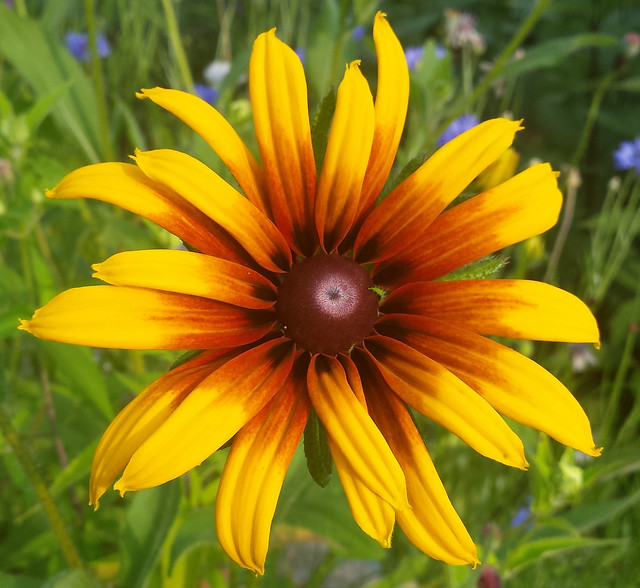
ombre petals with yellow at the edges and dark orange at the center

Cup plant was quite the show-stopper. We bought it in 2014 so it didn’t have a chance to do much until 2015. It grew taller than my reach – taller even than the 4-to-8 feet advertised on its plant marker. Apparently I was intrigued by the “cup” aspect because I took several photos like this:
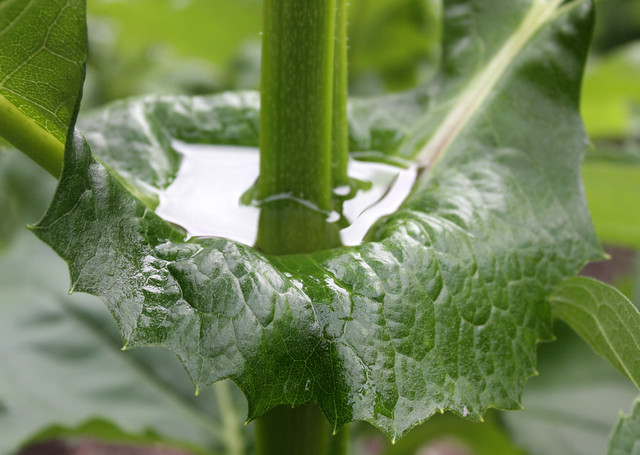
cup plant full of rain water

It attracted bees, butterflies, and even birds – I often saw goldfinches and one day spotted a downy woodpecker!
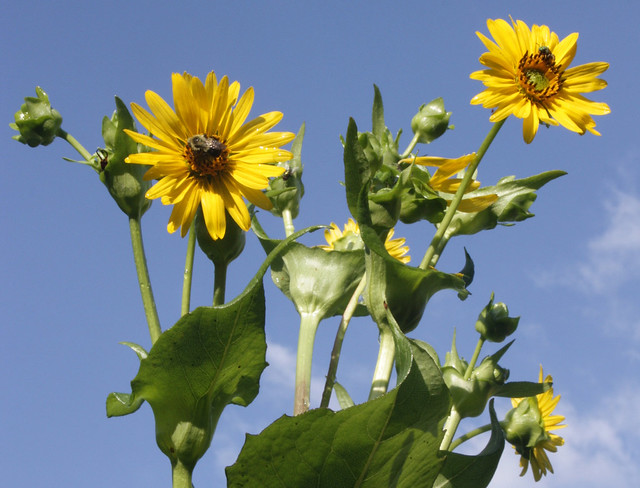
two yellow flowers, each with a bee